
Do you need bigger mudflaps when towing a caravan?
Towing a caravan on gravel? Find out where those stone chips come from, when bigger mudflaps are worth it and how Rock Tamers work.
Published on: 20 November 2026
You pull up after a stretch of gravel, wander around to the front of the van and there they are. A few fresh stone chips on the toolbox. The tow rig already has mudflaps, so how’d the little buggers get through?
Now think about the last time you were following someone down a gravel road and heard a stone ping off your windscreen. You probably said a few words about it but the driver up ahead probably had no idea. It’s possible you’ve even been that driver. You can see what it does to your own van when you stop, but you rarely see where the rest of it ends up.
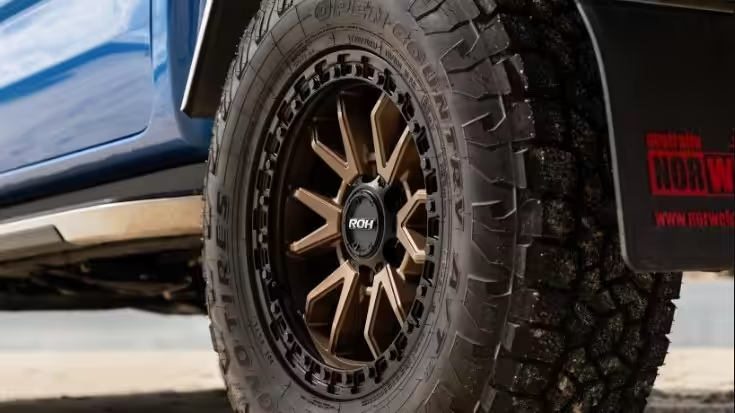
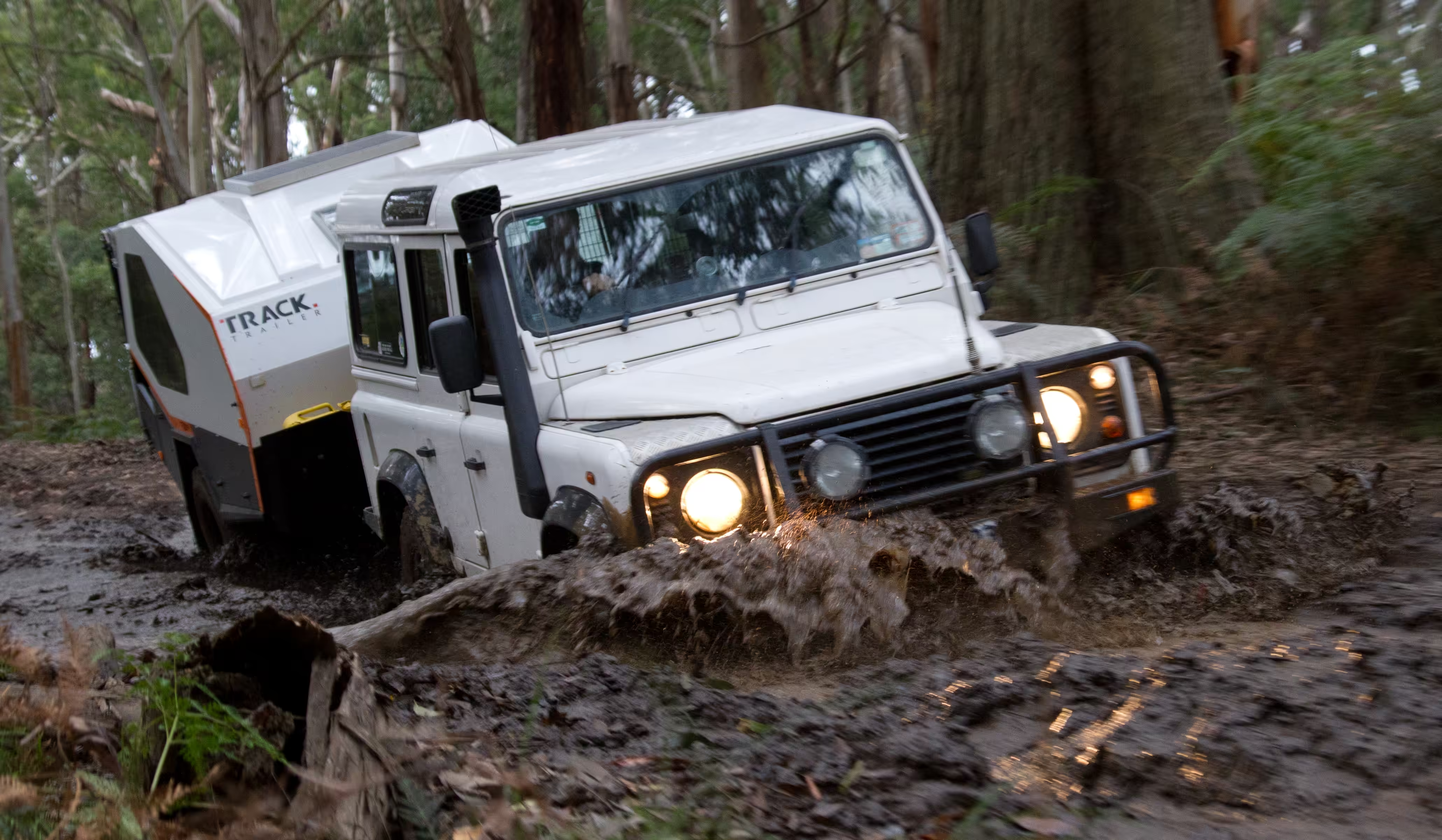
On a gravel road, your tyres pick up little stones in the tread and fling them out as the wheels turn. If you’ve ever picked gravel out of a chunky set of all-terrains after a trip, you’ll know how neatly a stone can wedge itself in there.
Your factory mudflaps catch some of that spray. How much gets past them depends in part on how much of the rear tyre the flap actually covers. If you’ve gone up a tyre size since you bought the tow rig, have a look from behind. The tread sticking out past the edge of the flap is a good place to start.
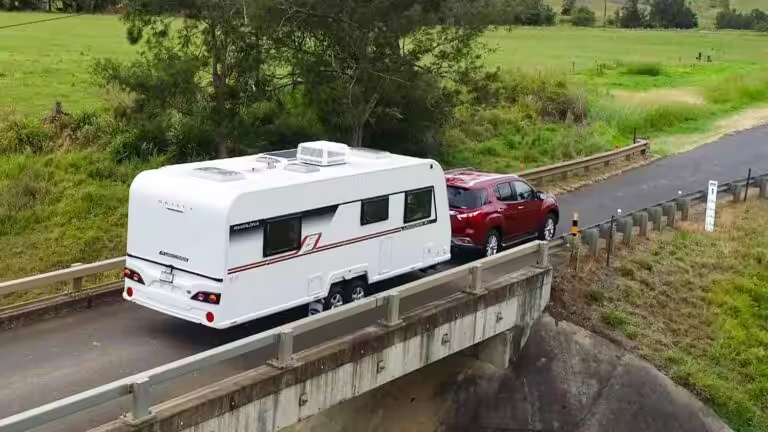
Then there’s the gap between the tow vehicle and the caravan. The air swirls around in that space as you drive, moving grit and debris around. Some stones hit the drawbar or the front of the van, some bounce underneath, and some can make it past the rig altogether.
We talk plenty about towing manners, such as giving other drivers room and letting a queue past when you can pull over safely. But we rarely think about what our back tyres are chucking at everyone else.
It’s easy to get wrapped up in keeping your own gear tidy, especially when it’s your toolbox that’s starting to look like someone’s taken to it with a bag of gravel. But if you’ve ever copped a stone to the windscreen while following another rig, you already know why it’s worth paying attention to what’s coming off yours.
If most of your trips are on bitumen and the roughest stretch is the driveway into the caravan park, bigger mudflaps probably aren’t high on your list.
If you regularly tow on gravel, or you keep finding fresh chips on the drawbar, toolbox or front of the van, extra coverage is worth a look. Start by checking how far your existing flaps reach across the rear tyres. Then look at how much room you’ve got underneath with the van hitched and the rig packed as you’d normally travel. A flap can look like it has heaps of clearance in the driveway before you’ve loaded the ute and hooked up the van.
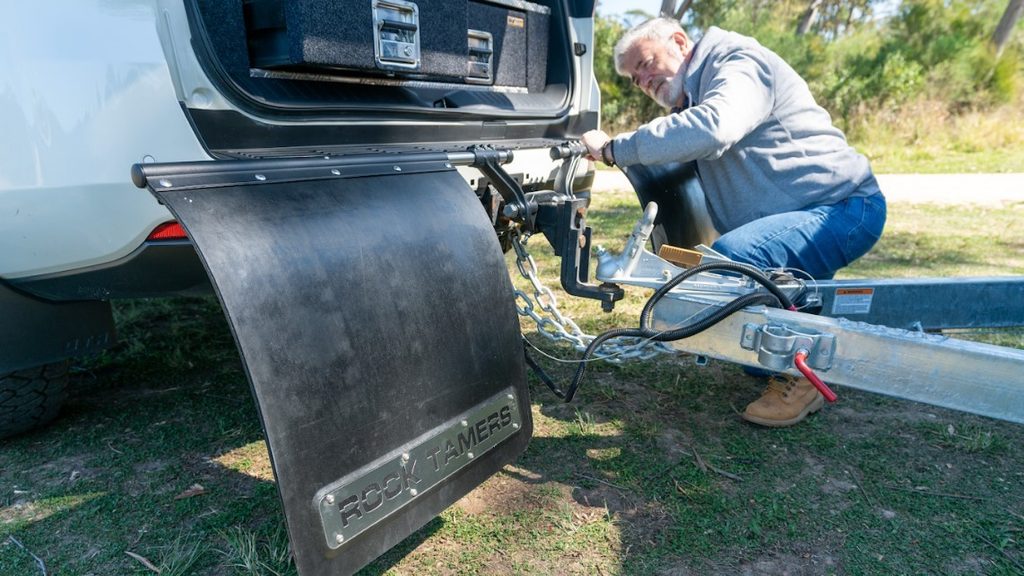
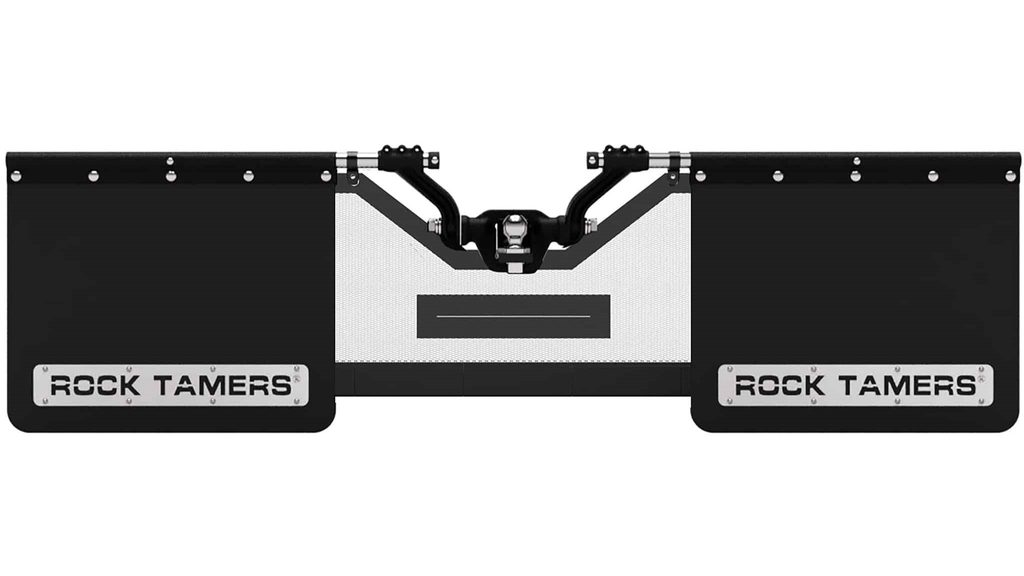
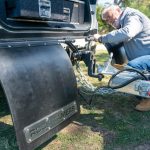
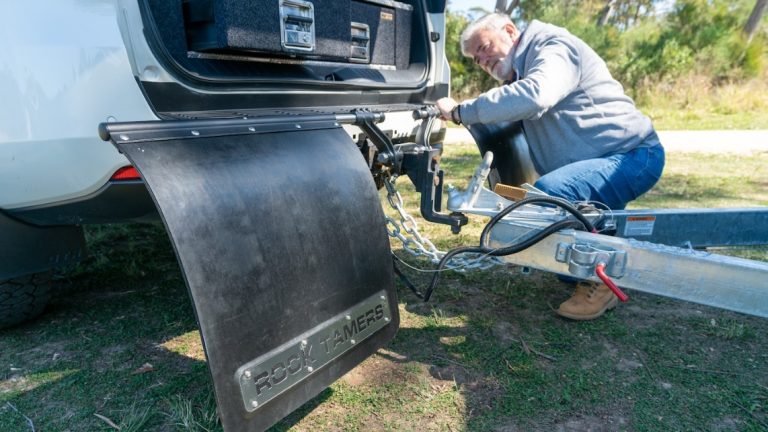
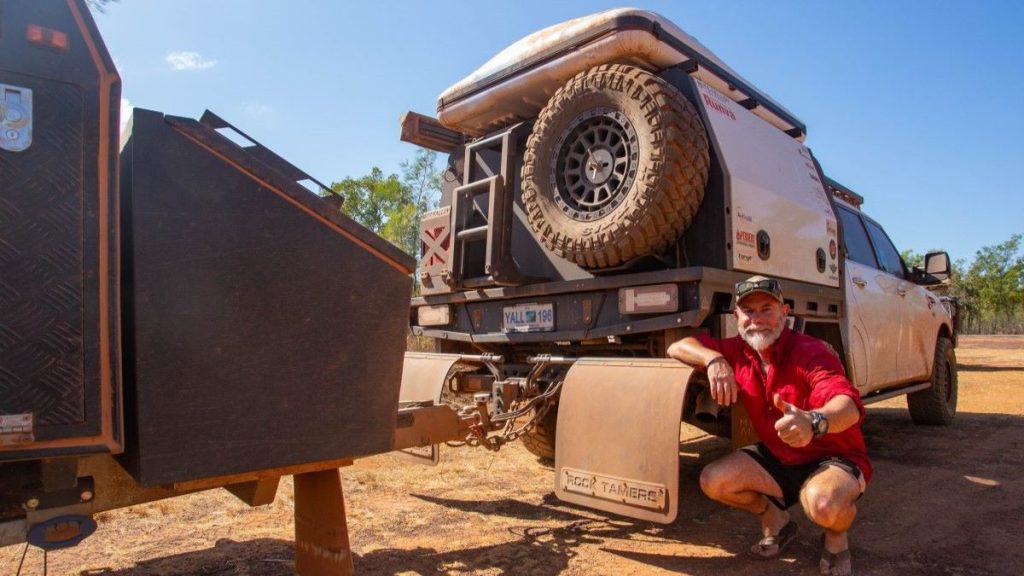
Clearview’s Rock Tamers are a pair of heavy-duty mudflaps that sit behind the rear tyres. They’re designed to intercept stones and grit and deflect them down towards the road. The width adjusts to suit your rig, and you can set the flap height to suit your loaded setup. Clearview specifies at least 100 mm between the bottom of the flaps and the ground when hitched or fully loaded.
The hub clamps onto a compatible 2-inch towbar shank without drilling into the vehicle. This makes it easy to take them off when you get home from your trip so you don’t have to spend the rest of the year with them installed for the weekly grocery run.
Clearview’s kit also comes with a Rock Screen. It’s a mesh panel that fills the gap between the two flaps and is designed to catch stray stones that could otherwise bounce off the caravan’s A-frame.
If your next trip has a fair bit of gravel on the map, have a squiz at your mudflaps while you’re hitching up. The chips on your toolbox are the ones you get to see. The person behind you gets a pretty good idea of where the rest are going.