
What can you actually tow in the Kimberley?
Planning on towing in the Kimberley? Here’s how your caravan or camper, route and setup affect where you can go and when to leave the trailer behind.
Published on: 17 November 2026
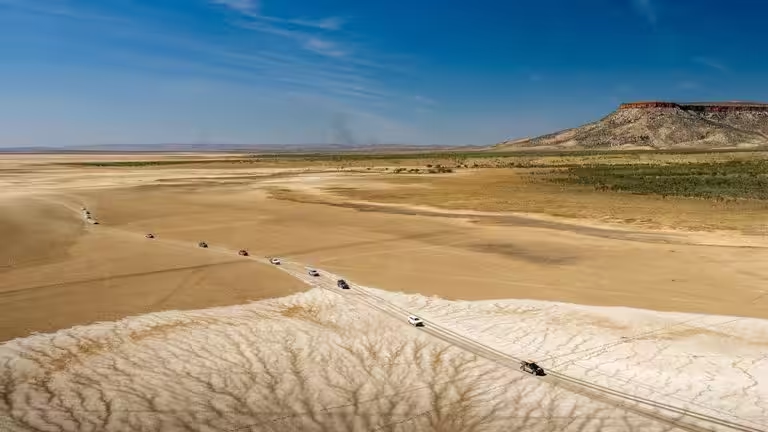
Before we start, we need to add a bit of a disclaimer here that the Kimberley region is three times the size of the UK, so us yapping on about the cans and can’ts of towing trailers in the area will largely be offset by your planned route, which of the many destinations you’re planning on seeing, how well set-up your tow rig is and, of course, how comfy the driver is with a tonne or three of van taking up the rearview.
To be fair, if you’re looking to mainly stick to the blacktop or the well-maintained dirt roads, then you’re going to be standing in fairly good stead no matter what you’re running. Assuming, that is, that you’re not totally unprepared and have enough water, fuel, tools and the ability to get yourself out of a jam.
The Kimberley is largely made up of shallow soil with a rocky base, so grip and traction are usually easy to come by, and the ground is generally solid enough that, with some decent driving skill and speed management, you can get through the majority of it.
However, for those of us who like taking the harder lines and getting to those as-remote-as-possible locations with our trailers, then a few points of order should be adhered to.
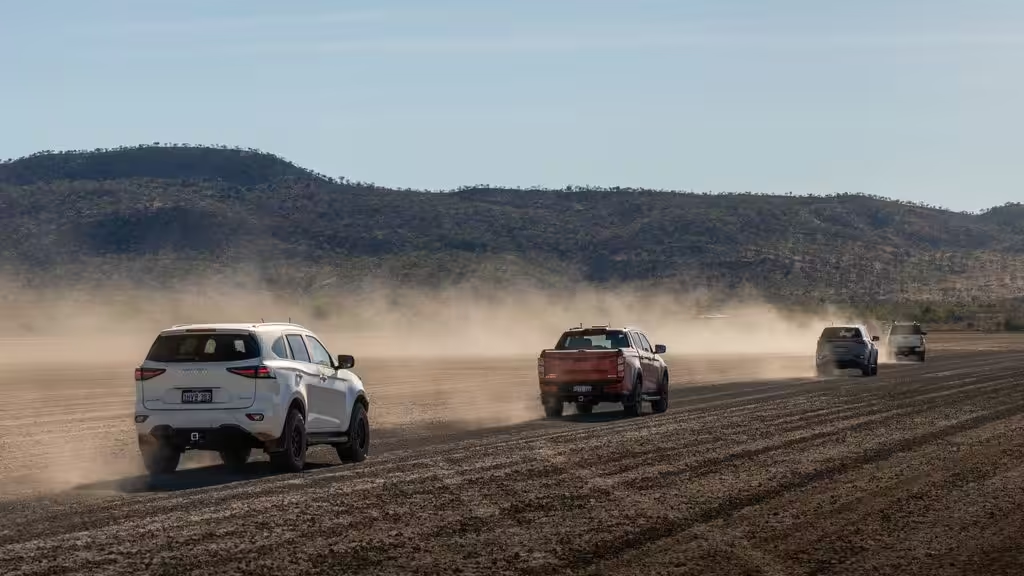
When doing any sort of off-road touring, the enemy has always been weight. Same goes for your trailer. Ideally, a single axle is the way to go and preferably don’t go bigger than a camper trailer, pop-top or hybrid if possible.
With that said, we saw plenty of 16-18-ish foot vans on our most recent Kimberley adventure, but they were all being pulled by fairly serious tow-rigs and weren’t seen too far from the blacktop. Keeping it as compact and light as your desired comfort levels will allow is only going to be a net positive.
Tackling this sort of trip with a caravan designed for on-road use between caravan parks really doesn’t take a heap of common sense to place it in the ‘not the greatest idea’ basket. You’re looking for off-road models only out here, and even then, it pays to have a specialist take a look underneath and identify anything that may be exposed to damage from gibber stones being kicked up.
You would be amazed how many high-end “off-road” campers have plumbing, wiring and thin-wall tanks just hanging out in the breeze waiting for a piece of the landscape travelling at warp speed to put a hole in it. With that in mind, a rock deflector on the drawbar should also be seen as cheap insurance.
As for the actual springs and shocks, while most off-road campers and caravans these days come with pretty decent offerings, nothing kills vehicles quicker than corrugations and the Kimberley has a lot of them. If you’re in any doubt about a suspension component’s working life, replace or upgrade it before leaving.
Yep, could have put this under the previous heading as tyres are part of the suspension system, but they’re still important enough to give them their own category. Mainly because almost everyone, us included, often neglects to check them before or during a trip. And given the Kimberley is a long way from everywhere, it’s not the place to “she’ll be right” it.
Forget your highway terrains and rubber you wouldn’t run on your daughter’s Getz. You want nice, thick sidewalled, preferably all-terrain tyres with plenty of tread. You also want to adjust the pressures to suit the track as you would your 4X4’s donuts. If they’re overinflated they can negatively affect handling and if they’re underinflated they can heat up and blow out.
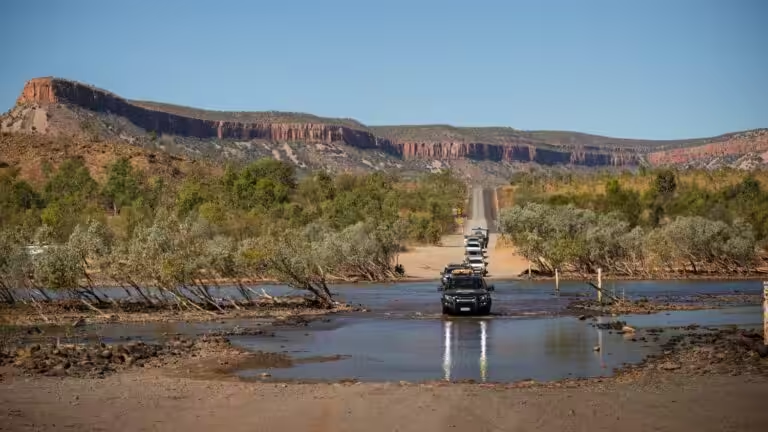
If you’re tackling the Gibb River Road or any of the other long-distance tracks that can and will make you pay for being underprepared, your tyres will often be the ones left holding the credit card. So take care of them. We found around the 25-28psi mark a good jumping-off point and tuned our pressures to suit our setup from there.
Look, I’m not going to sit here and act like a good old 50mm ball hitch is unsuitable for the Kimberley. The truth is, it’ll do the job for all but the most hardcore explorers. But if that’s you, then a dedicated off-road hitch is a massive advantage. The DO-35 comes standard on a lot of caravans and campers these days, and it’s for good reason.
Definitely not a prerequisite, but still damn handy to have if you find yourself on a particularly tricky low-range track.
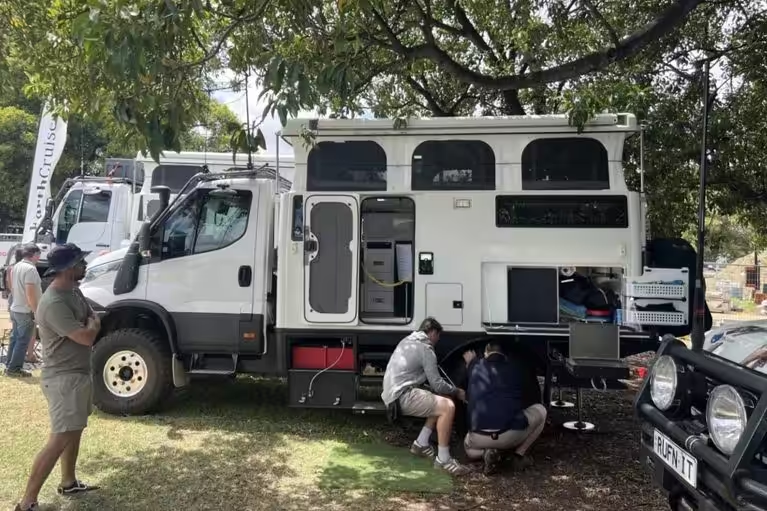
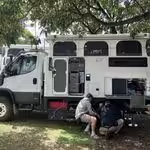
Motorhomes fall broadly into the same category as larger caravans (unless we’re talking a 4X4 truck like a Unimog or Iveco Daily or something). By all means bring them out here and enjoy the sights and sounds, just don’t expect too much from them.
We recently did the Kimberley with the Isuzu I-Venture Club on highway terrain tyres, which shows it can be done with the right vehicle, but a motorhome is a lot heavier and they’re often only 2WD, so choose your adventure accordingly.
Even with the most off-road ready, lightweight, rough-and-tumble adventure camper money can buy there are still locations where you’re better off finding a campsite (stunning ones are not difficult to find out here), setting up, then heading off for your adventure with the camper left behind. Mitchell Plateau is a lot less stressful if you’re just contending with your 4X4 on its own.
| Popular locations | Trailer set-up required |
|---|---|
| Great Northern Highway | It’s all gravy. Any sort of caravan, camper or motorhome can handle it. |
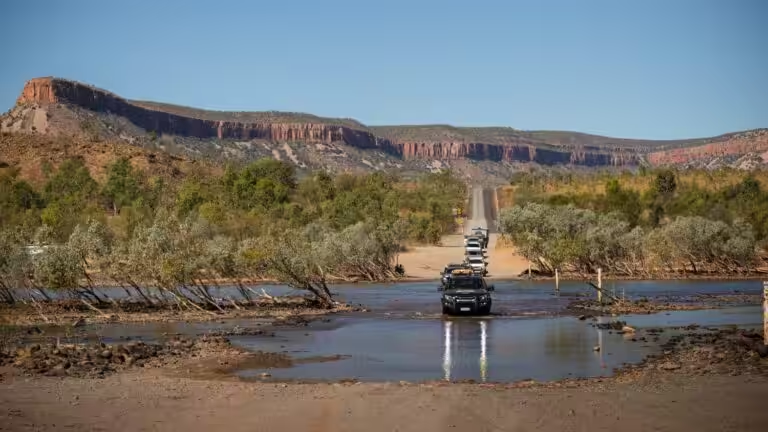
| Gibb River Road | Genuine off-road spec camper trailers, small caravans and hybrids. Off-road hitch and AT tyres as well as underbody protection. |
| Purnululu/Bungle Bungles | High-clearance 4WD vehicles towing single-axle, high-clearance camper trailers or caravans only. Dual-axle trailers and caravans aren’t permitted. |
| Kalumburu/Mitchell Falls | Probably the hardest towing route in the region. All the off-road gear as well as tyre repair kit (or even better a second spare). |
| Windjana Gorge | Graded on the reg, most 4X4s and trailers can handle this one with some judicious driving. |
| El Questro | Same deal, regularly graded in the dry so doable by almost every flavour of trailer. However, nothing is guaranteed so drive to the conditions. |
You don’t need the biggest tow rig or the flashiest off-road camper to enjoy the Kimberley. However, you do need a setup that suits the roads you’re planning to tackle, a bit of preparation and the sense to know when to leave the trailer at camp.
Keep the weight sensible, look after your gear and give yourself time to explore. There’s plenty out here worth slowing down for.