
Isuzu D-MAX and MU-X review: Do you really need more for remote touring?
We put the latest Isuzu D-MAX and MU-X to the test in the Kimberley to see how stock 4X4s on highway-terrain tyres handle remote touring.

Published on: 16 September 2026
There’s a bit of a trend at the moment where people seem to think you need the biggest vehicle with the most gear to tackle remote touring. We’re talking GVM-upgraded 300 Series Land Cruisers and full-size American utes with every bell, whistle and doo-dad strapped to them towing 25-foot vans across some of the more isolated parts of the country.
While there’s nothing wrong with that, far from it, the reality remains that you don’t need the size, weight, fuel usage or cost of such a set-up to get to even the hardest parts of the country. We were shown this recently when we were invited on a trip with the Isuzu iVenture Club to the Kimberley region of north-western Australia. One of THE bucket-list destinations for every Aussie adventurer.
Read next >> Is El Questro Station really worth the detour and expense?
And we did it with stock vehicles on highway-terrain tyres. Here’s how Isuzu’s latest 4X4s are making remote touring easier and more accessible than ever.
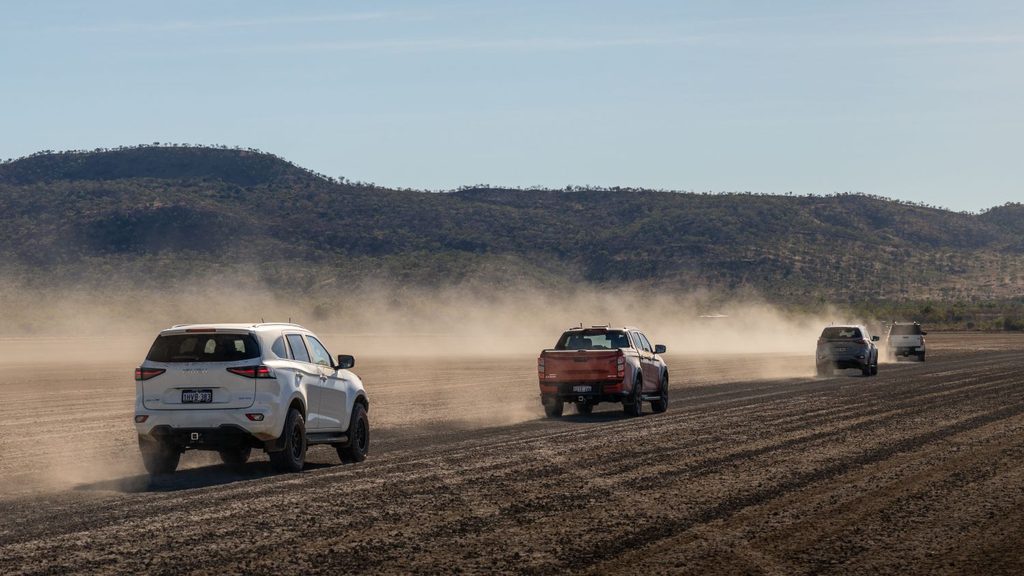
One of the deciding factors in vehicle suitability for long distance touring is: “can I stand to be in this thing for hours on end?” If the answer is no, then it’s probably not the droid you’re looking for and move along. If you can, then you’ve got a big old box ticked.
Personally, I would prefer to save several thousand by buying a lower-spec model and spending some cash on the best seats I could afford, netting a heap of long-distance comfort without having to pay for the stuff I don’t want that comes with the top-spec models. But that’s me.
Regardless, it highlights the point that touring comfort is a subjective thing. What you may find comfortable, your mate, or worse, your touring partner, may find back-wrenching. It’s important to find something that works for everyone who’s going to be spending time with the vehicle.
Isuzu does a great job of offering a range of interior options that’ll appeal to the majority of folks. The top-spec Blade model is the cream of the crop, offering better everything. The interior is like a Japanese Range Rover while the Walkinshaw-tuned suspension is by far the nicest for out-of-the-box dirt road mile-munching.
Still, it’s not like the models that are significantly cheaper with fewer appointlents are by any means bad. But you do have to make do with more plastic trim and maybe a few levels down on the overall ergonomics. As stated, it’s personal choice. Do you pay the extra for the suspension, barwork, winch, higher resale and interior comfort straight off the bat or do you build it specifically to your tastes as time and budget allows?
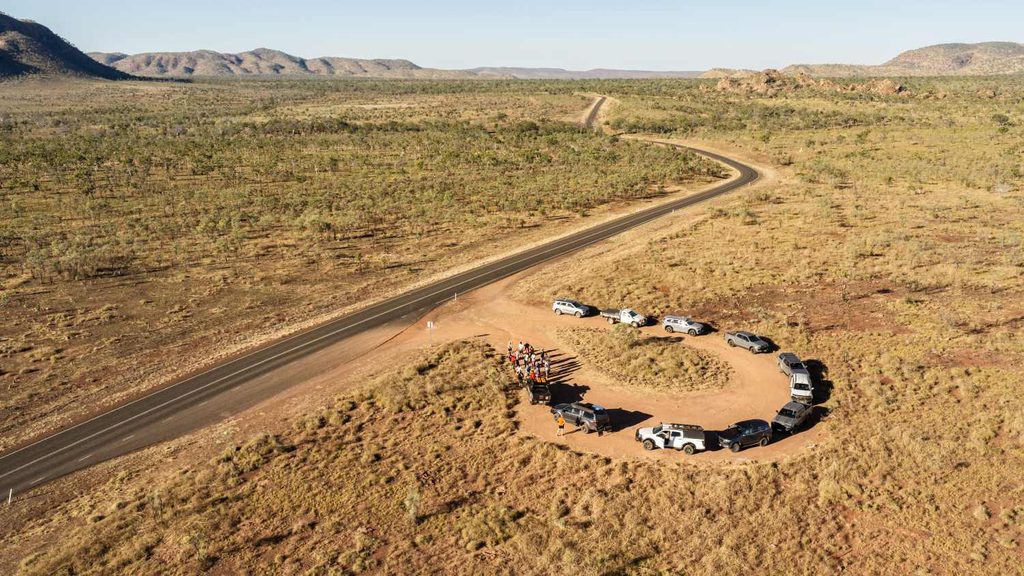
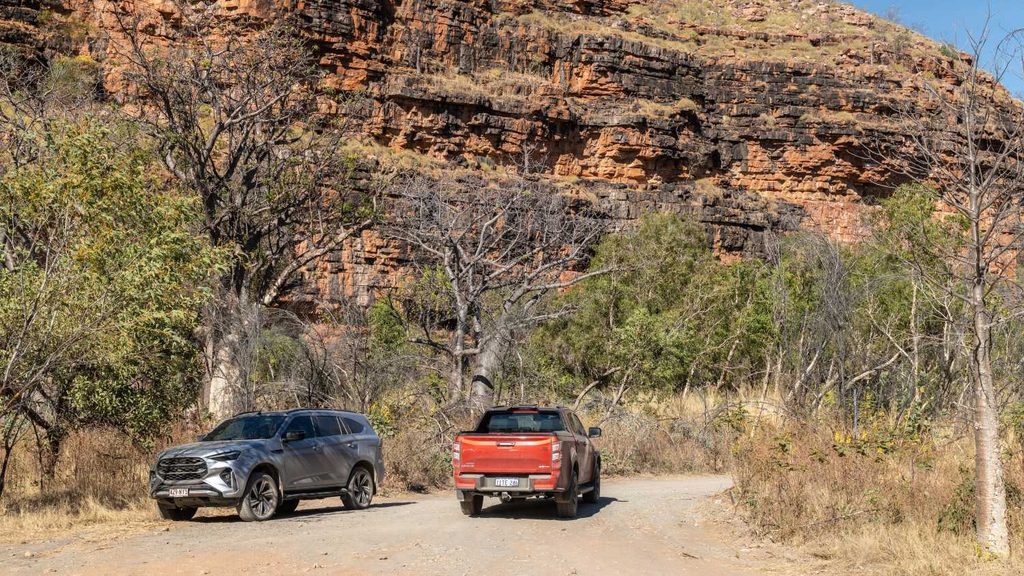
When choosing between and MU-X and a D-Max it’s not as clear cut as you may expect. A good litmus test is asking yourself if you’re planning on running a tub-topper canopy on your D-Max. If the answer is yes, get an MU-X.
Obviously, it’s not quite as basic as that. The MU-X has less payload, which is important to a lot of people, but it also has coil rear suspension versus the D-Max’s leaf springs, which offer a hell of a lot more driving comfort and off-road performance.
The D-Max can carry more in its tub, but it’s open to the weather. If you install a canopy, you’re likely better off with an MU-X and a cargo barrier. Either way, neither is exactly what you’d call short on storage.
The D-Max and MU-X can tow up to a medium size camper or caravan no problem, both having the 3500kg braked towing capacity that everyone seems to aim for (despite the fact that towing 3500kg with a 2500kg vehicle is a recipe for disaster, but that’s a whole different article).
The MU-X has disc brakes out back while the D-Max makes do with drums, but don’t see that as a negative. There’s a reason prime movers have drum brakes, they’re actually more efficient than discs, but it’s worth noting they’ll need occasional adjustment if travelling a lot.
While we didn’t get much of a chance to do much towing on our Kimberley trip, I have driven an MU-X with a 2.3T hybrid caravan in tow and it handled it like a champ. Both vehicles come with a choice of a 2.2L or 3.0L four-cylinder turbo-diesel, and if towing is on your bingo card then the 3.0L is a better bet.
There’s nothing exactly wrong with the 2.2L, it has similar power figures and comes with an 8-speed (rather than 6-speed with the 3.0L) auto and uses less fuel. But the more useable torque delivery (and the amount of power available once you start working the mighty 4JJ3) from the 3.0L makes it a better bet for tow duties.
I’m not a barbarian. I view things like lane assist, autonomous emergency braking and anything that shrieks at me while I’m driving with the utter disdain they deserve. One of the first things I test on any new vehicle is how easy such annoyances are to turn off. However, I do acknowledge that they are a necessary evil in the modern world of ridiculous government mandates for new vehicles and the continuous encroachment of bubble-wrap on our lives. Nevertheless, I think it’s fair to say I’ll never be a fan.
Still, while the Isuzus have all of the thickly ironic “driver assist” tech, they also have some pretty decent stuff as well. Particularly on the higher end models. We’re talking the usual Carplay and Android Auto that are to be expected, plus a couple of forward-facing cameras that I found particularly handy when four-wheel driving as they more or less eliminate wheel placement issues and blind spots.
Oh, and while we’re talking off-road, Isuzu still have one of the best traction controls in the game. The Rough Terrain mode is fluid and controllable and stays engaged even when the rear diff-locker is in use. Full points, no notes.
The D-Max ranges from $50K-ish to up around 80 Gorillas for the Blade. The MU-X varies between roughly $55K for the 2.2L LS-M up to just over $77K for the 3.0L X-Terrain. And just to specify, we’re only talking 4X4 models here, the 4X2 variants are cheaper.
Choosing the right option for you is, as mentioned, super subjective. The $30K more spendy Blade may seem extravagant but when you factor in things like a bull bar, winch, lightbar, suspension upgrades, interior comfort and things like side-steps and AT tyres, that $30K quickly becomes a lot more justifiable.
Even so, an entry level 3.0L SX space-cab (my personal preference) rings in about 25-grand cheaper than the Blade. With that I could add a set of seats, a bar, winch and snorkel and a nice set of ATs and it’d be dialled into exactly what I’d want.
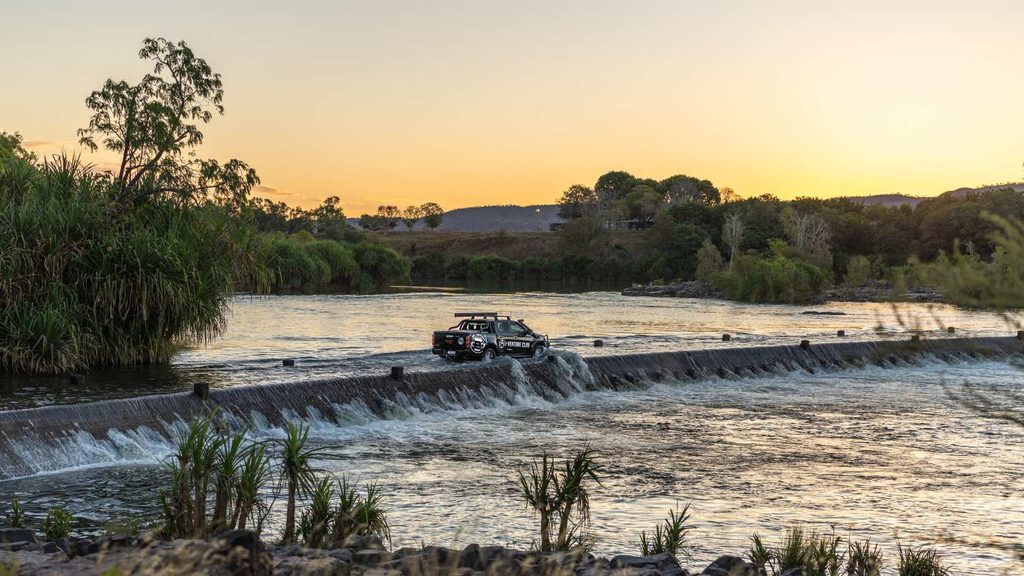
The short answer is yes. Our time in the Kimberley showed that you don’t necessarily need a heavily modified 4X4 on aggressive tyres to tackle remote touring. Both the D-MAX and MU-X proved comfortable and capable straight out of the box, even on stock highway-terrain tyres.
Which one makes the most sense comes down to how you plan to use it. If you’re doing plenty of unladen urban driving between trips, a 2.2L MU-X would be hard to go past. If you’re towing the proverbial ‘Behemoth 3000’ caravan and need the extra payload, a 3.0L D-MAX may be the better starting point.
There’s no single right answer. You can spend more on a higher-spec model or start with something cheaper and build it to suit your needs. Either way, if the Kimberley couldn’t break the stock-standard D-MAX and MU-X on highway-terrain tyres, it’s a pretty good indication that both are more than capable of taking you well beyond the bitumen.