
Planning your first Kimberley road trip: A practical guide
Planning a Kimberley road trip? Get practical advice on when to go, road conditions, fuel, water, permits and preparing your rig.
Published on: 2 October 2026
The Kimberley region of north-west Australia is often seen as the pinnacle destination for adventurers. It’s everything that people love about travel around this country. It’s remote, it’s rugged, it has something for everyone, and it is jaw-droppingly stunning. From the water holes to the river crossings to the terrain that’ll have you quoting Banjo Paterson, it truly is one of those destinations that redefines one’s love for touring this magnificent neck of the world.
However, this is not somewhere to simply hit up over a weekend (or a week). It’s not a place for the unprepared and “she’ll be right” doesn’t cut it out here. It takes planning, commitment and a strong leaning towards self-sufficiency to successfully navigate this wilderness. Which is why we thought we’d throw together this guide to help you get the most out of your Kimberley quest.
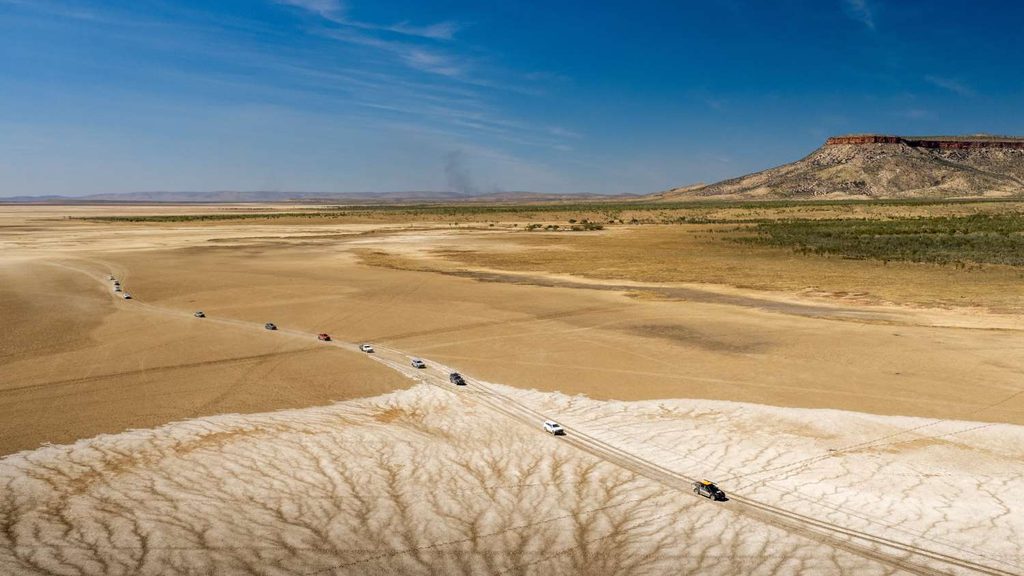
This far north there are only two seasons: the dry and the wet. Unless you enjoy deluges that’ll have you wondering if your caravan can float, the dry is the go. Better roads, broader access, fewer dangers and (duh) nicer weather make it a much more pleasant experience overall.
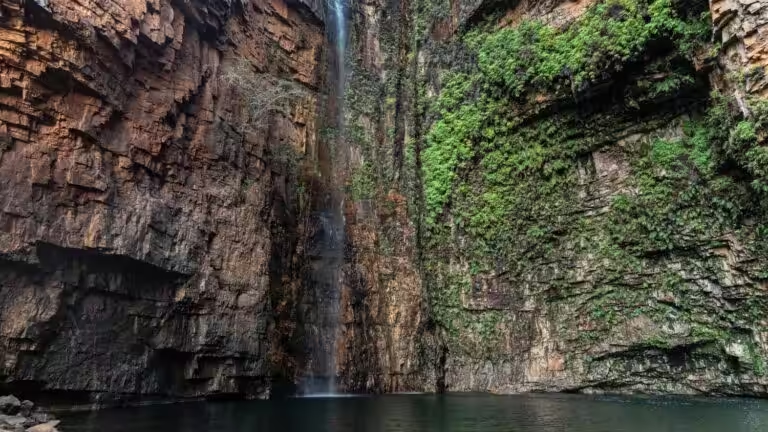
May to October is the usual sweet spot, with temps ranging between 20-30°C and blue skies that stretch to infinity. The waterfalls are also in full flow after the wet and the coastline has generally calmer waters as well.
However, road openings depend on the prior wet season and how quickly repairs can be completed. Later in the season, expect hotter conditions and check that campgrounds, tours and fuel stops are still operating.
That’s not to say the Kimberley isn’t every bit as spectacular during the wet, but you’d have to read about that in Helicopter Daily. Touring with an RV during these months is at best ill-advised and at worst flat out impossible.
Even when the weather is ideal, the road conditions are wildly varied. Many roads are indeed bitumen, but the wet season plays havoc with them and potholes that could swallow a Camry early in the season are not uncommon.
The same goes for the dirt roads. Gibb River Road is probably the most famous and the corrugations can see you on the shortlist to get all of your teeth fillings replaced.
As always whenever you’re travelling, off-road tyre pressures of both your tow rig and your trailer are incredibly important. After that it’s all about watching your speed, keeping a steady hand on the tiller through corners and driving to the conditions.
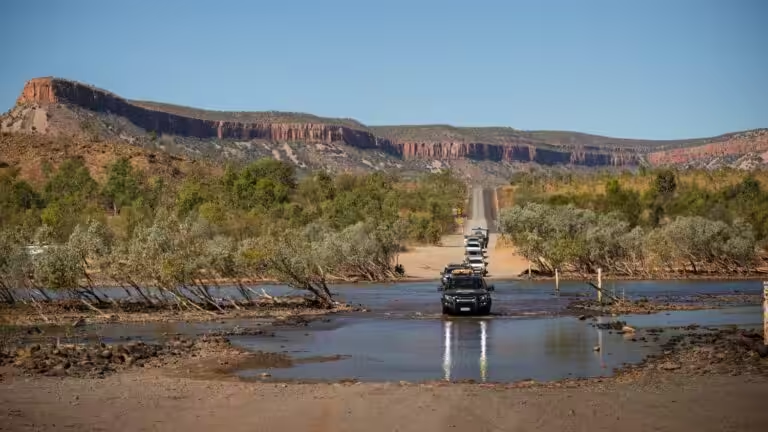
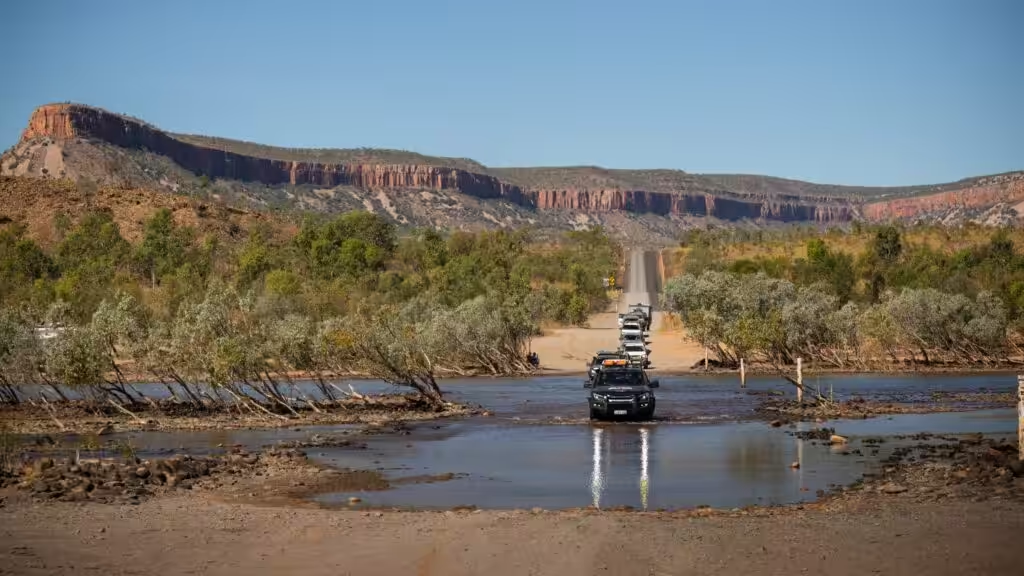
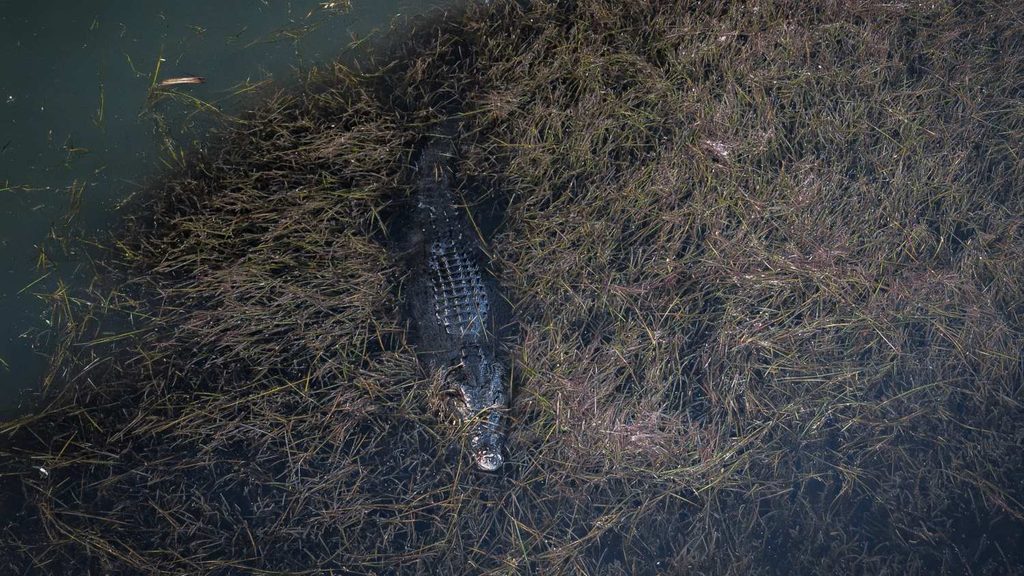
Water crossings are another almost inescapable part of Kimberley touring. Unlike elsewhere in the country, it’s not a good idea to walk these ones first either as future Louis Vuitton handbags (the ones that still have big teeth) are both common and active all through the region. A little local knowledge goes a long way here. Talk to folks at roadhouses and campgrounds about the prevailing conditions and depth and flow of the major crossings. Most people are only too happy to help out.
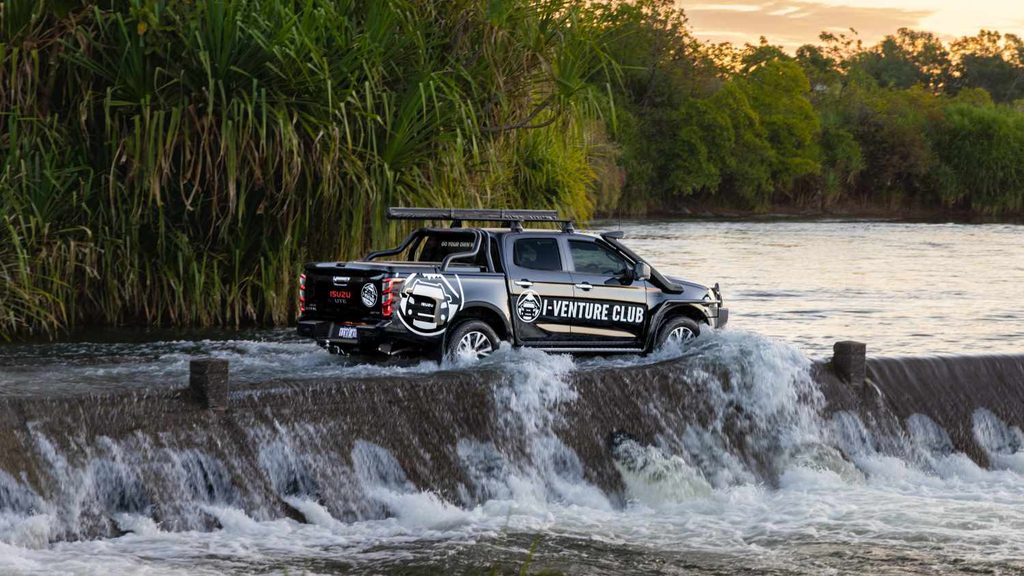
If you own a diesel, fuel generally isn’t a problem to find in the Kimberley, with pretty much all of the major towns stocking it and some of the larger stations like El Questro having it available as well. Expect to pay a chunk more per litre than you would in the big smoke. You may have to plan a bit more carefully with a petrol-powered vehicle, and if you’re running on LPG you’d want to be almost OCD with your fuel stop scheduling (I didn’t see a single servo that sold LPG on my travels).
As a general rule, there is rarely more than 500km between fuelling opportunities along the majority of popular routes. If in doubt, a couple of jerry cans wouldn’t go astray.
Much like fuel, water is fairly available, but given the remote nature of the place, it makes sense to adopt the same rule as when travelling in the desert: Having 10L of water per person per day on hand is considered the benchmark.
If you do become stranded and need to gather water from the riverbank, make sure you are being extremely croc-wise. Complacency can literally be a death sentence out here.
Having a UHF on board is a no-brainer, regardless of whether you’re travelling in a solo vehicle or in a convoy. Being able to communicate with people coming in the opposite direction of a water crossing or warning others of hazards up ahead can be a life-saver.
As for longer-distance communications, the same rules apply as with any remote travel. Starlink has been a game-changer, but if you’re against the idea, a PLB is the minimum and a satphone should really be high up on the priority list as well. The old HF radio is still seen by many as a must-have too.
The permit system for the Kimberley is, frankly, convoluted. The permissions you will secure will largely depend on your specific route. National Parks passes will get you into the majority of places and they can be purchased online before leaving (strongly recommended) from here.
Some remote locations like Mitchell Falls, Dambimangari Country or Kalumburu will require access permits from the local Indigenous communities, and the public access stations like El Questro, Mornington (reopening 2028) and Manning Gorge will also charge an entry fee.
Look, we won’t get on a moral high horse here and say that you should have every vehicle mod under the sun to prepare for the Kimberley. Hell, this bloke did it in a Corolla. That’s an entertaining exception rather than a preparation checklist for towing a loaded camper or caravan. Start with a thorough service and check that both vehicle and trailer are suitable for your planned roads.
Animal strikes are real, so a bull bar is a good idea, plus at least one winch per travelling party is cheap insurance. From there good suspension and tyres can make all the difference on corrugation and when traction is in short supply. Check the air filter regularly in dusty conditions. Remember, a snorkel won’t make your vehicle waterproof or replace its specified wading limits.
As for your trailer, a stone-guard can help reduce stone damage, some quality all-terrains (preferably the same size and mounting pattern as the tow vehicle) will minimise punctures and a hitch that can offer a high degree of misalignment (DO35/45 is my pick) also makes sense.
From there it pays to get under your trailer before leaving and identify anything that could get damaged, like plumbing and wiring, and secure it up and out of the way or make a guard for it.
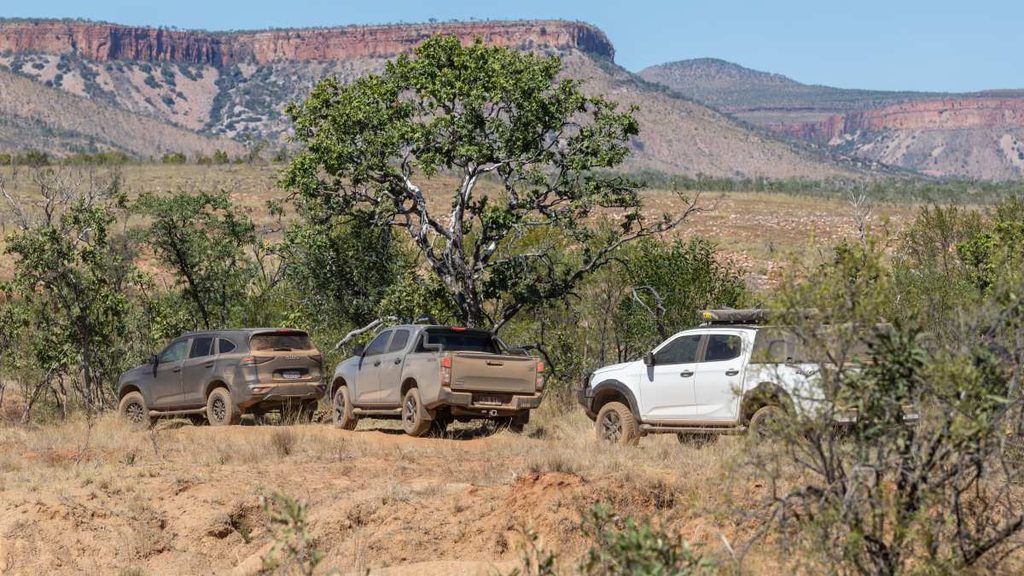
A whole lot of the region is not accessible by vehicle, so take your hiking shoes and water bottle along. If the budget is there, taking a trip via light plane or helicopter adds a whole different layer to the experience which few regret. The same goes for a guided boat tour up the gorges or a thrill ride through Horizontal Falls.
Oh, and swimmers are a must. The number of waterholes is staggering, each one of them more beautiful than the last. However, follow local signage and ranger advice, and never assume a beautiful waterhole is safe to enter.
Anyway, enough explaining from us. The place really does defy description. Make the plans and take the trip. Trust us.