
10 unforgettable things to do at Uluṟu for every budget
Discover the best things to do at Uluru, from free walks and sunsets to unforgettable dining, cultural experiences and adventures.

Published on: 3 August 2026
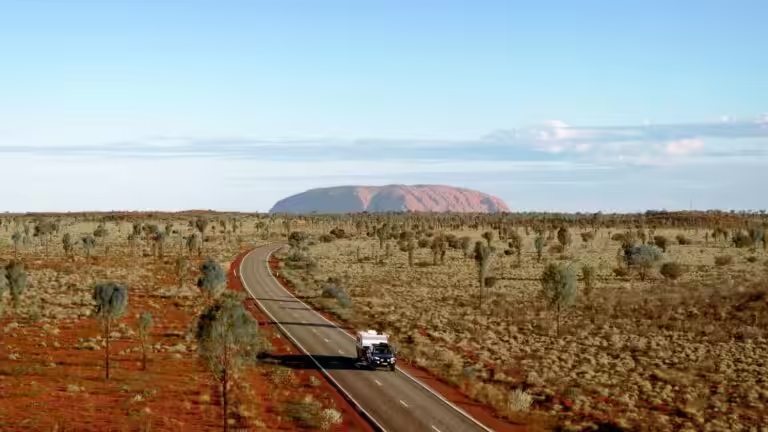
Most visitors come to Uluṟu expecting to watch one sunset, take a few photos and move on. But stay a little longer and you’ll discover that Uluṟu is about so much more than one famous rock.
Whether you’re travelling on a budget or looking to splurge on a memorable experience, these are the best things to do at Uluṟu.
The best things to do at Uluṟu include walking sections of the Uluṟu Base Walk, watching the rock at sunrise and sunset, exploring Kata Tjuṯa and visiting the Cultural Centre.
Travellers on a budget can also enjoy complimentary cultural activities at Ayers Rock Resort or explore Uluṟu by bike if they bring their own. For something extra special, consider Field of Light, Wintjiri Wiṟu, an outdoor dining experience, a camel ride or a scenic helicopter flight.
Allow four or five nights to experience a good mix of free and paid activities without rushing.
| Experience | Cost |
|---|---|
| Uluṟu Base Walk | Free with park pass |
| Sunrise and sunset | Free with park pass |
| Kata Tjuṯa | Free with park pass |
| Cultural Centre | Free with park pass |
| Ayers Rock Resort activities | Free for resort & campground guests |
| Field of Light | Paid |
| Wintjiri Wiṟu | Paid |
| Signature dining | Paid |
| Cycling around Uluṟu | Free with park pass and your own bike or paid hire |
| Camel, Segway or helicopter experience | Paid |
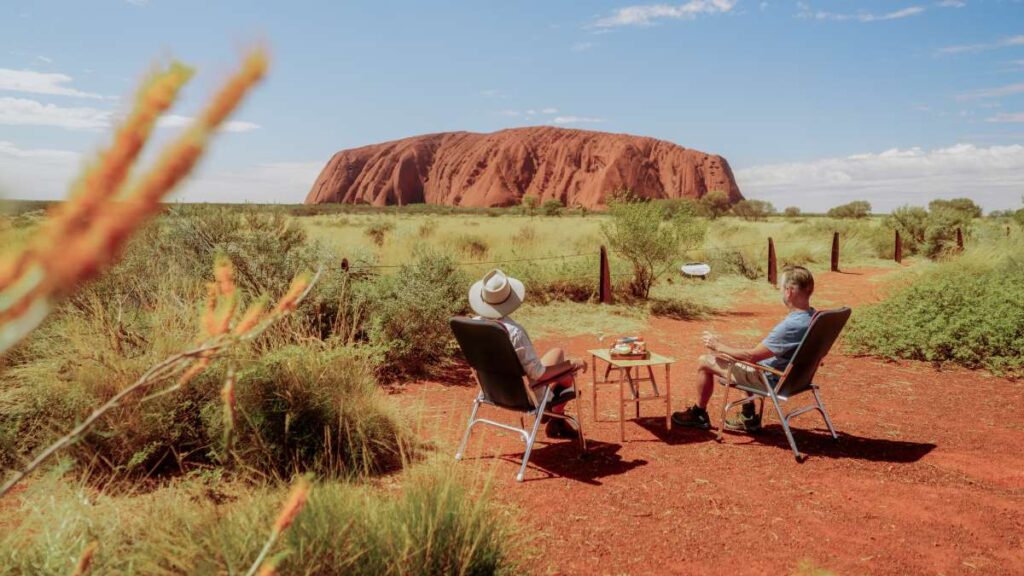
One of the best ways to experience Uluṟu is on foot, but don’t let the 10.6 km distance of the full Base Walk put you off. You don’t have to complete the entire circuit to appreciate the scale, beauty and cultural significance of Australia’s most iconic rock.
Several shorter walks allow you to experience different sides of Uluṟu at your own pace. The Mala Walk is one of the most popular, taking you to the dramatic Kantju Gorge while sharing stories of the Mala people and Tjukurpa (traditional law and stories). Along the way, you’ll discover caves, ancient rock art and interpretive signs that provide a deeper understanding of Aṉangu culture.
A free ranger-guided Mala walk is also available. It departs from the Mala Walk Carpark daily at 8 am between October and April, and 10 am from May to September.
The Kuniya Walk is another excellent option. This short return walk leads to the tranquil Mutitjulu Waterhole, an important cultural site surrounded by towering rock walls. It’s also home to more fascinating rock art and stories connected to the Kuniya ancestral python.
One of my favourite things about the Uluṟu Base Walk is that Uluṟu is not hidden behind barriers. At times, you can walk right up and touch the base along the public walking track. Small fences are placed in various spots to protect ancient rock art and sacred cultural sites from damage, but for the most part, it’s wonderfully accessible.
For the most enjoyable experience, set out early in the morning. The cooler temperatures, softer light and quieter walking tracks make sunrise one of the best times to explore Uluṟu on foot before the desert heat builds.
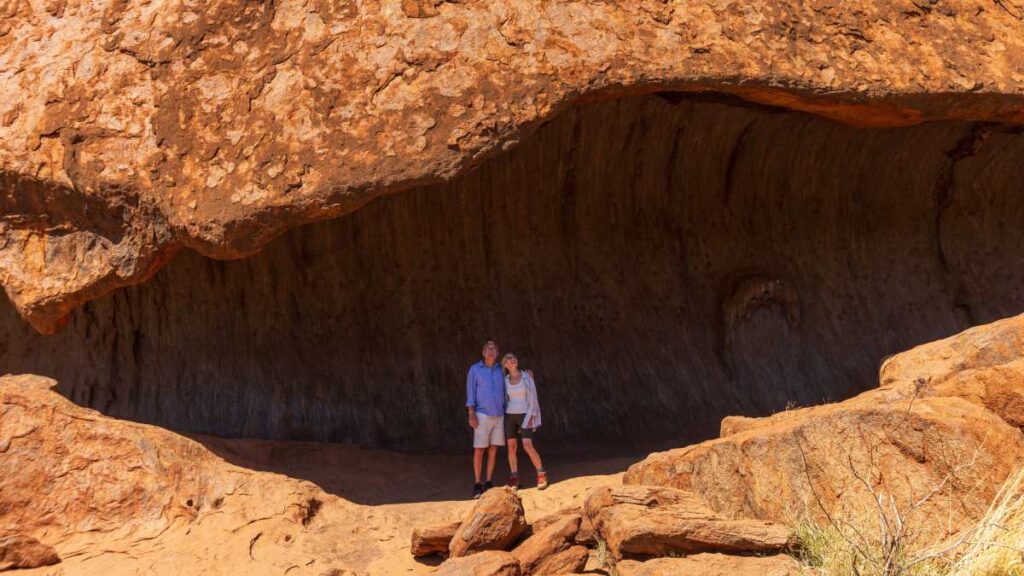
No visit to Uluṟu is complete without seeing it at both sunrise and sunset. While the sunset crowds tend to get all the attention, sunrise is worth setting an early alarm for here (even if you’re not a morning person).
The early morning is typically much quieter and there’s a real sense of stillness as the first light gradually reveals the landscape. As the sun climbs higher, Uluṟu slowly transforms through shades of deep purple, red and burnt orange, making it a spectacular time for photography.
Sunset delivers a completely different experience. As the light fades, the rock glows with rich red and amber tones before eventually disappearing into the twilight. It’s the more popular of the two, so expect larger crowds, particularly during peak travel periods.
Tip. For a quieter Uluṟu sunset experience, watch the sunset from the sunrise viewing area. Instead of watching Uluṟu glow red, you’ll see the changing colours of the Central Australian sky silhouetting the rock as the sun sets beside it.
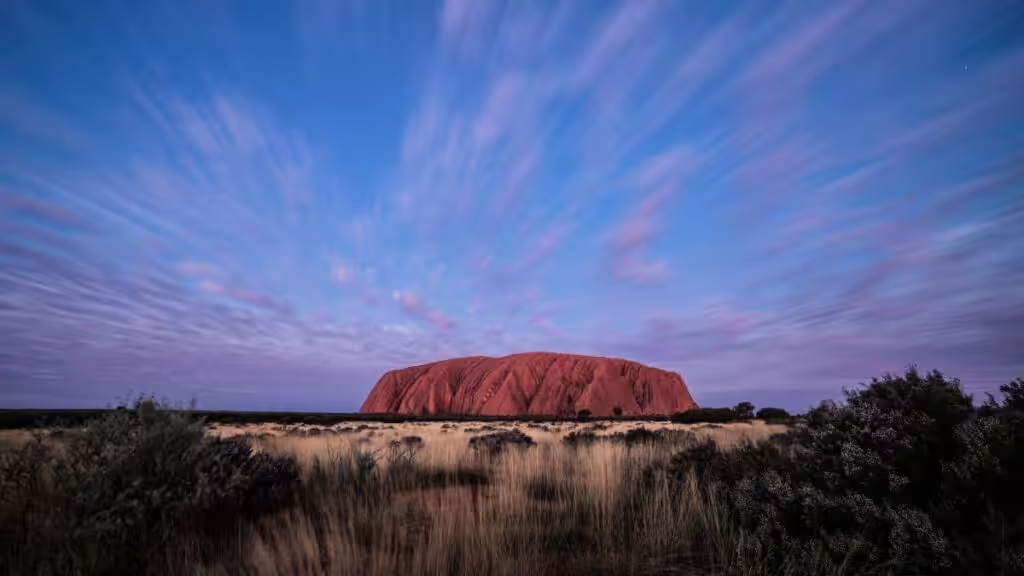
While Uluṟu may be the headline attraction, don’t make the mistake of skipping Kata Tjuṯa. Located around 40 minutes from Ayers Rock Resort, this spectacular collection of 36 ancient rock domes offers a completely different experience and is often the highlight of a visit to the Red Centre. Many visitors are surprised to discover that the tallest dome stands at 546 metres, towering over Uluru by 198 metres.
The most famous walk is the Valley of the Winds, a challenging 7.4 km circuit that winds between the towering domes and rewards hikers with breathtaking views from the Karu and Karingana Lookouts. If you’re looking for something shorter and easier, the Walpa Gorge Walk is an excellent alternative. This one-hour return walk follows a natural creek bed into a dramatic gorge, where the sheer rock walls create a surprisingly cool and peaceful environment.
Beyond the walks themselves, Kata Tjuṯa is a place to slow down and appreciate the changing colours, unique geology and deep cultural significance of the landscape. Like Uluṟu, Kata Tjuṯa is a sacred place for the Aṉangu and holds an important place in Tjukurpa (traditional law and stories).
While some areas are culturally restricted, the designated walking trails and viewing areas offer an unforgettable way to experience this remarkable landscape respectfully. Like Uluṟu itself, there are sections where you can walk right beside the rock formations and touch the ancient domes with your hands.
If time allows, plan to come back at sunset as Kata Tjuṯa puts on its own natural show. Many travellers arrive expecting Uluṟu to be the highlight of their trip, only to leave saying Kata Tjuṯa was the experience they enjoyed the most.
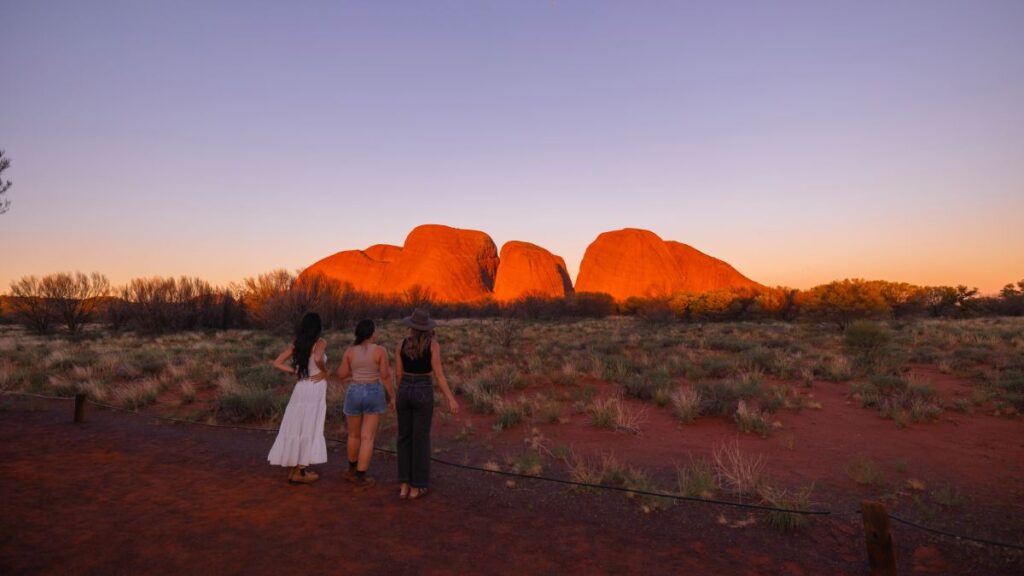
If you only have time for one stop before exploring Uluṟu, make it the Cultural Centre. It might not be the reason you visit Uluru, but it could easily become one of the most rewarding parts of your visit.
Located inside Uluṟu-Kata Tjuṯa National Park, it’s included with your National Park pass and offers the perfect introduction to the landscape, its history and the world’s oldest continuing living culture.
The Cultural Centre helps visitors understand Tjukurpa, the foundation of Aṉangu culture that encompasses traditional law, spirituality, creation stories and the deep connection between people and Country. As you explore the exhibits, you’ll gain a greater appreciation of why Uluṟu and Kata Tjuṯa are far more than spectacular natural landmarks; they are living cultural landscapes that continue to hold immense significance for the Aṉangu today.
There is a cafe here (the only place to buy food and drink in the national park) and outdoor picnic shelters with gas barbecues. It’s also a great place to pick up books, artwork and locally made souvenirs before continuing your journey.
Allow one to two hours to explore the exhibits, galleries and information displays before continuing your journey. It’s time well spent and will add much greater meaning to every other experience you have during your visit.
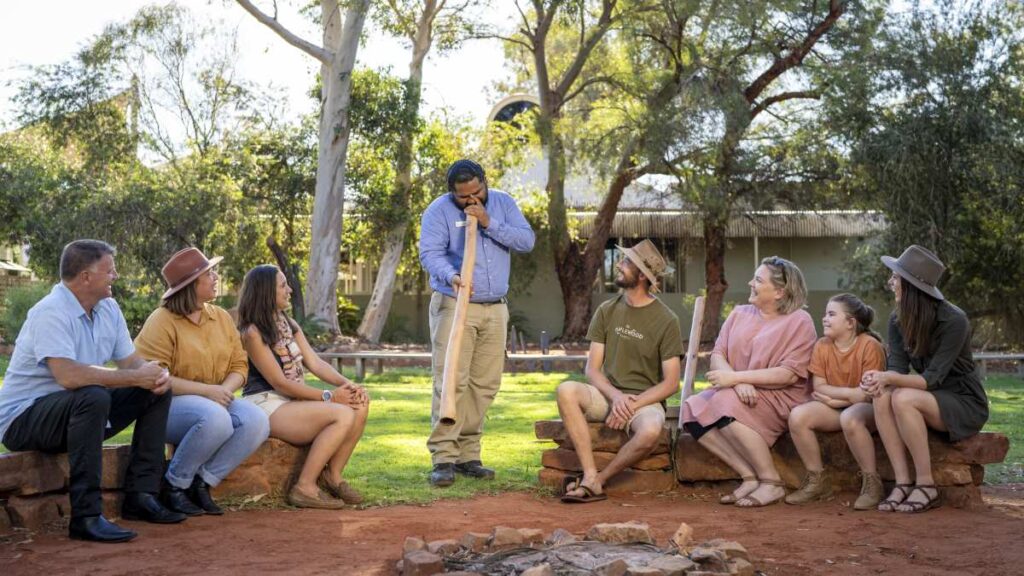
One of the biggest surprises for many visitors about staying at Ayers Rock Resort is just how many complimentary experiences are included for guests. Between exploring Uluṟu and Kata Tjuṯa, you can fill your afternoons and evenings with cultural activities, guided walks and hands-on experiences without spending an extra cent.
Learn about native plants and traditional uses on a Guided Garden Walk, hear fascinating stories about Aboriginal culture and life in Central Australia during Bush Yarns, or discover the history and significance of one of Australia’s most recognisable instruments at the Didgeridoo Workshop.
Families can enjoy the Paint Your Australian Animal activity, while food lovers shouldn’t miss the Bush Food Experience, where you’ll learn about native Australian ingredients and the important role they’ve played in Aboriginal culture for thousands of years.
Art enthusiasts can browse the Gallery of Central Australia (GoCA) and the Lawn Gallery, showcasing works by local and Indigenous artists, while the resort also hosts a range of rotating experiences throughout the year, from astronomy sessions and movies to cultural presentations and special events.
Be sure to check the daily activities schedule when you arrive, as times and experiences vary throughout the week. It’s a fantastic way to learn more about the Red Centre while making the most of your stay at Ayers Rock Resort.

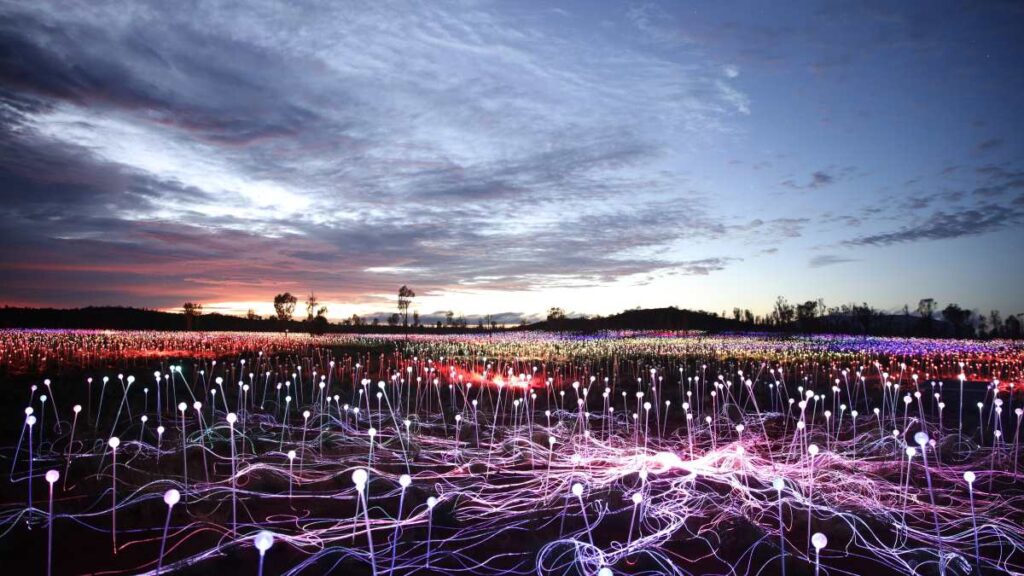
One of the most photographed experiences in the Red Centre, Field of Light transforms the desert into a sea of colour as more than 50,000 illuminated glass stems gently glow beneath the night sky. Created by internationally acclaimed British artist Bruce Munro, the award-winning installation has become one of the destination’s most iconic experiences.
There are several ways to experience Field of Light. The evening experiences allow you to wander through the illuminated installation beneath a blanket of stars, creating an unforgettable contrast against the silhouette of Uluṟu. If you’re an early riser, the Sunrise Field of Light experience offers something completely different, with the glowing stems gradually fading as the first rays of sunlight illuminate the desert and Uluṟu emerges from the darkness.
If you’re watching your budget, the Field of Light General Admission experience is a great option, foregoing the dune-top viewing, canapés and drinks.
Whether you’re visiting for the photography, the atmosphere or simply to experience one of Australia’s most unique outdoor art installations, Field of Light is well worth adding to your itinerary. Just be sure to bring your camera as it’s an experience you’ll want to remember long after you’ve left the Red Centre.
Note: While originally intended as a temporary exhibition, Field of Light has been extended several times and is currently scheduled to remain at Uluṟu until the end of 2029.
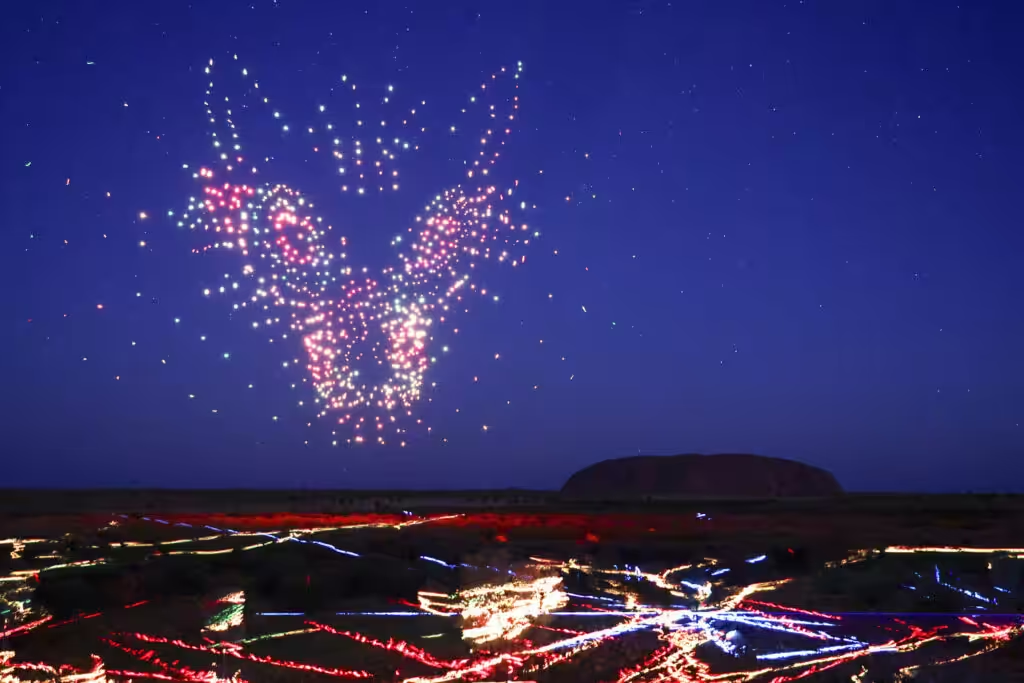
Set on a private dune with uninterrupted views towards Uluṟu, hundreds of choreographed drones illuminate the night sky, accompanied by projections, lasers, traditional music and narration. Together, they bring to life a chapter of the Mala story, an important part of Aṉangu Tjukurpa (traditional law and stories), creating an experience unlike anything else in Australia. It’s an experience that blends ancient storytelling with modern technology in a way that’s both respectful and unforgettable.
Whichever option you choose, Wintjiri Wiṟu is much more than a light show. It’s a powerful blend of culture, storytelling and innovation that leaves a lasting impression long after the final drone disappears into the desert sky.
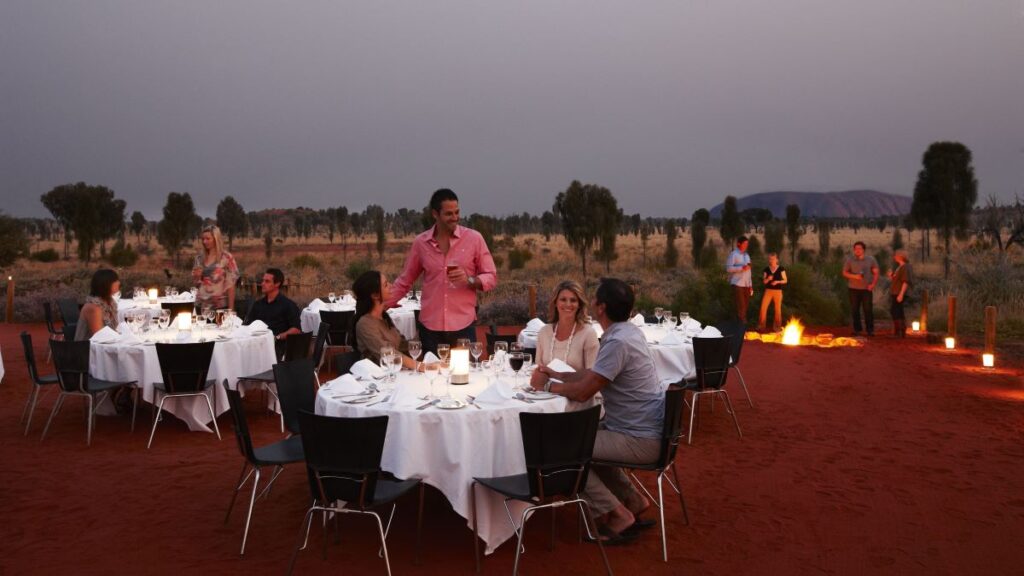
Watching the sun set over Uluṟu is memorable enough, but sharing a meal beneath the stars makes the experience even more special. Ayers Rock Resort offers several signature dining experiences, each with its own unique style.
If it’s your first visit to Uluṟu, Sounds of Silence is a classic choice. After canapés and sparkling wine overlooking the National Park, guests enjoy a bush tucker-inspired buffet beneath the stars, followed by a fascinating guided tour of the southern night sky. It’s a relaxed, social evening that’s become one of Australia’s most iconic outdoor dining experiences.
For couples celebrating a special occasion, Tali Wiṟu is the resort’s most exclusive offering. Limited to a small number of guests, this intimate open-air dining experience features a seasonal four-course menu showcasing premium Australian ingredients, matched with fine wines and personalised service in a spectacular desert setting.
If you’d like to combine two of Uluṟu’s most famous experiences into one evening, the Field of Light Uluru Dinner is hard to beat. After enjoying a three-course meal inspired by native Australian flavours, you’ll have the opportunity to explore Bruce Munro’s spectacular Field of Light installation as darkness falls across the desert.
Whichever experience you choose, dining beneath the vast Outback sky with Uluṟu as your backdrop is one of the most memorable ways to end a day in Australia’s Red Centre.
Exploring Uluṟu by bike is a fantastic way to experience the landscape at your own pace. With flat terrain and dedicated sections of the Base Walk to follow, cycling allows you to cover more ground than walking while still taking in the changing colours, ancient rock formations and ever-changing perspectives of the monolith.
Ayers Rock Resort offers bike hire for adults and children with return transfers to Uluṟu, making it an easy option if you haven’t brought your own bicycles. You can stop along the way to explore the Mala Walk, Kuniya Walk, Mutitjulu Waterhole and other points of interest, spending as much or as little time at each location as you like.
If you’re travelling in a caravan, camper trailer or motorhome and already have bikes with you, even better. Simply bring them along and, with a valid Uluṟu-Kata Tjuṯa National Park pass, you can enjoy the same experience without paying for bike hire.
For the most enjoyable ride, set off early in the morning when temperatures are cooler and the soft light makes for spectacular scenery and photographs.

After exploring Uluṟu on foot, why not experience it from an entirely different perspective?
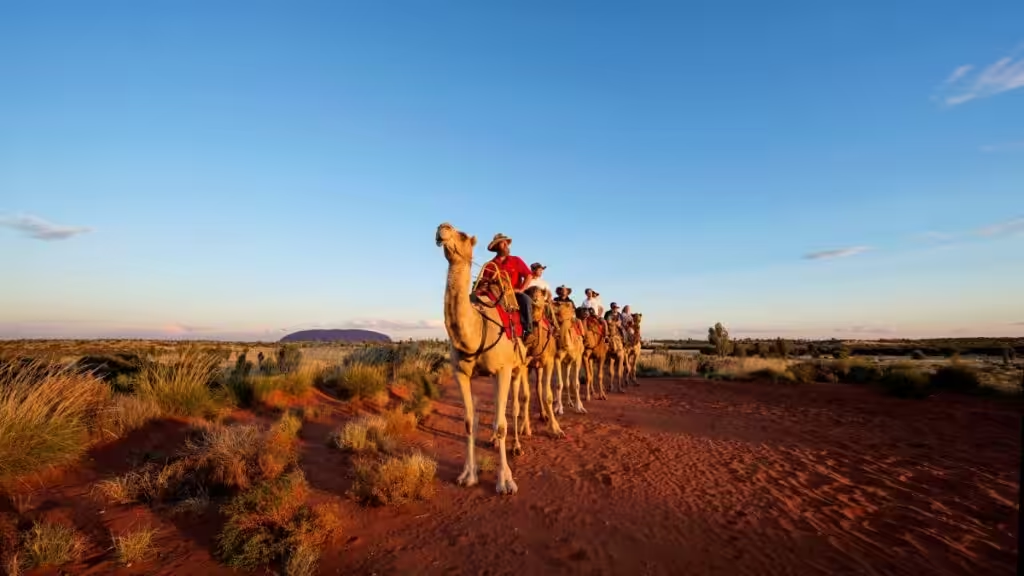
Whether you’re gliding across the desert on a Segway, riding alongside friendly camels or soaring high above the Red Centre in a helicopter, these unique experiences offer unforgettable views of Australia’s most iconic landmark.
One of the most popular options is a camel ride. The Camel Express experience is a shorter introduction that’s perfect if you’re travelling with limited time, allowing you to enjoy the peaceful desert landscape from the back of one of Australia’s famous cameleers.
For something a little different, the Uluṟu by Segway tour combines a guided section of the Base Walk with an off-road Segway adventure, giving you the chance to cover more ground while learning about the geology, history and cultural significance of the area from an experienced guide.
If you’re looking for the ultimate perspective, it’s hard to beat a scenic helicopter flight. Seeing Uluṟu and the 36 domes of Kata Tjuṯa from the air provides a completely different appreciation of their immense scale and the vastness of the surrounding desert. It’s a spectacular way to finish your visit and one you’ll remember long after you’ve returned home.
Whichever experience you choose, seeing Uluṟu from a different angle is the perfect reminder that there’s far more to this remarkable destination than simply watching the sunset.
While it’s possible to visit Uluṟu in a single day, you’ll barely scratch the surface. Between exploring Uluṟu and Kata Tjuṯa, enjoying the complimentary experiences at Ayers Rock Resort, tackling the walks, and fitting in unforgettable experiences like Wintjiri Wiṟu or Field of Light, it’s easy to fill four or five nights.
If you’re planning your own adventure, we’ve put together a 5-day Uluṟu-Kata Tjuta National Paqrk itinerary that shows you how to experience the very best of the Red Centre without feeling rushed. It includes a day-by-day guide covering the major attractions, cultural experiences and some of the hidden gems that many visitors miss.
A little planning goes a long way and will help you make the most of your visit.
Accommodation at Ayers Rock Resort can book out in advance, particularly during the cooler months and school holidays.
While many of the experiences in this guide are free, you’ll still need a valid National Park pass to access Uluṟu, Kata Tjuṯa and the Cultural Centre. At the time of writing, a three-day pass costs $38 per adult, while children under 18 are free. The pass can be purchased online before you arrive or at the park.
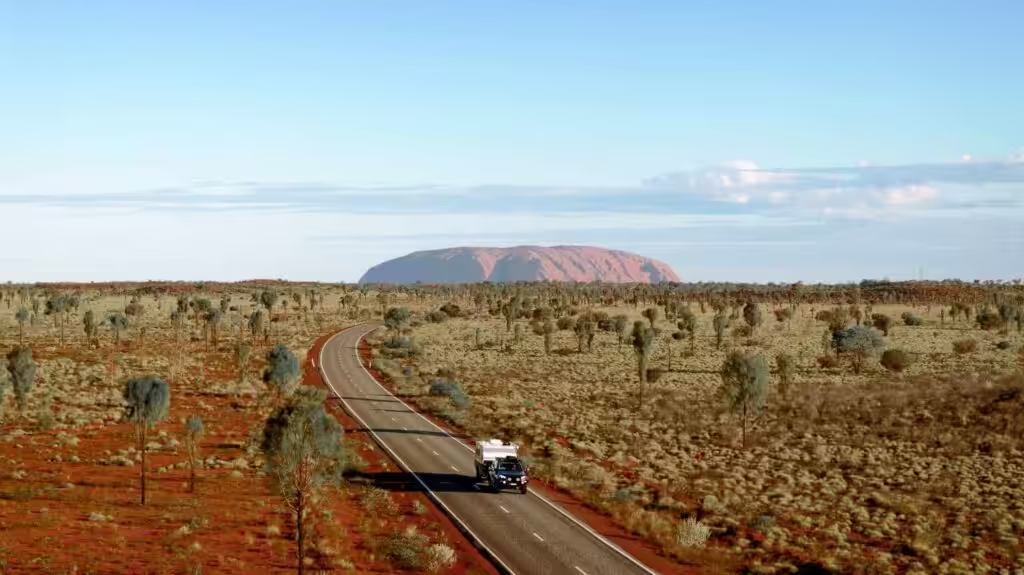
Travelling in a 4WD? Consider taking the scenic route instead of heading straight down the highway. Our guide to the ultimate 4WD road trip to Uluṟu shows you how to turn the journey into part of the adventure, with stops including the West MacDonnell Ranges, Palm Valley, Kings Canyon and the iconic Mereenie Loop Track.
Whether you’re watching the first rays of sunlight hit Uluṟu, hiking through the towering domes of Kata Tjuṯa or enjoying dinner beneath a sky filled with stars, there’s no shortage of unforgettable ways to experience Australia’s spiritual heart.
The best part is that you don’t need to spend a fortune to make incredible memories. Mix a few of the free experiences with one or two special treats, allow yourself plenty of time to explore, and you’ll leave with a far deeper appreciation of the Red Centre than a quick stop for sunset could ever provide.