
How many days do you really need at Uluṟu? Why five days is the sweet spot
Planning an Uluṟu itinerary? Discover why five days is the ideal stay, with a detailed guide to Uluṟu, Kata Tjuṯa and Ayers Rock Resort.

Published on: 27 July 2026
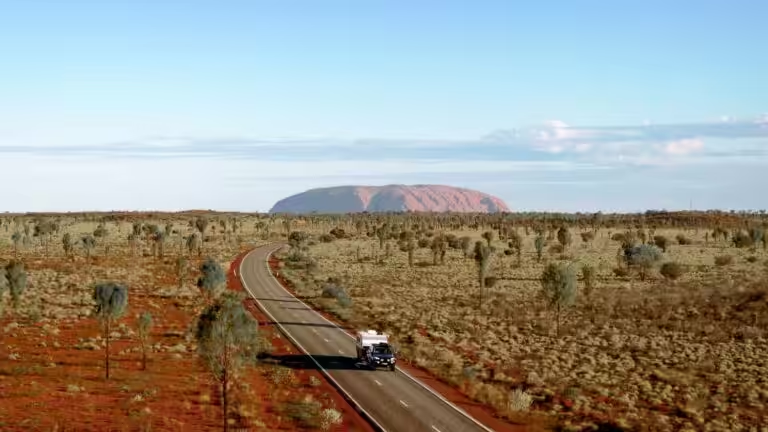
Most RV travellers spend years dreaming about visiting Uluṟu. But after driving thousands of kilometres to get there, many make the same mistake… they arrive in the afternoon, have a little walk around, watch the sunset, stay overnight and leave the next day.
The reality is that Uluṟu deserves far more than a quick stop. Between the walks, cultural experiences, Kata Tjuṯa, sunrise and sunset viewing areas, and the immersive storytelling experiences at Ayers Rock Resort, five days is about the right amount of time to appreciate what Australia’s Red Centre has to offer.
Let’s not sugarcoat it. Any journey to Central Australia by road is a lengthy road trip adventure. Fortunately, it’s also an amazing journey full of truly iconic landscapes and moments (we’ll be writing about this soon… stay tuned), but arriving at Uluṟu Kata-Tjuṯa National Park is the headline act, so you need to allow enough time to fully experience it.
In a nutshell, if you only stay one night, you’ll miss Kata Tjuṯa and the best ways of experiencing Uluṟu.
So how long should you stay? Well, after making this journey across Australia twice now to experience Uluṟu, I reckon five days is the sweet spot.
What many don’t consider when planning their Uluṟu trip is that by the time you reach Uluṟu-Kata Tjuṯa National Park, you’ve likely covered thousands of kilometres and need a break from the road for a few days. Regardless of whether you’ve rushed it or had a slow journey, Uluṟu is not just another stop on the itinerary. It’s the payoff.
Five days gives you time to slow down. It also gives you time to understand that Uluṟu isn’t just something to look at and to discover that it’s a living cultural landscape that reveals a little more of itself each day you spend here.
Also, from a practical point of view, five days gives you a bit more flexibility with the weather.
After the long drive into Yulara, today is all about slowing down.
Check into Ayers Rock Resort Campground and get set up. Both powered and unpowered sites are available and check-in is from 11 am.
With the afternoon free, walk around the campsite, treat yourself to an Australian Native High Tea or take advantage of the completely free experiences available at Ayers Rock Resort. You might join a Guided Garden Walk to learn about native plants and bush foods, hear stories of Aboriginal culture during Bush Yarns, discover the significance of the didgeridoo at the Didgeridoo Workshop or enjoy the Paint Your Own Australian Animal activity, which is especially popular with families.
Your first night at Uluṟu deserves a real wow moment, and there are few better introductions to the Red Centre than the Wintjiri Wiṟu Sunset Dinner. This isn’t simply dinner with a view. Set in an open-air desert theatre overlooking Uluṟu and Kata Tjuṯa, the evening begins with sunset drinks, canapés and a gourmet hamper showcasing native Australian ingredients before darkness falls and the real spectacle begins.
More than 1,200 choreographed drones, together with lasers, projections and a powerful soundtrack, illuminate the desert sky to bring a chapter of the ancient Mala story from Kaltukatjara to Uluṟu to life. Created in partnership with Aṉangu Traditional Owners, Wintjiri Wiṟu is a world-class cultural storytelling experience unlike anything else in Australia.

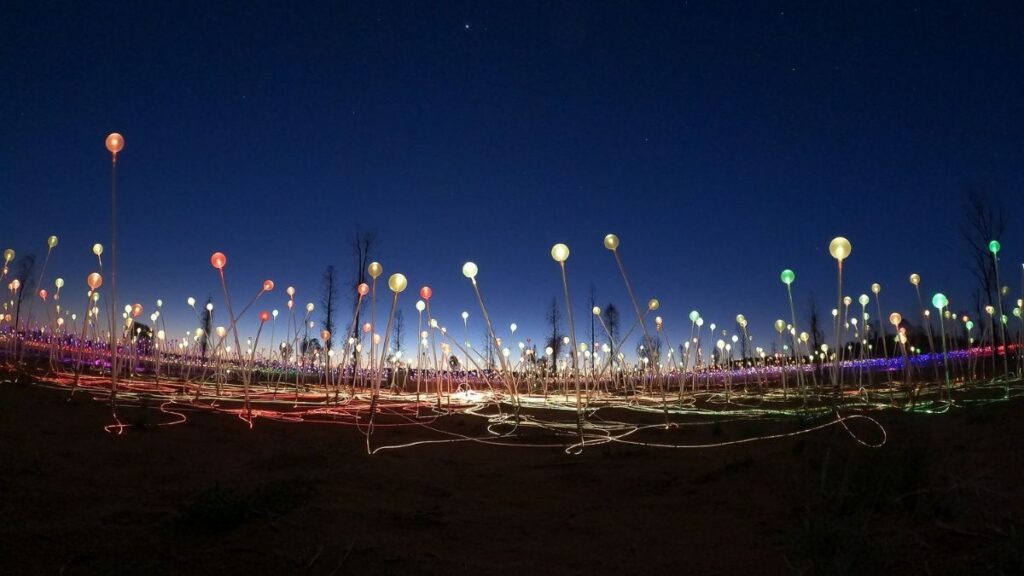
Start the day nice and early by experiencing the famous Field of Light at Sunrise. Created by internationally renowned artist Bruce Munro, the installation celebrates its 10th anniversary in 2026 and has now been extended until at least the end of 2029. Inspired by desert wildflowers blooming after rain on Aṉangu Country, its 50,000 illuminated stems have become one of Australia’s most iconic tourism experiences.
You’ll get to wander among the lights, and just before the sun appears above the horizon, you’ll be welcomed onto a raised viewing area to take in the view with a warm tea, coffee, or hot chocolate in hand.
Alternatively, if the thought of rising before sunrise is just a ‘nope’ in your books, take the free ranger-guided Mala Walk at Uluṟu instead. Starting at 8 am and taking around 90 minutes, this two-kilometre wheelchair-accessible walk begins at the Mala Car Park and is included in the cost of your National Park Pass.
Speaking from experience though, the Field of Light Sunrise experience is worth getting up early for.
So, when you’ve consumed enough caffeine to recover from your early start, enter Uluṟu-Kata Tjuṯa National Park and spend the next three days exploring Aṉangu Country, where every walk, waterhole and rock formation has stories and cultural significance stretching back thousands of years.
Here you can visit the world-class Cultural Centre before embarking on what is my personal favourite way to experience Uluṟu… by pushbiking around it! If you don’t have your own, you can easily hire both adult and children’s bikes from near the Cultural Centre carpark.
The cycle track around Uluṟu is self-guided and approximately 15 kilometres long. Because the track is flat, it’s easily completed in under three hours and there’s plenty of time to stop and look at the various sites.
After your early start, it’s worth allowing some time to rest back at camp in the afternoon so you can enjoy the evening without stifling multiple yawns.
Speaking of the evening, if you’re not in the mood to rustle yourself up some grub in your RV, there are plenty of dining options available at the resort. Other unique dining experiences available at Ayers Rock Resort include:

While Uluṟu often steals the spotlight, many visitors are surprised to discover that Kata Tjuṯa, which is around 30 kilometres away as the crow flies, is just as awe-inspiring.
With 36 domed rock formations, the tallest measures 546 metres, towering over Uluṟu by 198 metres. It’s no surprise that Kata Tjuṯa translates to “many heads” in the local Pitjantjatjara language. Like Uluṟu, it holds profound cultural and spiritual significance for the Aṉangu, the Traditional Owners of Uluṟu-Kata Tjuṯa National Park.
It’s also one of the reasons it’s worth allowing a full day here rather than trying to squeeze Kata Tjuṯa into a quick stop. The more time you spend walking through the landscape and learning about its significance to the Aṉangu, the more rewarding the experience becomes.
While Uluṟu offers excellent visitor facilities and iconic viewing areas, Kata Tjuṯa feels quieter and more immersive. With fewer developed facilities and fewer visitors, it’s easier to feel completely surrounded by nature, making walks like the Valley of the Winds one of the most memorable experiences in the Red Centre.
Speaking of walks, it’s the best way to experience Kata Tjuṯa, allowing you to get up close and touch the huge domes as you hike through the formed paths.
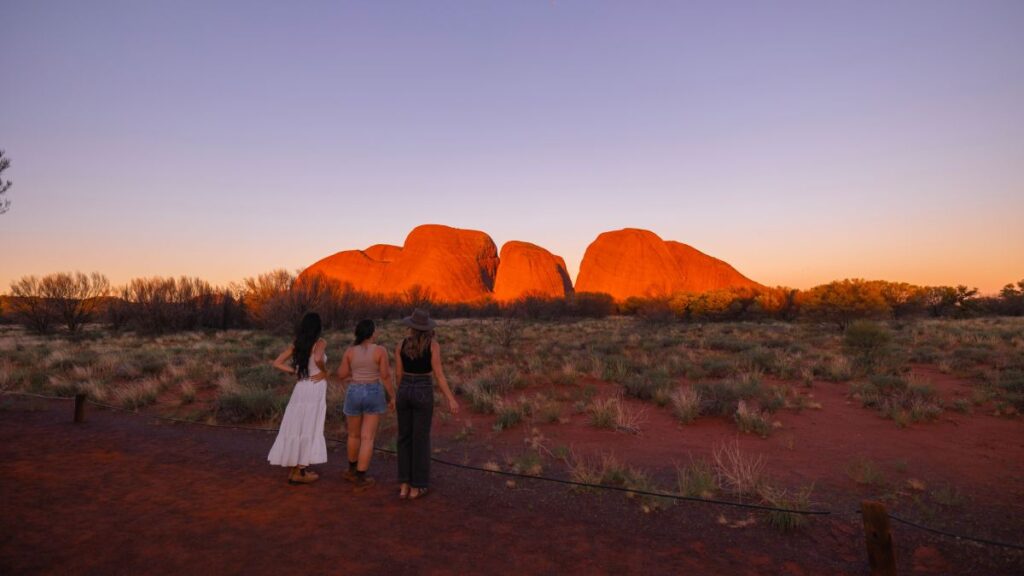
The Valley of the Winds Walk at Kata Tjuṯa is the more strenuous of the two main walks. It’s a grade four, 7.4-kilometre walk that takes around three to four hours and boasts two stunning lookouts. You can also just walk to the Karu Lookout, the first lookout at only 1.2 kilometres from the parking lot, before returning if you’re not feeling up to it.
The grade 3 Walpa Gorge Walk is the easier of the two at 2.6 kilometres return and a gentle rise. The trail winds through a lush valley between two of the domes and takes only around an hour return.
Sunrise and sunset are worth the effort here too. Early risers catching the sunrise view from the Kata Tjuṯa Sunrise Dune Viewing Area will get the added bonus of seeing Uluṟu on the horizon. Those catching sunset from the Kata Tjuṯa Sunset Viewing Area will appreciate the changing colours of the domes and the fact that it’s a little quieter than an Uluṟu sunset.
There’s no need to rush back into sightseeing this afternoon. Use the time to return to the campground for some downtime or enjoy another of the complimentary resort activities.
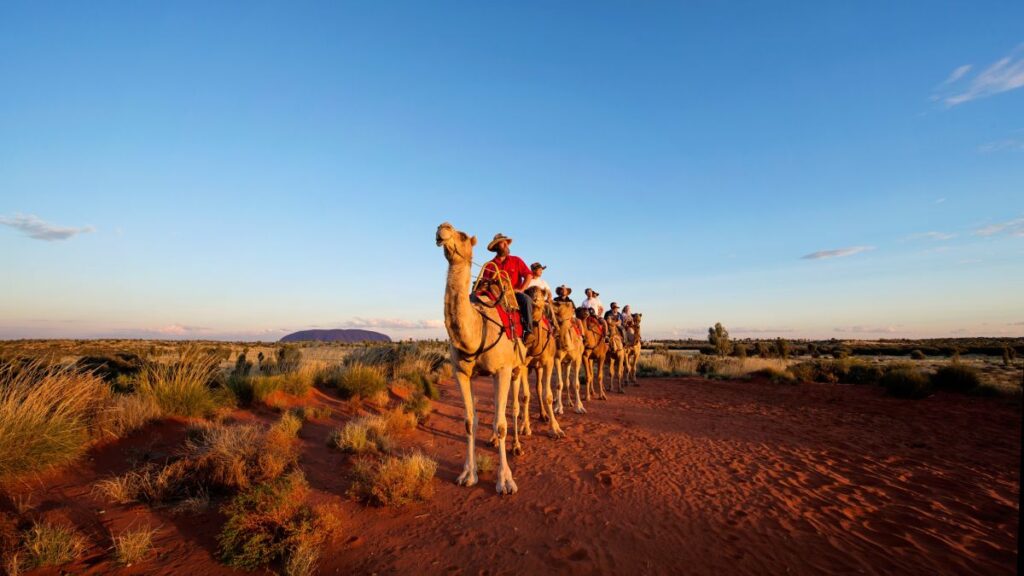
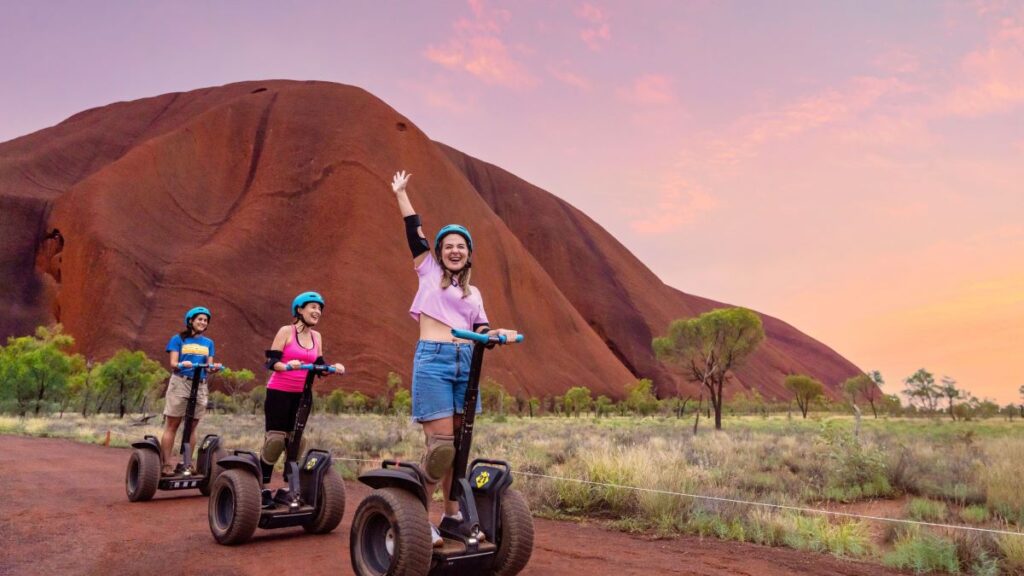
If you caught the Kata Tjuṯa sunrise, you might like to spend this evening doing something a little different. Take in the sunset from the back of a camel or learn more about our vast skies on the Outback Sky Journeys stargazing tour. Alternatively, those who enviously watched others zip by on a Segway at Uluṟu the day before can now experience it for themselves on the Sunset Segway tour, which includes a sunset picnic from a unique viewpoint.
Your final day inside Uluṟu-Kata Tjuṯa National Park is your chance to experience anything you haven’t seen, or simply enjoy Uluṟu one more time.
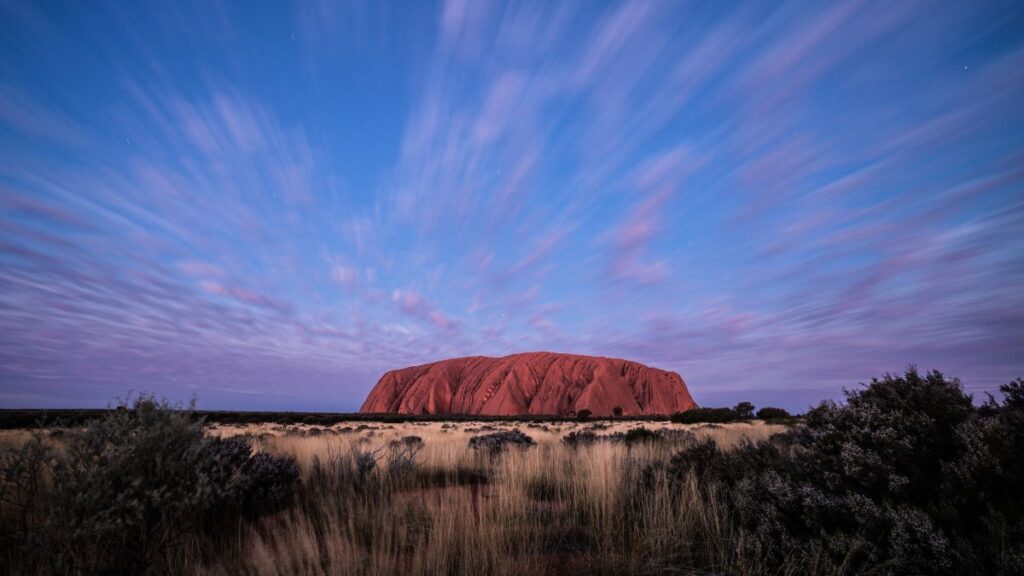
If you’ve only viewed sunset so far, make the effort to experience sunrise. The changing colours as the first light reaches the rock are completely different and well worth the early alarm.
This is also a great opportunity to complete sections of the Uluṟu Base Walk on foot, revisit favourite viewpoints or spend more time at the Cultural Centre learning about Aṉangu culture, Tjukurpa (traditional law and stories) and the deep connection between the Aṉangu and Country before returning to Uluṟu with a completely different perspective.
Because you’re not trying to squeeze everything into a whirlwind visit, you’ll find yourself slowing down and appreciating the quieter moments that make Uluṟu so special.
This is also a good afternoon to simply enjoy the resort. Cool off with a swim in the campground pool, browse the Gallery of Central Australia, stop for a coffee and something sweet at Kulata Academy Café or pick up a few supplies from the IGA before your next leg of the journey. If you’re travelling for an extended period, it’s also the perfect opportunity to catch up on the laundry while enjoying a slower pace for a change.
If you’re up for yet another sunset, pack yourself a picnic dinner and experience it a little differently by viewing the sunset from the Uluṟu Sunrise Viewing Area. It’s a completely different natural light show, with Uluṟu cast into silhouette against the Central Australian sky, which, by the way, is not shy about showing off. It’s also usually a less crowded experience.
Alternatively, if you’re still wanting to experience something truly memorable, consider an extended helicopter tour over Uluṟu and Kata Tjuṯa. Or, if you’re happy to keep things low-key, enjoy dinner at one of the resort restaurants before catching the live music at the Outback BBQ & Bar and reflecting on an unforgettable few days in the Red Centre.
There’s no need to race away. Before packing up, consider treating yourself to one final unforgettable experience with Sunrise Journeys. Set against the backdrop of Uluṟu at first light, this immersive dawn experience combines laser projections, music and storytelling inspired by the artwork of three local Aṉangu women artists.
As the desert slowly awakens around you, you’ll enjoy a uniquely peaceful way to connect with Country before sitting down to a native-inspired breakfast. It’s a memorable way to farewell the Red Centre before beginning the drive home.
Back at the campground, check-out isn’t until 10 am, giving you plenty of time to pack up without feeling rushed.
Regardless of where you’re heading next, it’s worth using the dump point, refuelling and stocking up on supplies before you hit the road so you don’t get caught short before your next stop.
Whether you’re heading towards Kings Canyon, Alice Springs or following Australia’s Longest Shortcut through to Laverton in Western Australia, you’ll leave knowing you experienced Uluṟu properly rather than simply ticking it off the list.
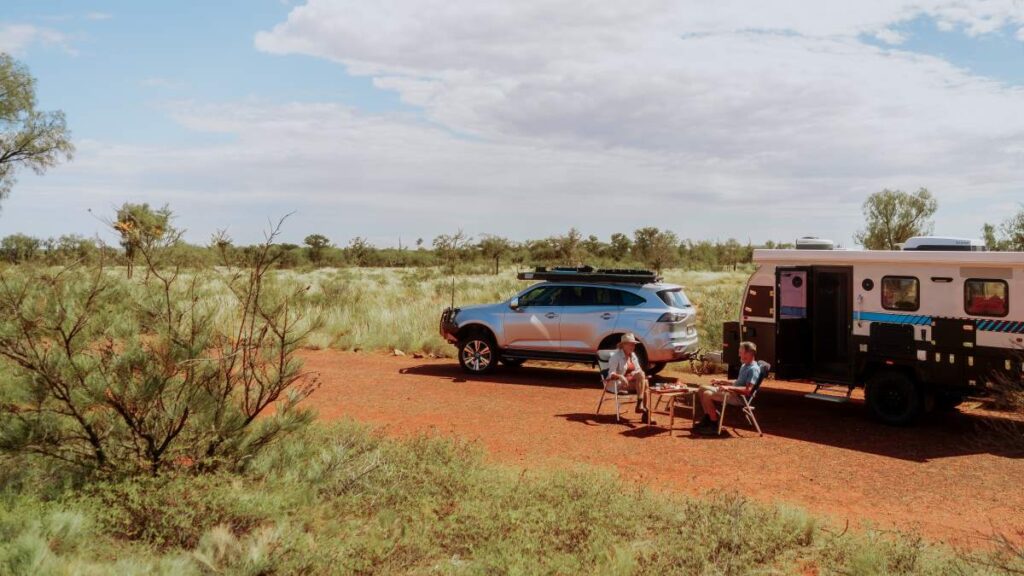
Camping directly inside Uluṟu-Kata Tjuṯa National Park is not permitted and the Ayers Rock Resort Campground is the most convenient and closest established base at just 20 kilometres away.
We’ve stayed at Ayers Rock Resort Campground twice now, and while it’s not the cheapest campground you’ll ever find, it’s also not as expensive as an East Coast caravan park. With a swimming pool, powered and unpowered sites, and the usual facilities you’d expect from a quality campground such as a laundry, clean showers and toilets, and a nearby dump point, the pricing is fair given its remote and unique location. There’s also a free shuttle bus that takes guests around the resort.
If at this point of your trip you want a break from caravan and camping (no judgement, we’ve all been there), Ayers Rock Resort also offers accommodation to suit a range of budgets. Alongside its hotels and self-contained apartments, the Outback Lodge is the resort’s budget-friendly hostel-style option, with shared dormitories and private rooms available. It’s a great choice for travellers looking for affordable accommodation without missing out on the convenience of staying close to Uluṟu.
Other established campgrounds include Curtin Springs Wayside Inn, a working cattle station around an hour’s drive away, and Kings Creek Station, at least a three-hour drive from Uluṟu.

Admission to Uluṟu-Kata Tjuṯa National Park is via a park pass that’s valid for three consecutive days. The pass covers entry to both Uluṟu and Kata Tjuṯa, giving you plenty of time to experience sunrise and sunset at Uluṟu, explore the base walk and discover the spectacular domes and walking trails of Kata Tjuṯa without feeling rushed.
An Uluṟu-Kata Tjuṯa National Park pass will set you back $38 per adult and, in a win for families, those under 17 are free.
To ensure you have power at your campsite, book your powered site at Ayers Rock Resort as far in advance as you can. I made this mistake the first time we visited and ended up in the unpowered overflow section at the rear of the campground, which at the time was a giant red dustbowl. Needless to say, I looked on in envy at the people who had been organised enough to book in advance.
Many of the experiences at Ayers Rock Resort are once-in-a-lifetime (hello, camels at sunset, Field of Light, and a helicopter ride over Kata Tjuṯa), so you should reserve your spot as far in advance as you can to avoid disappointment.
The best time to visit Uluṟu is between May and September, when daytime temperatures are mild and ideal for walking. During these cooler months, you’ll be more comfortable tackling the Uluṟu Base Walk or Kata Tjuṯa’s spectacular Valley of the Winds trail, and the crisp mornings and evenings create incredible conditions for sunrise and sunset photography.
December to February regularly sees temperatures exceed 40 degrees Celsius, with some walking tracks closing due to extreme heat. If you’re visiting during the warmer months, plan outdoor activities for early morning, carry plenty of water and invest in a fly net for your face.
No matter when you visit, allowing five days gives you the flexibility to work around the weather and experience both Uluṟu and Kata Tjuṯa at their best, rather than trying to squeeze everything into a single rushed visit.
Uluṟu isn’t somewhere you simply tick off a bucket list and move on. After travelling all this way, give yourself enough time to experience it properly. Five days gives you time to appreciate not only the incredible landscapes, but also the living culture and stories that make Uluṟu-Kata Tjuṯa National Park unlike anywhere else on Earth.
So whether you’re travelling through Central Australia, tackling an Adelaide-to-Uluṟu road trip, driving Australia’s Longest Shortcut or doing the Big Lap, make Ayers Rock Campground your home in the Red Centre and experience the awe of Uluṟu at your own pace.
Long after you’ve left the Red Centre, you’ll remember these unhurried moments the most.