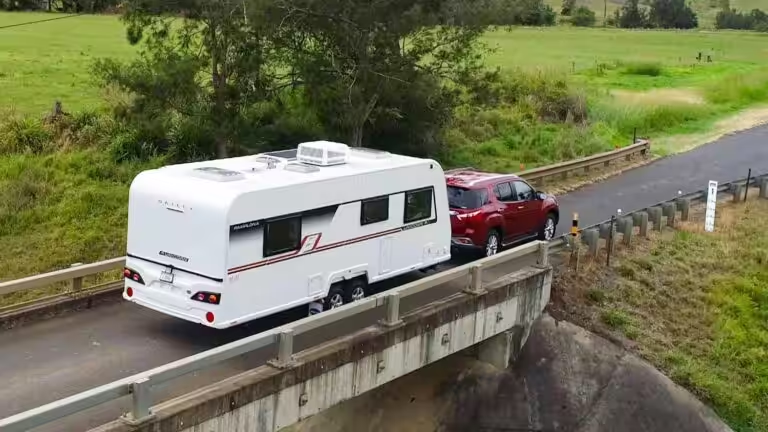
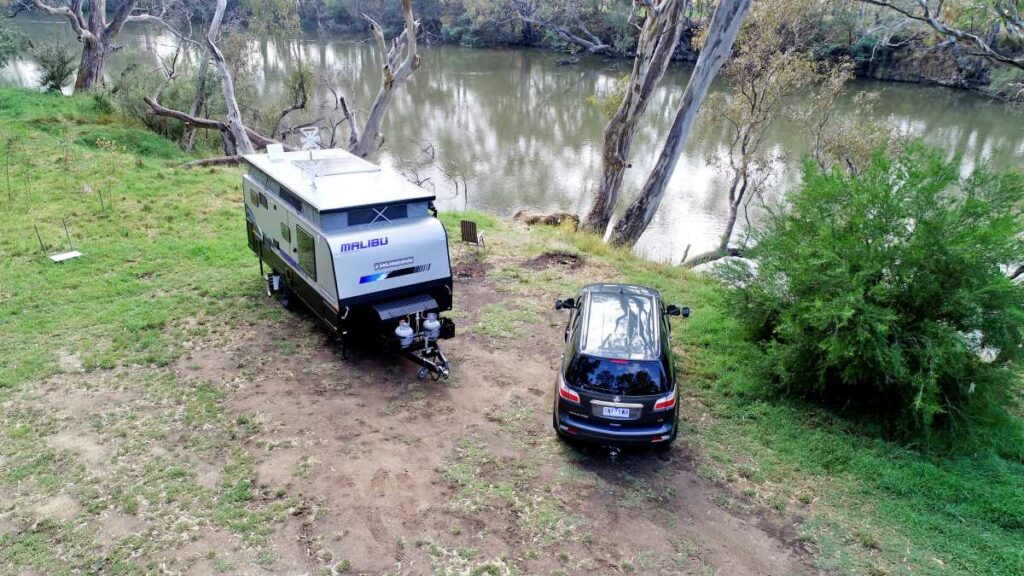
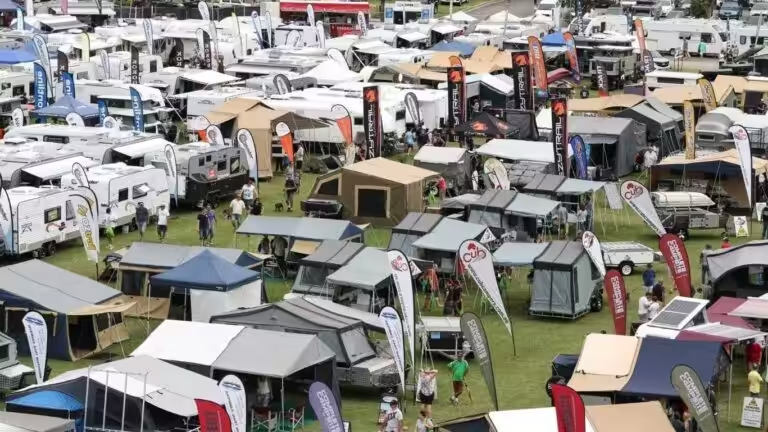
Spend five minutes in any caravan park and you’ll see it. Lifted 4WDs, big vans, rooftop gear, drawers, fridges and more. The problem? A lot of these setups are likely overweight and the owners don’t even realise it.
It’s surprisingly easy to exceed your vehicle’s limits once you hook up a caravan, load up the gear and head off on a trip. And it’s not just a technicality either. Being overweight can affect your insurance, handling, braking and even whether you’re legally allowed to be on the road.
So the question is – do you actually know what your setup weighs?
According to the team at Fulcrum Suspensions, this is becoming increasingly common as modern touring setups get heavier and more complex. Between larger caravans, added accessories and fully loaded touring gear, many Australians are unknowingly pushing their vehicles closer to their limits than ever before.
What GVM and GCM actually mean (and why they matter)
If you’ve spent any time towing, you’ve probably heard the terms GVM and GCM thrown around, but they’re often misunderstood.
GVM (Gross Vehicle Mass): The maximum your vehicle can weigh, including passengers, fuel, accessories and towball weight
GCM (Gross Combination Mass): The maximum combined weight of your vehicle and caravan
It sounds simple enough, but where people get caught out is how quickly they reach those limits. If you’re not 100% clear on how it all works, it’s worth brushing up on it. We’ve covered it in more detail in our caravan and trailers weights explained article.
Why so many caravanners are overweight (without realising it)
Most caravanners don’t set out to overload their vehicle; it just happens gradually. You add a bullbar, then a winch, maybe a second battery, drawers, recovery gear, a roof rack… and suddenly, you’ve eaten up a huge chunk of your vehicle’s payload before you’ve even hooked up the van.
Then there’s towball weight, which counts towards your GVM, something many people forget.
And the weight of the caravan itself? That can be another surprise. It is not uncommon for your brand-new caravan to weigh more than you expected straight off the lot – and that’s before you fill the water tanks, pack your gear and load up for a trip.
Before too long, you’re over and you wouldn’t even know it.
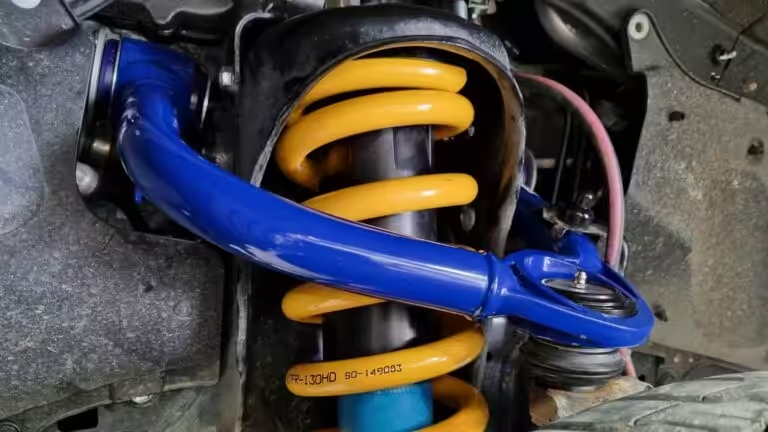
For some setups, a properly engineered GVM upgrade can help safely increase payload capacity and better suit touring or towing duties. Fulcrum Suspensions offers a range of vehicle-specific GVM upgrade kits designed for different applications and touring styles.
Why suspension matters more than you think
Even if you’re technically within your weight limits, your suspension setup plays a massive role in how safe and stable your rig feels on the road.
Sagging suspension, poor load distribution or an unsuitable setup can all lead to:
Reduced braking performance
Unstable handling
Increased wear on tyres and components
A generally uncomfortable (and sometimes sketchy) towing experience
We’ve looked at this in more detail in our articles on suspension sag and trailer sway. The key takeaway? Weight is only part of the equation and how that weight is managed matters just as much.
Signs your setup might not be right
If you’re not sure where your setup sits, there are usually a few clues. These include:
Rear of the vehicle sagging when hitched
Steering feels light or vague
Braking performance isn’t what it should be
Uneven tyre wear
Headlights pointing upwards instead of at the road
None of these are things that you want when towing a few tonnes down the highway.
Most people are guessing
Most people don’t actually know their real-world weights.
They rely on brochure figures, rough estimates or what “feels about right.” But once you factor in accessories, passengers, fuel, water and gear, those numbers can be way off.
Unfortunately, guesswork can come back to bite you – especially in an emergency situation or insurance claim.
Why a GVM and towing assessment makes sense
This is why we think every caravan owner should get a proper GVM and towing assessment done. Instead of guessing, you get a clear picture of how your vehicle and caravan are actually sitting, including weight distribution, suspension performance and overall suitability for towing.
It’s not just about ticking a compliance box either. It’s about understanding how your setup behaves in the real world.
Where Fulcrum fits in
Companies like Fulcrum Suspensions offer dedicated GVM and towing assessments designed to take the guesswork out of your setup.
With 16 certified Fulcrum stores around Australia, their team works with touring and towing setups every day – from weekend caravanners right through to heavily loaded lap-of-Australia rigs.
Rather than just a quick look-over, the process focuses on:
Checking your current suspension setup
Assessing how your vehicle is handling the load
Identifying potential issues before they become problems
Looking at weight distribution and towing behaviour
They also offer a range of GVM upgrade solutions for different vehicles and touring requirements. Depending on the application, these upgrades can include features like remote reservoir shock absorbers or height-adjustable shocks. Not every setup requires upper control arms either, as the ideal solution depends on the vehicle and intended use.
Fulcrum also includes a free suspension assessment as part of the process, which can be a useful starting point if you’re unsure where your setup stands.
You don’t need to be planning a lap of Australia to justify checking your setup.
Even a weekend away can push your vehicle closer to its limits than you think, especially once everything is loaded up and hitched. And when you’re towing a few tonnes down the highway, guessing isn’t really a great strategy.