
Best teardrop and pod campers in Australia
Compare teardrop and pod campers available in Australia, including prices, towing weights, sleeping options and off-road features.
Last Updated: 7 October 2026
Updated 7th October 2026. A comfortable bed, a kitchen and somewhere to stash the camping gear – sometimes, that’s all you need. Teardrop campers and pod campers pack those essentials into a compact trailer, making them worth a look if you want a simpler setup without stepping up to a full-size caravan.
I’ve been travelling with my family of four in a small off-road teardrop built for two for years. My husband and I sleep inside, while the kids now have their own space in an awning tent. It won’t suit every family or every trip, but it’s taught me how much you can do with a small setup.
Choosing one takes a little homework, though. Prices, towing weights, storage and inclusions vary considerably, and a compact body doesn’t automatically mean a lightweight camper or a small price tag.
To help you narrow down the options, we’ve rounded up 14 teardrop and pod campers available in Australia, comparing prices, weights, sleeping arrangements and the features that set them apart. From simple weekend campers to well-equipped off-road pods, here’s what’s worth a closer look.
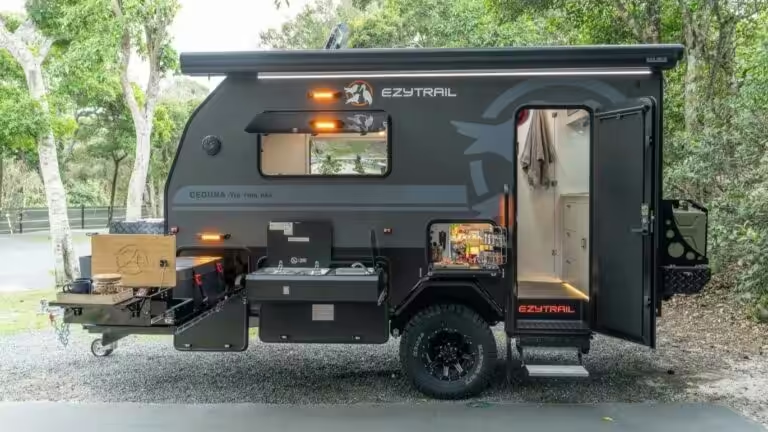
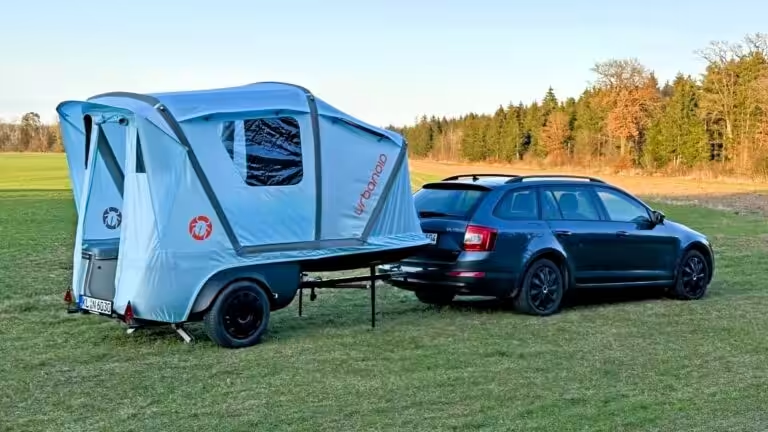
The most obvious difference is the shape. A teardrop camper has the classic curved profile, while a pod camper generally has a boxier, more angular body. You’ll also see the term ‘squaredrop’ used for some of these designs.
Beyond the shape, there’s plenty of overlap. Both typically offer a hard-sided sleeping cabin with a fixed bed and an external kitchen, often accessed beneath a rear hatch. Depending on the model, you might also get extra storage, space to sit inside, an external shower or the option to add a rooftop tent.
Neither label tells you how much the camper weighs or where it can go. Teardrops can be built for off-road touring, while some pods are better suited to sealed roads and maintained gravel routes. Construction, suspension, clearance and the manufacturer’s intended use matter a lot more than whether it has a round of boxy silhouette.
For this guide, we’ve grouped teardrop and pod campers together so you can compare their layouts, weights and features without getting too caught up in the terminology.
| Camper | Advertised price (AUD) | Tare weight | ATM | Sleeping capacity |
|---|---|---|---|---|
| Little Guy Deluxe | $19,900 | 380kg; approx. 470kg fully optioned | 538kg | 2; compact cabin |
| Breath Plus | From $29,766* | 800kg | 1,500kg | 2; 140cm × 200cm mattress |
| Jayco J-Pod X | From $34,490 | 970kg | Not supplied | 2 adults |
| Austrack X-Series Pulse | $34,990 | Not supplied | 1,500kg | 2 inside; up to 4 adults with additional rooftop tent |
| Stonegate Tucana | $34,999 on road | Approx. 800kg | Not supplied | 2; double bed converts to lounge |
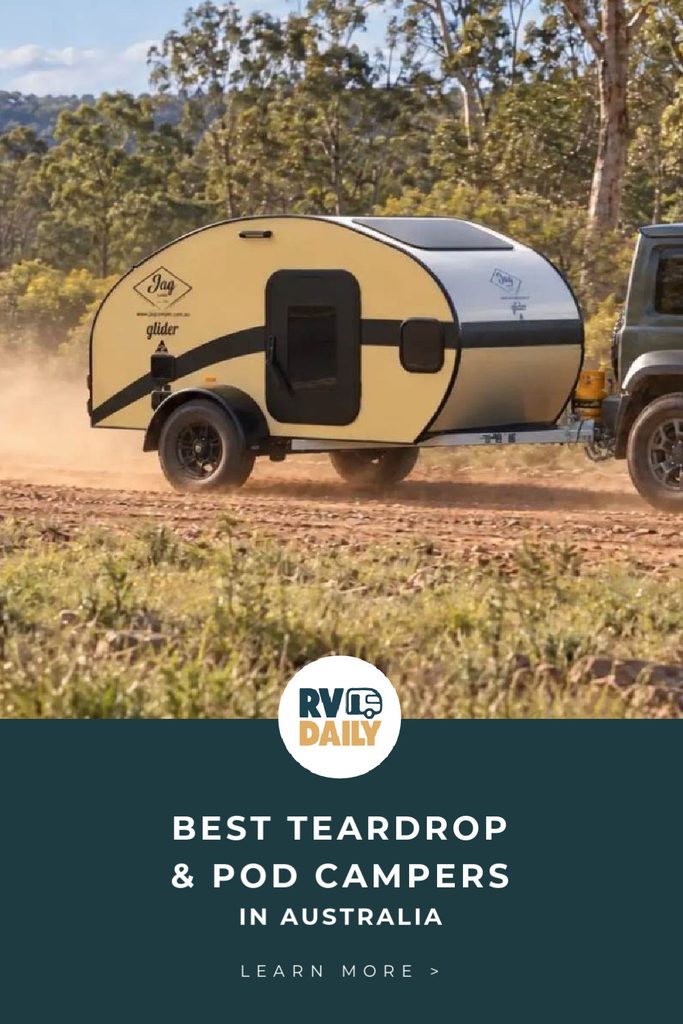
| JAG Glider | $37,500 | 550kg | 1,020kg | 2; double bed |
| Cruizy Campers Vagabond Joey | $40,950 | 580kg | 1,140kg | 2; queen-width mattress |
| Cool Beans Retro | $45,000 drive-away; off-road model $48,000 | Confirm selected build | Confirm selected build | 2; queen bed |
| JAG Teardrop Camper | $51,450 | 850kg | 1,500kg | 2; queen bed |
| Stockman Rover | From $53,490 | Escape: 1,160kg; Intrepid: 1,260kg; Ultra: 1,350kg | Escape: 1,800kg; Intrepid/Ultra: 1,950kg | 2; queen bed |
| Hitch Campers Canning S | From $74,990 | From 1,050kg | 1,600kg | 2; optional Lilypad child bunk |
| Kimberley Kampers Kube | From $76,865, excluding on-road costs | From 1,110kg | 1,950kg | 2; king bed converts to seat |
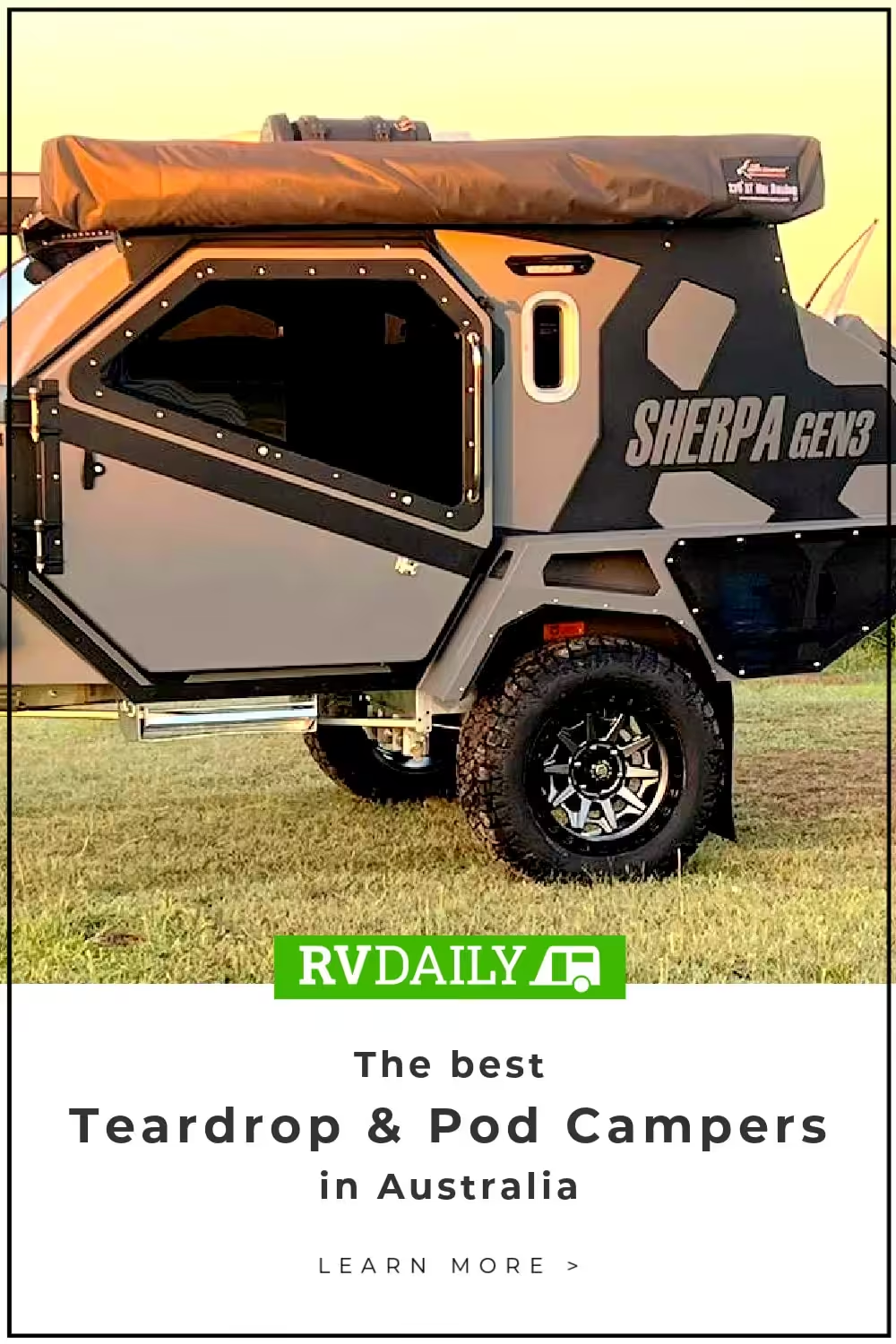
| Silverback Sherpa Gen 3 | From $117,000 | 920 – 1,150kg | Not supplied | 2; additional rooftop tent options |
| Bruder EXP-4 | From $137,700, including GST | Approx. 950kg | 1,850kg | 2 in main cabin; additional sleeping options |
Photos and specs can help you build a shortlist, but it’s worth seeing your favourites in person before buying. Climb inside, try the bed and check the kitchen and storage to get a feel for how each camper would work for you.
Advertised price: $19,900
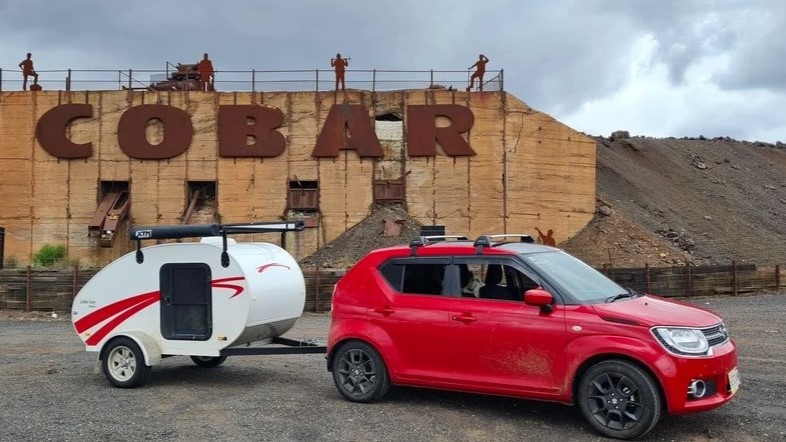
If keeping things small and simple is your priority, the Little Guy Deluxe deserves a look. Its published tare starts at just 380kg, making it one of the lightest campers in this comparison.
The traditional teardrop layout includes two side doors, a compact sleeping cabin and a rear galley with a bench and storage underneath. A roof vent with a fan, screened windows and an insulated roof round out the basics. Check the mattress dimensions carefully: the cabin is narrower than a standard Australian double mattress.
This is a simpler starting point than the fully equipped pods further down the list.
Advertised range pricing: From $23,320 for the Essential; $29,766 for the Plus
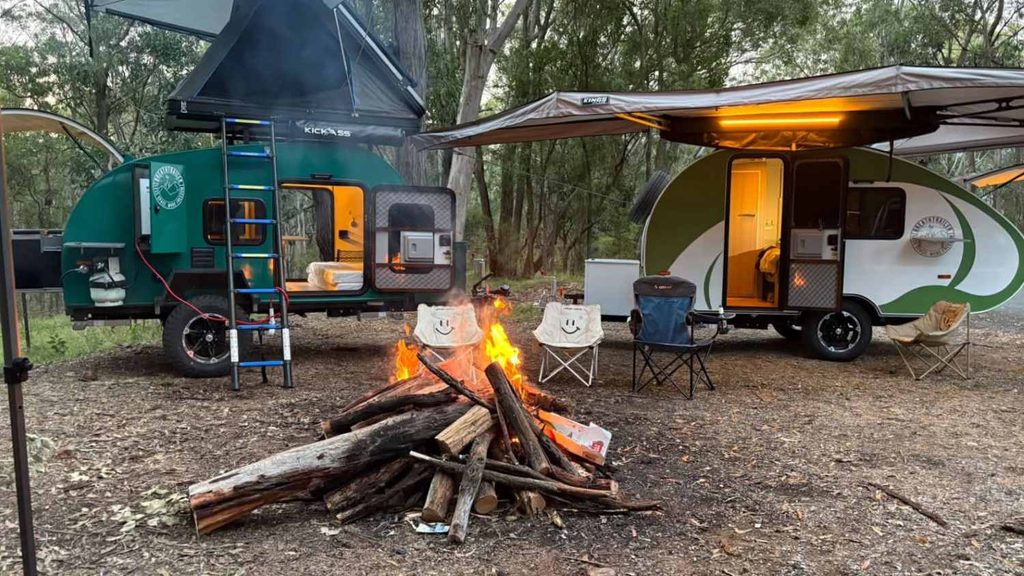
Breath Trailer offers several takes on the teardrop, allowing you to choose between a basic starting point and a more extensively equipped camper. The Essential is the entry model, while the Plus adds equipment that makes it easier to head away without sourcing everything separately.
The Plus includes a 140cm × 200cm mattress, two screened side doors and a rear cooking area with a fridge and two-burner stove. Solar, a 120Ah lithium battery and an inverter are also included.
Further up the range, the Ultra adds features including an external shower, awning and roof rack. The larger Breath Max takes a different approach, with a standing interior and internal shower and toilet.
Advertised price: From $34,490
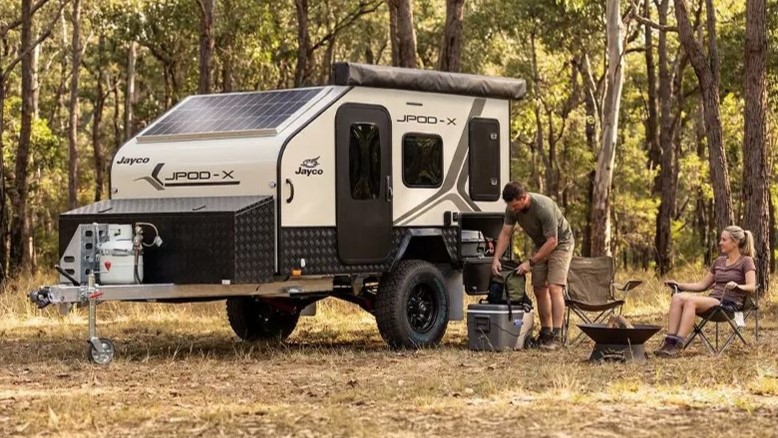
The Jayco J-Pod X offers a compact sleeping cabin and outdoor kitchen, backed by the brand’s national dealership and service network. It’s designed for two adults, with an innerspring mattress, cabin fan and storage for the essentials.
The current model page highlights an 85L upright 12V fridge and an external kitchen with a two-burner cooktop and sink. A 270-degree batwing awning provides shelter, while a large top-opening toolbox adds storage on the A-frame.
A 200W solar panel, 200Ah lithium battery and Bluetooth power monitoring come standard.
Advertised price: $34,990
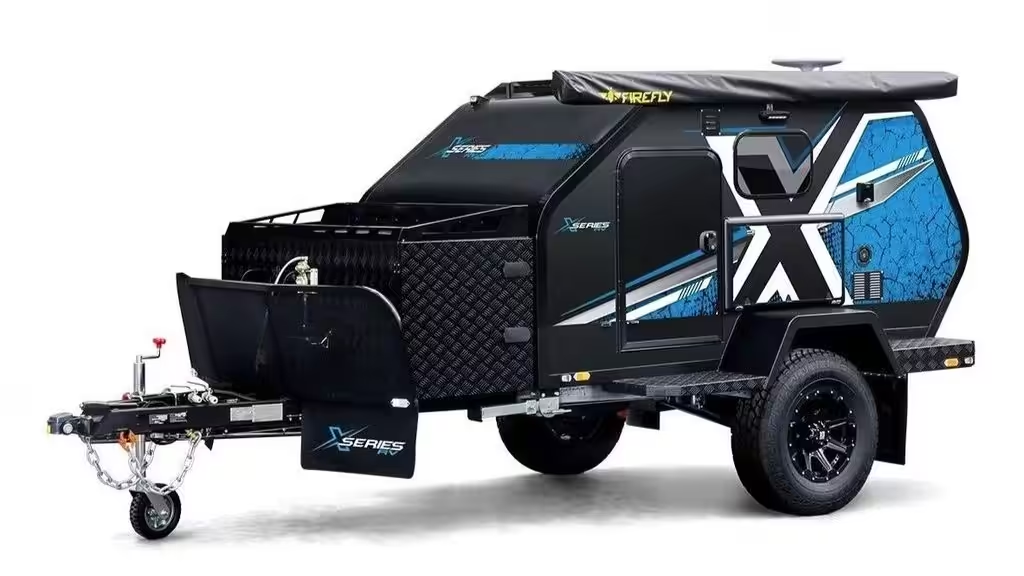
The Austrack X-Series Pulse packages a double bed, outdoor kitchen and useful storage into a compact, boxy pod. Two side doors provide access to the sleeping cabin, with a ventilation fan, screened windows and a diesel heater among its comfort features. Austrack says it can sleep four adults with the addition of a rooftop tent.
The external kitchen includes a two-burner cooktop, sink and tap, supported by a 65L freshwater tank. A front toolbox houses a dedicated fridge slide.
Its electrical setup includes a 150Ah lithium battery, REDARC battery management and Anderson plug connections. Austrack markets the Pulse for off-road use, with independent coil-spring suspension, a DO35 coupling and mud-terrain tyres.
Advertised price: $34,999 on road
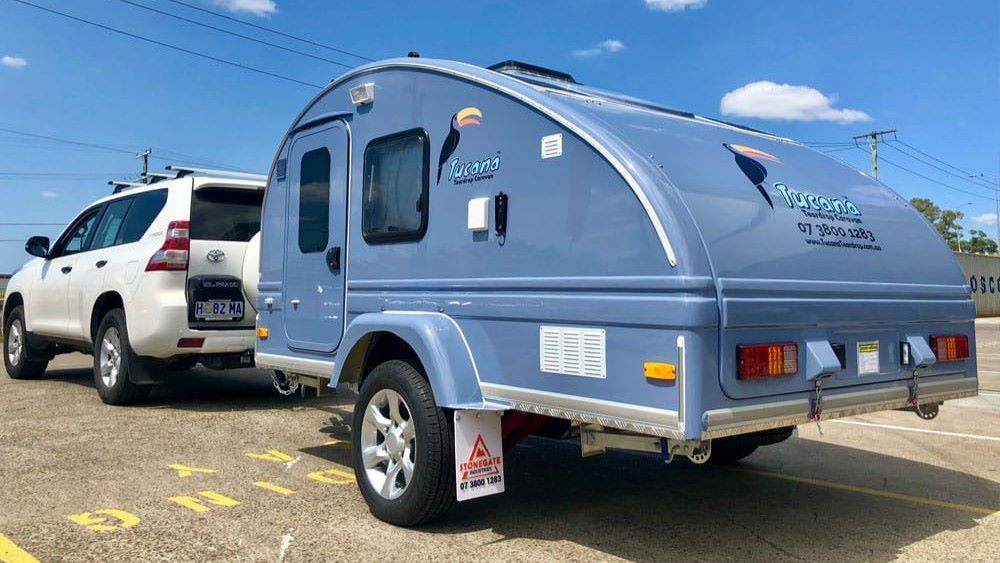
The Tucana’s convertible interior is its main point of difference. The double bed converts into a lounge, giving you somewhere to sit indoors when the weather turns or you want a break from the camp chair.
Under the rear hatch, the external kitchen includes a gas cooktop, stainless-steel sink, storage, preparation space and a fridge slide. An 80L water tank supplies the kitchen, while the advertised electrical package includes solar and lithium power.
Independent coil-spring suspension rounds out the package. It’s worth comparing if indoor seating ranks highly on your wish list, but you still want a compact camper with outdoor cooking.
Advertised price: $37,500
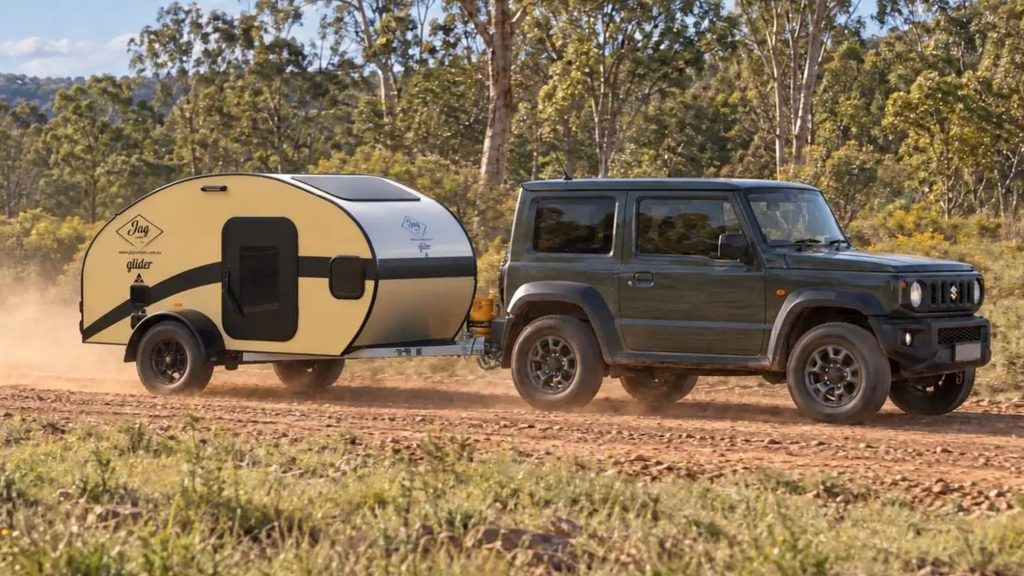
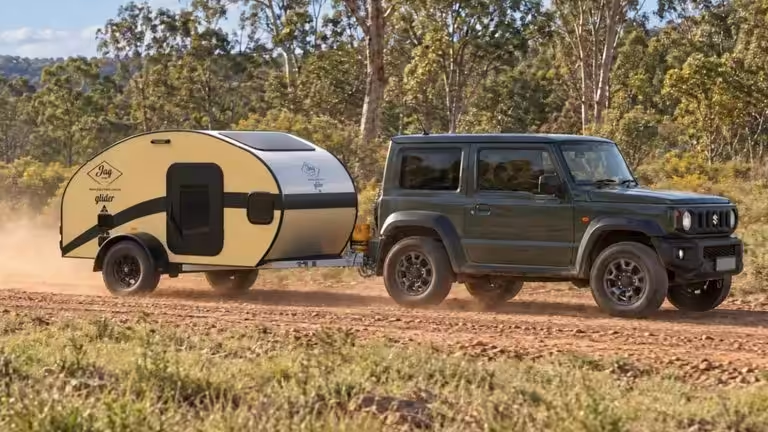
Built in Brisbane, the JAG Glider offers a smaller and lighter alternative to the company’s original teardrop with a published tare of just 550kg.
The insulated cabin includes a double memory-foam mattress, two security doors, screened windows, a sunroof and a fan. At the rear, the kitchen provides a two-burner portable gas cooktop, 30L drawer fridge/freezer, storage drawers and a collapsible sink.
A 100Ah lithium battery and vehicle, solar and mains charging support the electrical setup. AL-KO independent off-road suspension and hydraulic override brakes are included, while hot water and shelter packages are optional.
Advertised price: $40,950
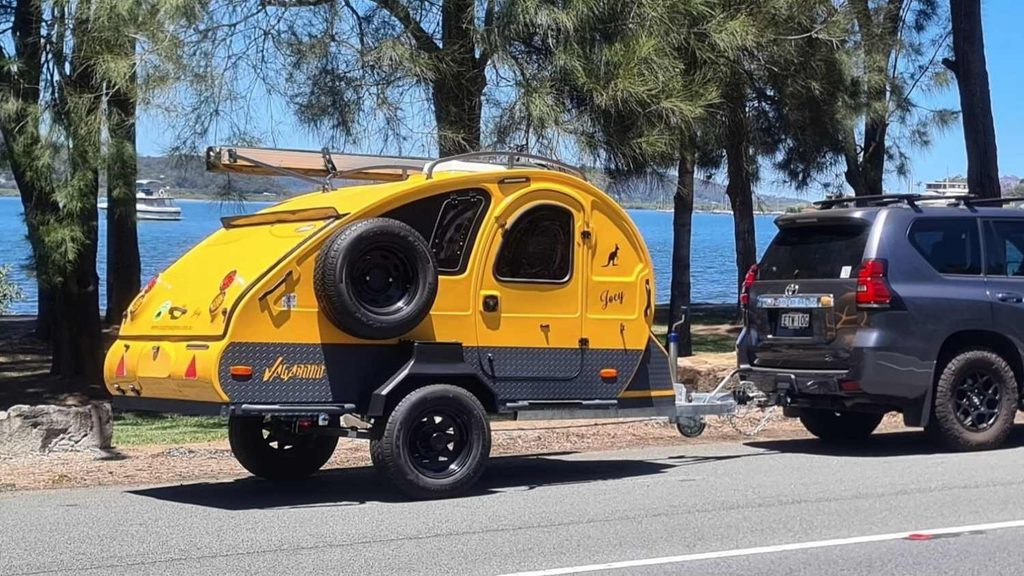
The Vagabond Joey combines a relatively low published tare with a well-equipped rear kitchen. A 50L SnoMaster fridge/freezer, two-burner gas stove, plumbed sink and cupboards cover the cooking essentials, with a four-person crockery set also included.
Inside, a queen-width mattress measuring 2.1m long provides sleeping space for two. Screened doors and windows, a roof hatch, LED lighting and USB charging help make the cabin practical, while a 270-degree awning extends the living space outdoors.
The more expensive Vagabond Brumby is also worth comparing if you want lithium power, a portable hot-water system and a shower awning included.
Advertised drive-away price: $45,000; off-road model $48,000
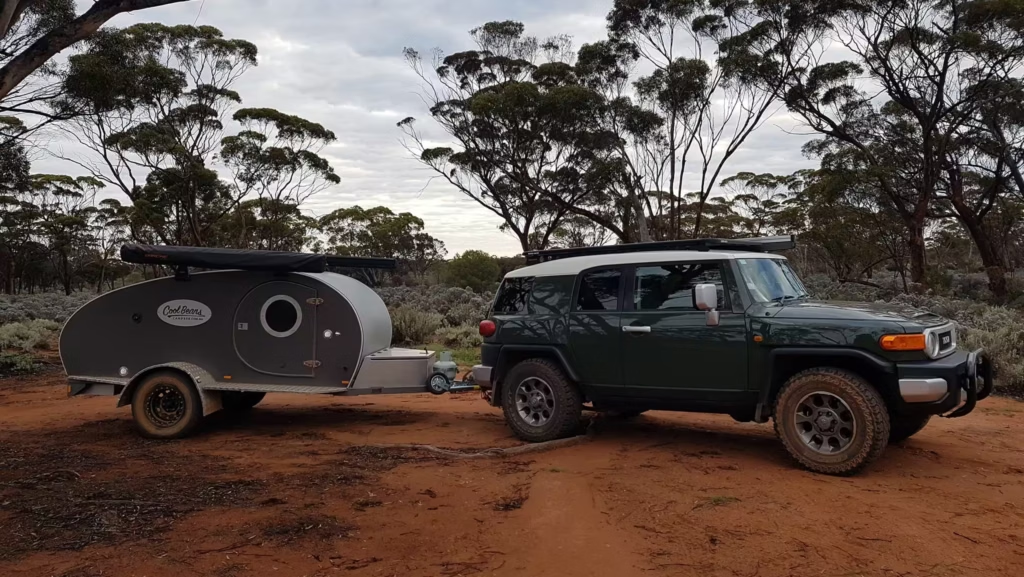
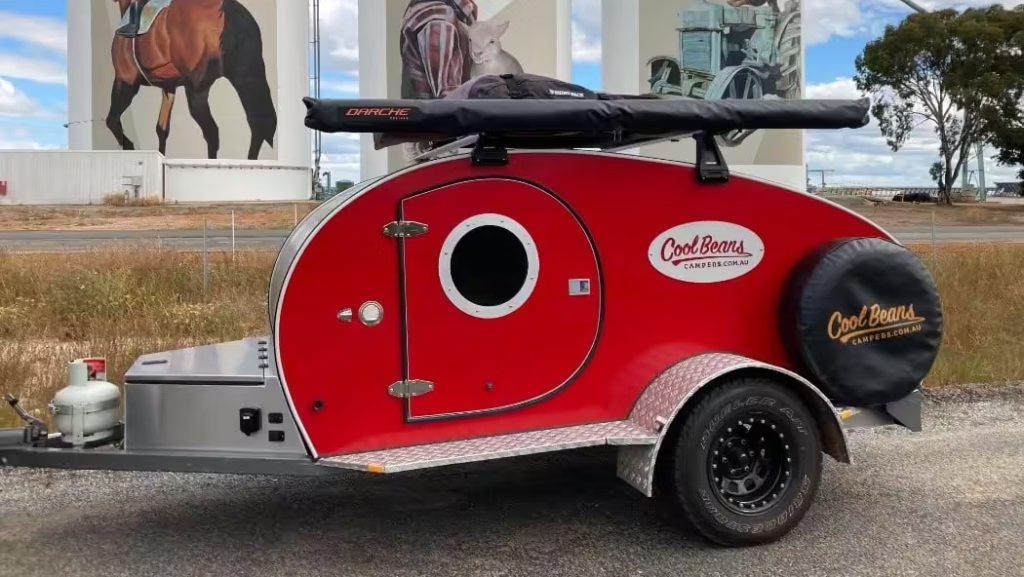
Handmade in Fremantle, Cool Beans Campers bring plenty of retro character to the campsite, with curved profiles, D-shaped doors and porthole windows. There’s substance behind the styling, too, including a locally made welded chassis and marine-grade stainless-steel fittings.
The cabin houses a full queen-sized bed, cupboards, drawers, reading lights and charging points. The rear kitchen includes a 60L Engel fridge/freezer, two-burner stove, stainless-steel sink and a 1.5m bench.
The off-road version adds heavier-duty leaf-spring suspension, a full-length stone guard, roof racks and all-terrain tyres. Customisation is available, making this worth a look if you want some say in the finished camper.
Advertised price: $51,450
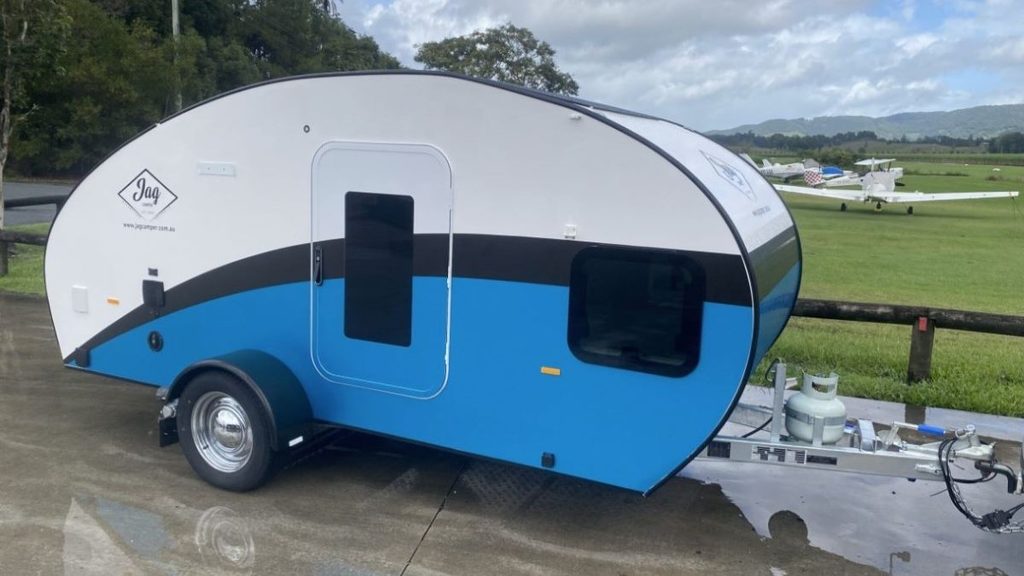
The original JAG Teardrop suits campers who want a queen bed and a substantial kitchen without moving into a full-size caravan. Two side doors provide separate access to the cabin, while a large under-bed storage compartment helps accommodate bulkier camping gear.
The rear kitchen features a 1.6m × 0.6m benchtop, slide-out cooking and sink facilities, a 60L upright Dometic fridge and several storage drawers and cupboards. Its rotating smart TV can be viewed from inside or outside.
Standard specifications include a 100Ah lithium battery, 85L freshwater tank and Cruisemaster CRS2 independent suspension. Optional upgrades cover shelter, hot water and larger electrical systems.
Advertised price: From $53,490
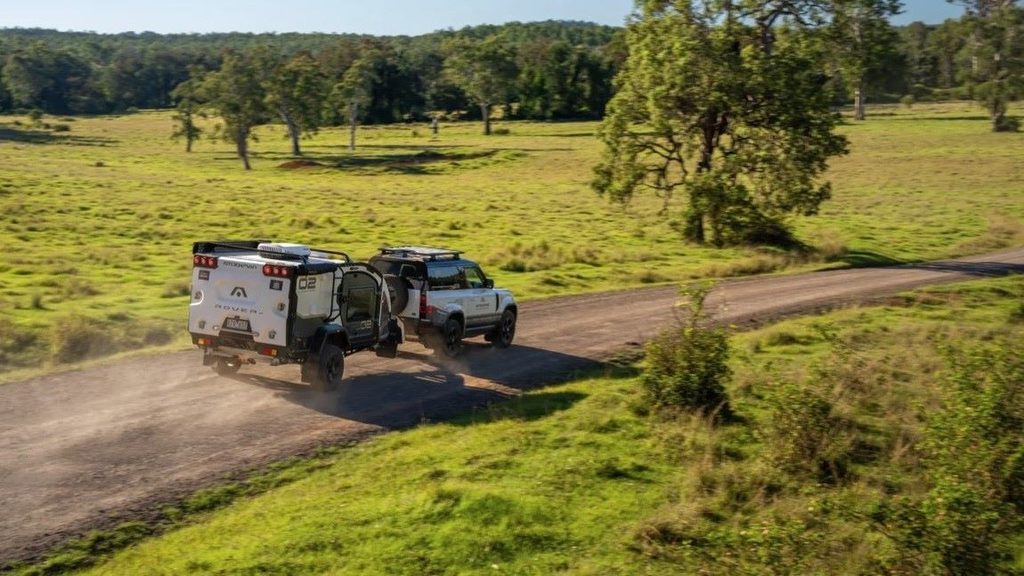
The Stockman Rover range now includes the Escape, Intrepid and Ultra. All provide a queen-bed cabin and external kitchen, but the chassis and equipment differ considerably.
The Escape is the entry model on an on-road chassis, with a 120Ah lithium battery, 100W solar and 150L water tank. The Intrepid steps up to the XT off-road platform, adding Cruisemaster independent suspension, a DO35 coupling, cooking equipment, a 130L Bushman fridge and an external hot shower.
The Ultra adds a 300Ah lithium battery, inverter charger, diesel hot water, air-conditioning and a portable solar kit. Compare the individual models carefully as the least expensive Rover has fewer inclusions and is not an off-road model.
Advertised price: From $74,990
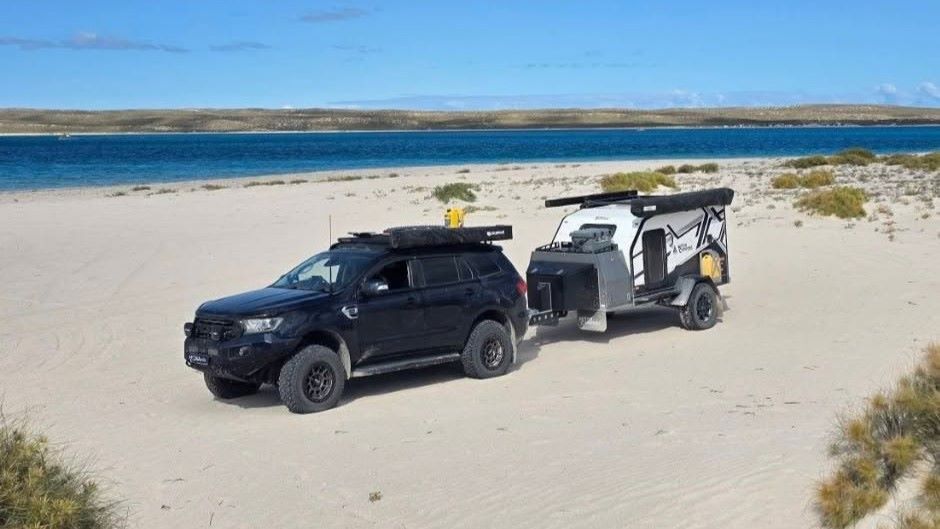
The 2026 Canning S has a considerably upgraded specification compared with the earlier Canning. Its standard package includes a queen bed, 230L freshwater capacity and a 230Ah lithium battery, making it worth investigating for longer trips.
The external rear kitchen features a two-burner induction cooktop and stainless-steel sink. REDARC power management, a 200W solar panel and a 2,000W inverter support the electrical setup.
Cruisemaster XT Level 2 airbag suspension is standard, allowing the camper’s height to be adjusted for towing, storage and campsite levelling. Inside, bed-end cupboards provide storage, while the optional Lilypad bunk adds sleeping space for a small child.
Advertised price: From $76,865, excluding on-road costs
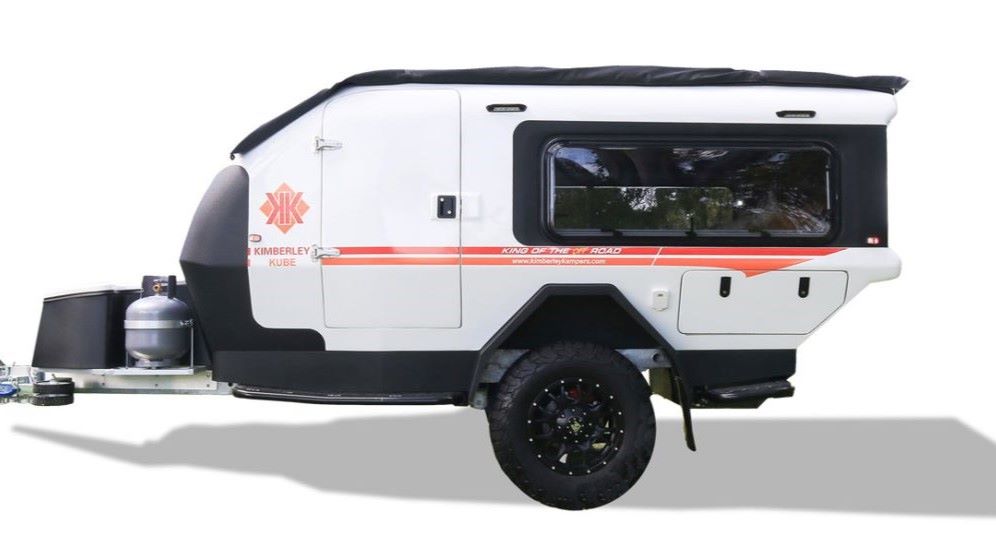
The Australian-built Kimberley Kube takes the pod concept into more luxurious territory. A king-sized bed (can convert to a seat) and panoramic windows are the main cabin attractions, while the slide-out stainless-steel kitchen keeps cooking outdoors.
Its touring features include lithium power, solar, diesel hot water and heating, with equipment choices varying by configuration. An external shower and toilet enclosure provides privacy without taking up space inside the sleeping cabin.
Adjustable air suspension helps with campsite levelling and travel height. It’s an option for couples who want a compact off-road camper with more comfort and equipment than a basic bed-on-wheels setup.
Advertised price: From $117,000
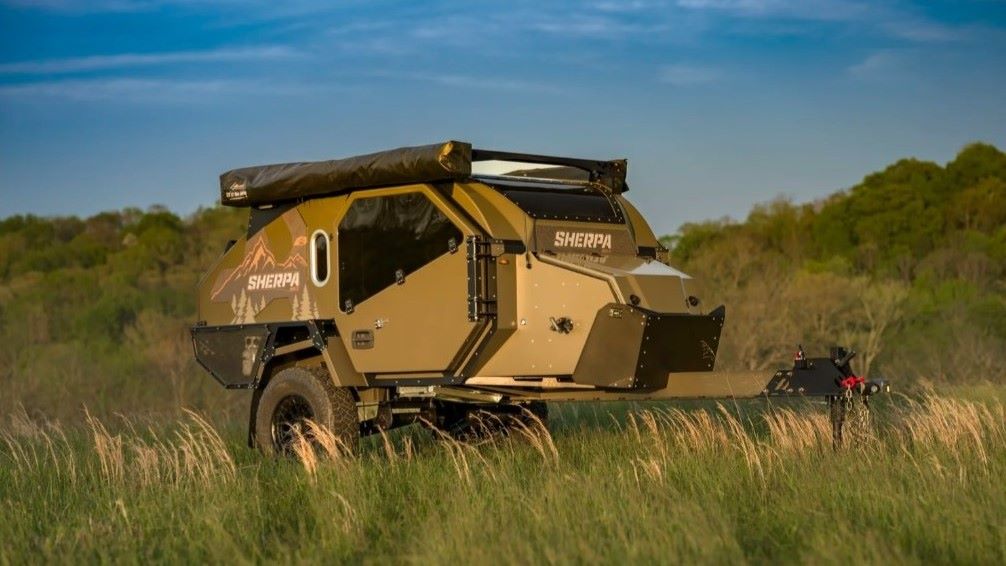
The Sherpa Gen 3 combines a queen-bed cabin with an extensive outdoor living setup. Its kitchen includes two 30L drawer fridge/freezers, a two-burner cooktop, a large sink and plumbed hot and cold water.
A Joolca wet and dry shower enclosure gives you separate spaces for showering and changing. Diesel hot water and cabin heating add comfort for colder trips, while a 270Ah lithium battery supports the electrical system.
The BRS-designed independent air suspension uses Firestone airbags and Bilstein shocks, with adjustment for travelling and campsite levelling. Rooftop tents and additional battery capacity are among the optional upgrades.
Advertised price: From $137,700 including GST
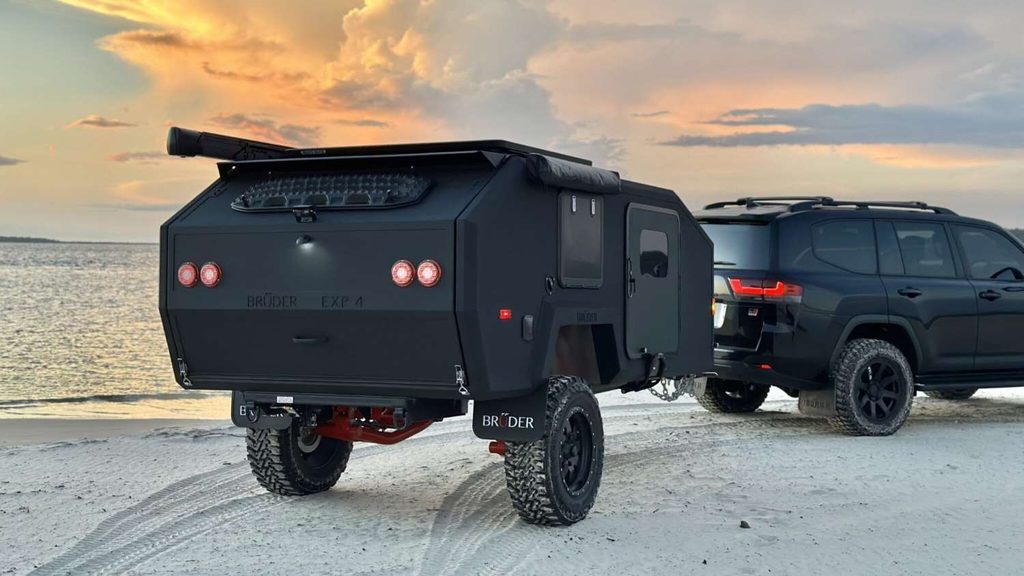
The Bruder EXP-4 sits at the premium end of this comparison and is the ultimate compact expedition trailer with a compact composite body and a strong focus on off-road touring. Its adjustable air suspension provides substantial wheel travel and allows the camper to be levelled at camp.
The standard equipment list includes an 80L compressor fridge/freezer, external kitchen, 200L water tank and diesel heating for hot water and cabin comfort. A 200Ah lithium battery is paired with 200W of fixed solar and a 300W portable solar blanket.
Additional sleeping and shelter options are available.
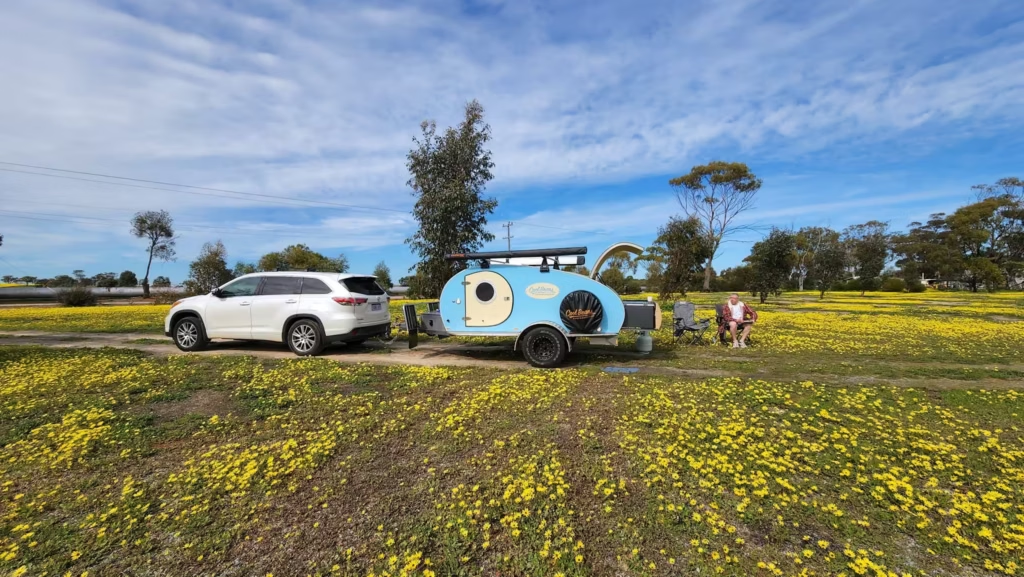
A camper can look great in photos and still be awkward to live with. Once you’ve narrowed down your favourites, take a closer look at how you’ll tow, pack and use them.
Compare more than the advertised tare weight. Water, gas, food, clothes and camping gear all add weight, while accessories such as rooftop tents and extra batteries can reduce the payload available for your belongings.
Ask for the weights of the camper with your chosen options fitted, then check them against your vehicle’s towing, towball and other weight limits. A small camper isn’t automatically suitable for a small car.
Check the actual mattress dimensions rather than relying on descriptions such as ‘double’ or ‘queen’. Climb inside, stretch out and see whether you have enough headroom to sit comfortably.
Two side doors can make overnight access easier, particularly if you’d rather avoid climbing over your partner. Also consider where you’ll put shoes, glasses, phones and clothes when the bed is occupied.
Most teardrop and pod campers have an outdoor kitchen, so imagine preparing dinner in wind or rain. Does the rear hatch provide enough cover? Will the awning shelter the cooktop, sink and fridge, or do you need a separate shelter?
Check how much work is involved in putting that shelter up. The bed might be ready immediately, but your complete campsite could take longer.
Large storage figures don’t always translate into convenient packing. Look at the shape of the compartments and whether your chairs, table and other bulky gear will fit.
Try accessing under-bed storage with the mattress and bedding in place. Check which cupboards remain accessible when the kitchen is open, and where wet or dirty equipment will go.
Think about what you’ll run and how long you’ll stay between powered sites. A fridge, lights and phone charging place different demands on a battery from induction cooking or air-conditioning.
Compare battery capacity alongside solar input, vehicle charging and inverter capacity. For water, consider drinking, cooking, washing up and showering and check whether the advertised tank capacity includes greywater storage.
Look beyond the ‘off-road’ label. Ask the manufacturer which roads and conditions the camper is designed for and what restrictions apply to its warranty.
Suspension, ground clearance, coupling articulation and protection for plumbing and wiring all matter. Choose a camper suited to the trips you actually take, whether that’s coastal caravan parks, maintained gravel roads or rougher touring routes.
Compare campers with the equipment you need included. A lower starting price may leave you adding a fridge, a proper mattress, awning, battery or hot-water system, while a more expensive model may already include them.
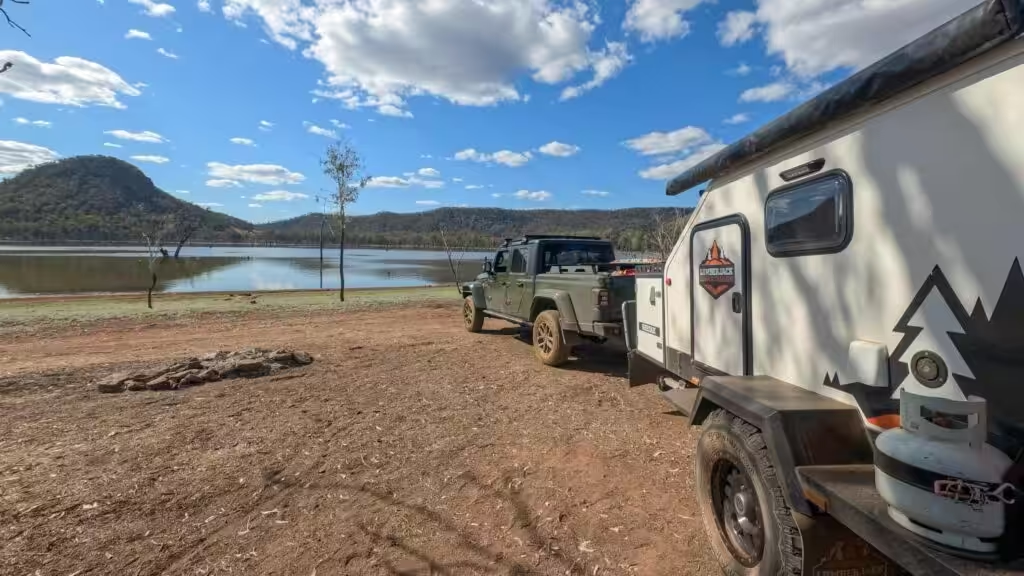
Yes, although most sleep just two people inside. Some offer an optional child bunk, while others can accommodate a rooftop tent. An awning tent or a separate ground tent also solves the extra sleeping space problem.
Most traditional teardrop and pod campers don’t have an internal bathroom. Some include an external shower and privacy enclosure, while others offer these as optional extras. A portable toilet can complete the setup, provided you have somewhere suitable to store and use it.
There are exceptions. The larger Breath Max, for example, offers an internal shower and toilet. However, those facilities come with a different footprint from those mentioned above.
If you usually stay at caravan parks, shared amenities may cover your needs. For camping without facilities, check what’s included, how the enclosure sets up and how you’ll manage water and waste.
The right camper is the one that suits your tow vehicle, budget and camping habits. A simple teardrop might cover everything you need for weekends away, while longer trips may justify more storage, water and power.
Use the comparison table to build a shortlist, then see your favourites in person. Try the bed, open the kitchen and imagine packing for your next trip – that’s where you’ll discover whether a camper works for you.
📌 Save this article to Pinterest so you’ll have it handy for later.