
Cape York in a HiAce campervan? Turns out it makes more sense than you think
We took a 4WD Toyota HiAce campervan to Cape York. Here’s what worked, what didn’t, and why 4WD campervans make more sense than you think.
Published on: 28 May 2026
Mention Cape York and most people picture lifted 79 Series LandCruisers, mud-terrain tyres, rooftop tents and enough recovery gear to rescue a small country. Add a caravan into the mix and suddenly the whole trip starts sounding expensive, complicated and just a little intimidating.
But what if there was another way to tackle The Cape?
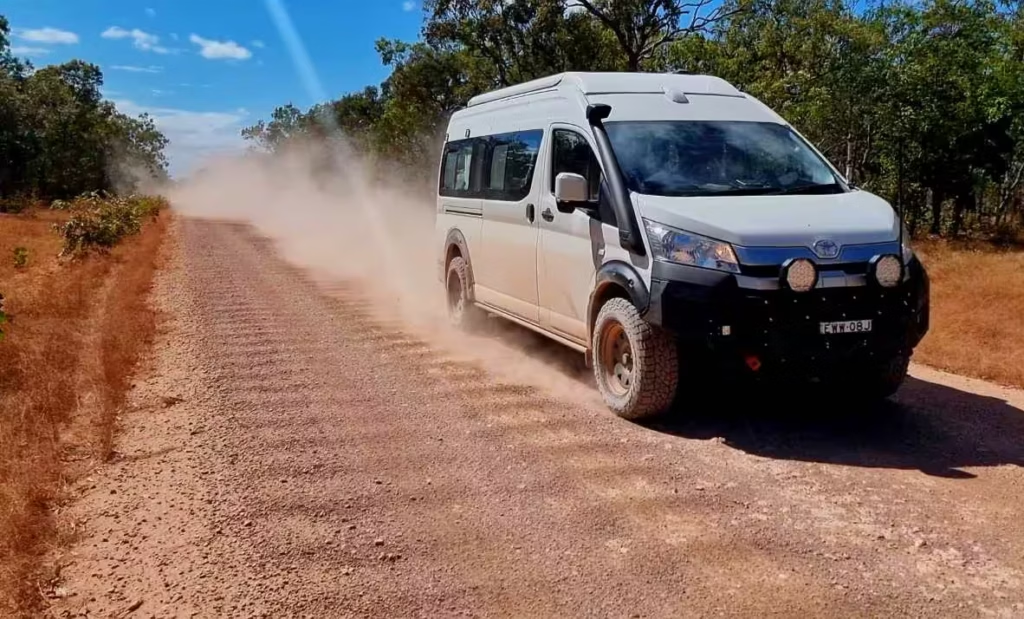
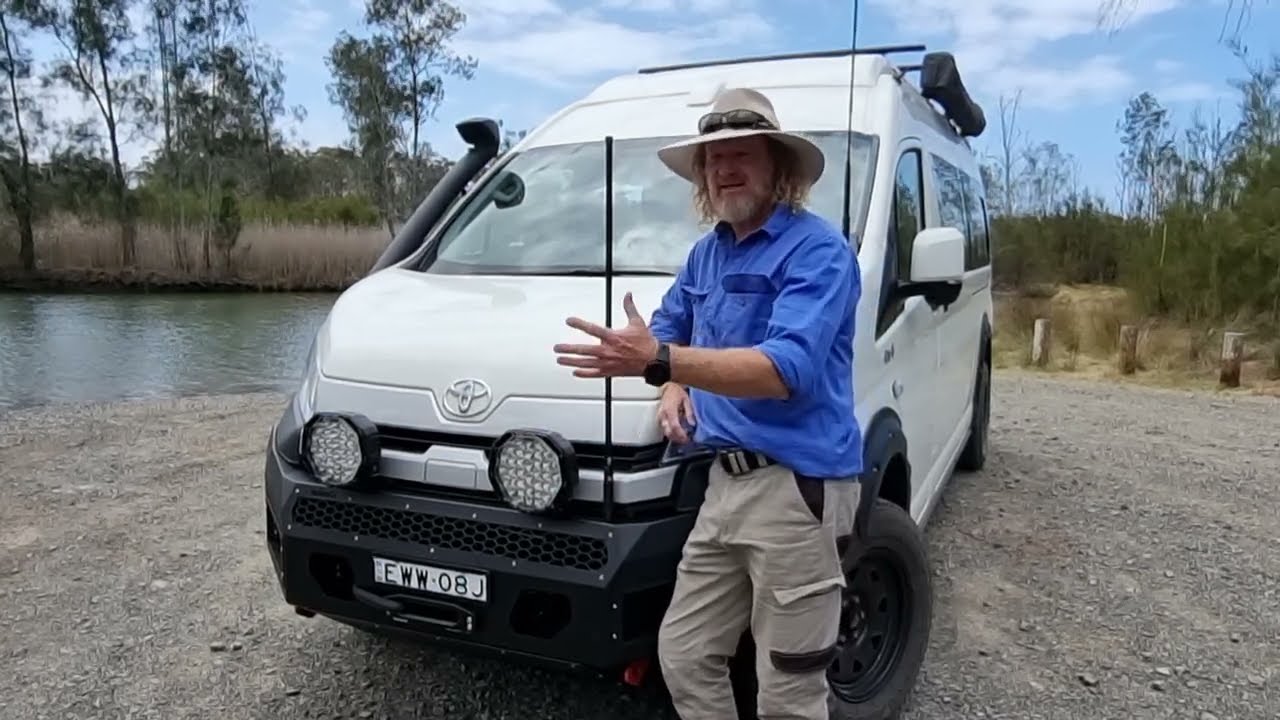
A few years ago, we converted a standard Toyota HiAce into a 4WD touring campervan, complete with high and low range, rear diff lock, bull bar, winch, long-range tank, the lot, for upcoming travels around Australia.
Since then, it’s taken us across some seriously remote parts of Australia, so when the idea of an eight-week Cape York trip came up, we figured… why not take the van?
Yes, but it depends on the campervan, your driving experience and how much of Cape York you want to tackle.
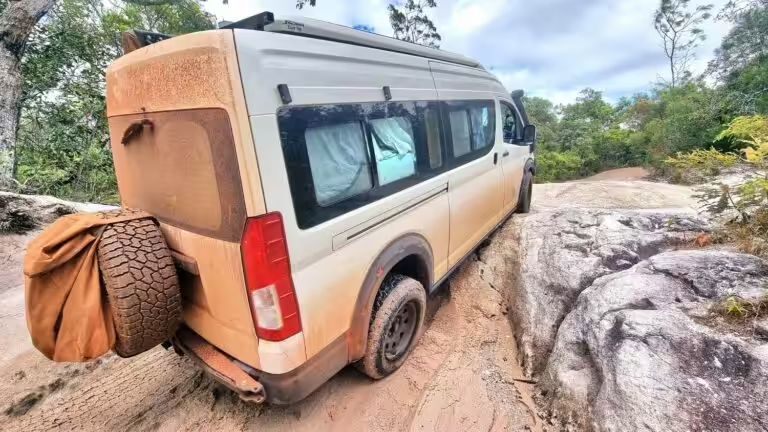
We took a heavily modified 4WD Toyota HiAce campervan through much of Cape York, including large sections of the Old Telegraph Track, beach drives and remote camps. While we skipped some extreme obstacles like Gunshot and Nolan’s Crossing, the van handled the trip surprisingly well and offered far better comfort and livability than many traditional touring setups.
If you’re mechanically prepared, sensible with tyre pressures and realistic about your vehicle’s limits, a capable off-road campervan can absolutely handle Cape York.
There is no doubt that the 78 Series Troopy is the more robust vehicle. It has more ground clearance and no doubt would make it to the tip and back in one piece. The downside is the long-term livability compared to the cavernous HiAce.
For the caravan; while it offers a lot more livability than both the Troopy and the HiAce, it limits the off-roading that is easily achievable in both the Troopy and the 4×4 HiAce. While we encountered plenty of caravans in The Cape, they were also the predominant vehicle to see problems from the rough tracks.
For us, both the LandCruiser and a caravan drew the short straws, so we took the wannabe-delivery van instead.
Sure, the HiAce doesn’t have the ground clearance of a Troopy, and no one’s going to mistake it for a hardcore rock crawler. But what it did offer was comfort, simplicity and the freedom to pull up almost anywhere and be completely self-contained.
So, was taking a campervan to Cape York a terrible idea?
As it turns out, it made a whole lot more sense than we expected.
If you’re curious how it all comes together, here’s a full walkthrough of the setup before we pointed it north toward The Cape.
Kicking off from Port Macquarie on the mid-north coast of NSW, we set off with no specific plan, smiles on our faces, with eight weeks up our sleeves to soak up the far north of QLD. Meandering up the coast gave us plenty of beach time for swimming and chilling on the sand prior to getting into the croc, stinger, midge, shark, and sand fly-infested regions of northern QLD.
Sounds fun – right?
As much as this southern section was glorious, the real adventure started when we left Cooktown, slowing our pace to see as much of Cape York as we could with the vehicle we had. Without going into a turn-by-turn diary, we conquered The Bloomfield track, Starke Coast out to Eddies Camp, Elim Beach and to Cape Bedford.
Yes, we got bogged on the way out there, but knowing it would happen on one particularly deep, muddy crossing, we did a little shovel work prior and had the winching gear ready to haul us out. All our gear worked perfectly, which is why we always carry it. I don’t want to miss out on some of the best places, just because we might be ill-prepared.
Heading further north into Hope Vale and Battlecamp Road into Lakefield National Park, then pushing onto the start of the Old Telegraph Track (OTT), which would be one of the most well-known tracks in these parts, if not Australia.
Now, this track offers the full spectrum of 4WDing; from ‘Oh S#*t’ moments, to ‘quick, hold my drink’, right down to ‘wow, isn’t this beautiful’ and everything in between.
One minute you could be slogging through soft white sand, then onto a few gnarly rock steps after a doozy of a river crossing, then some muddy bog holes, all mixed with nightmarish corrugations that can plague your rig for years to come.
No, we didn’t do every piece of the OTT. There are sections that can be bypassed given their severity. Gunshot being the big-ticket item and often seen on social media.
Yes, it’s doable in most 4WDs, but fully expect damage from minor scraps, to roof racks being projected forward when you nosedive into the boggy bottom of the drop.
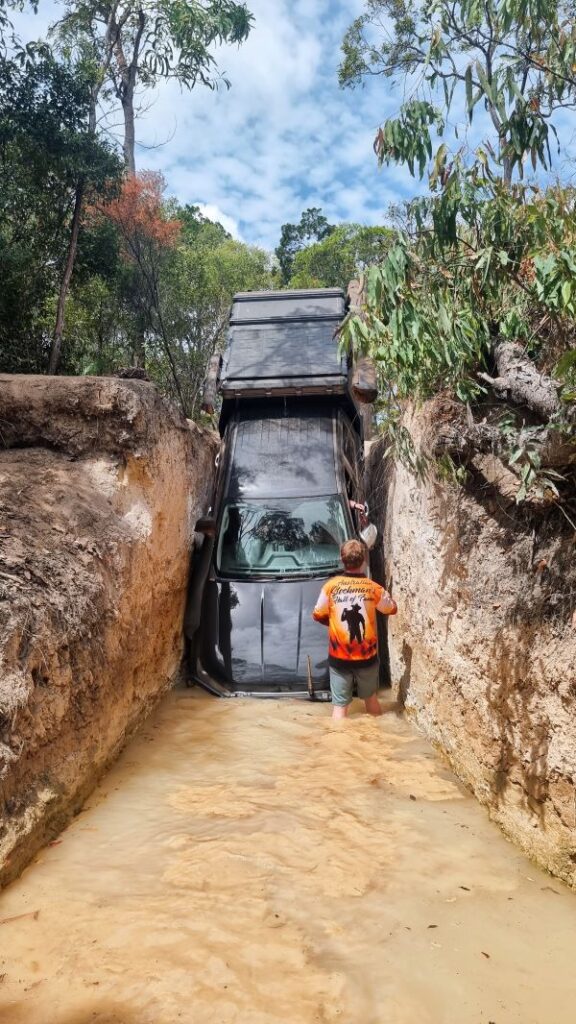
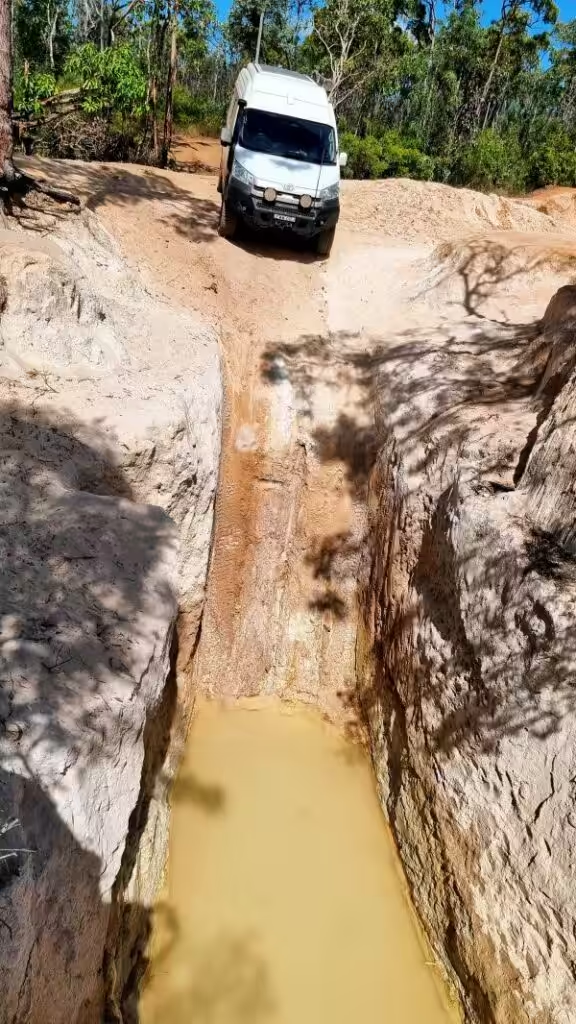
We camped on the river there for two nights, to observe, photograph and help the unfortunate. No, we didn’t attempt it, given the certain damage it would do to our wider-than-most HiAce van and its longer-than-ideal wheelbase.
Don’t go thinking you’ll just dawdle down one of the Chicken Tracks either. Sure, there are numerous side tracks that have been created over the years, but they’re all relatively difficult, and most people get bogged in them.
The same goes for Cockatoo Creek; that drop in is akin to Gunshot and offers an eyes-wide-shut moment for most drivers and passengers. No, we didn’t do this crossing either.
While we were talking about what we didn’t do. Nope, the Pasco River crossing was way too deep and lined with far too large rocks for us to negotiate. Then there’s Nolan’s Crossing; it’s simply too deep for my liking.
While I have no doubt the HiAce would make it, and my driving is up to it as I’ve driven it in other 4WDs, I know we would have taken on water in our camper, and that’s not something I wanted to contend with.
Given we took a couple of the bypass tracks meant we didn’t drive the complete OTT, but with the vehicle we chose, I’m stoked we saw as much as we did – let’s say 90 per cent of the track, all of which was undamaged other than a bit of pin striping of the overly large panels down the sides of the van.
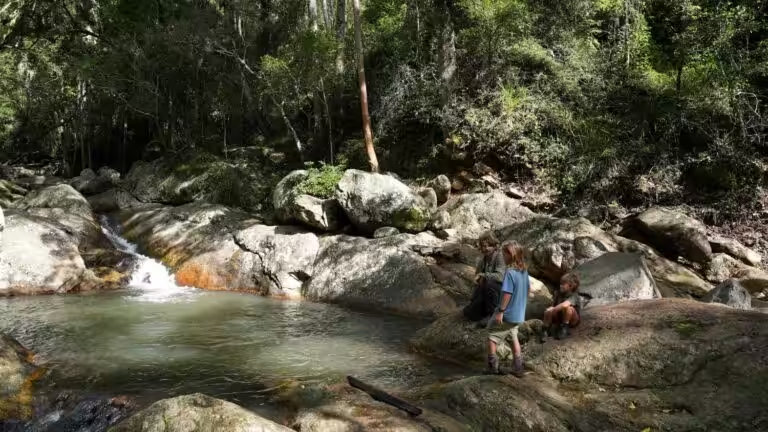
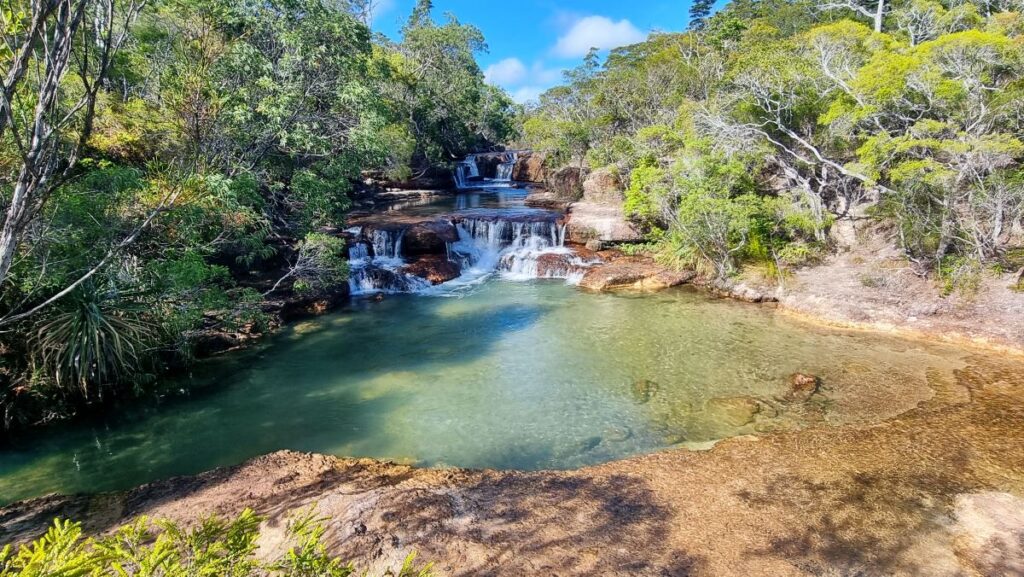
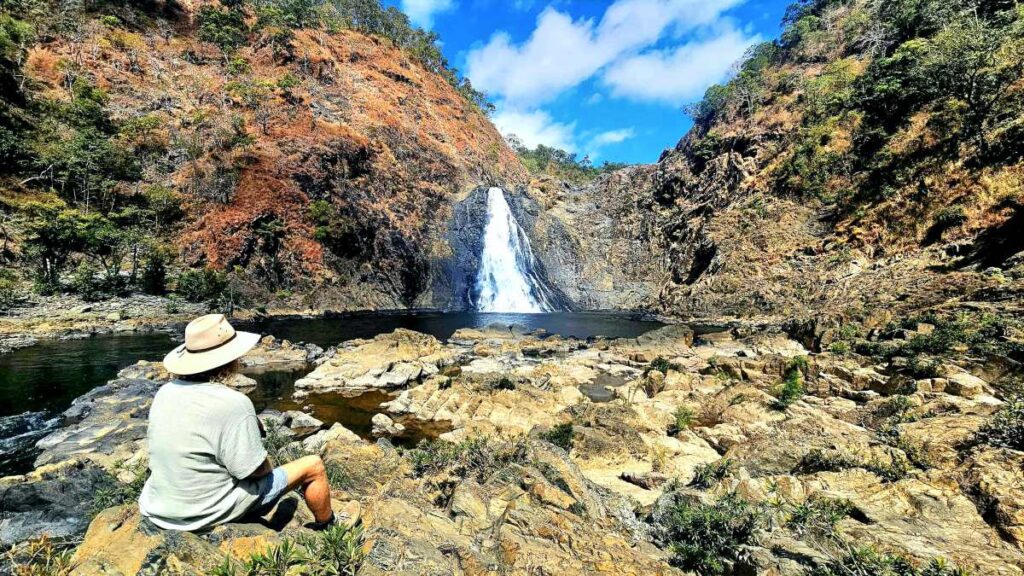
Once up further north, that’s where all the serene waterholes and falls are: Fruit Bat Falls, Eliot, and Twin Falls, making the whole sweaty, dusty journey worth every second. We camped nearby to each of these falls and soaked up the sheer pleasure of the fresh waters, with cascading white water washing our worries away.
It’s the perfect way to idle away a few days at each, temporarily separating you from the reality of the stinking hot and humid weather, the dust and all the nasty bittie things that lurk in the bush and waterways.
Once at the Jardine River, the oh-so-short ferry ride takes you north to the final frontier, where it’s not overly far to the Tip… depending on which way you go. We criss-crossed our way to the tip over a few days, setting up camp along the western coast at Roonga Point, just shy of Punsand Bay.
Given its proximity to the general area near the tip, we camped here for a few days and tackled day trips. It is also near the launch point for a day trip to Roko Island, which is definitely worth the boat ride.
Our drive to the most northerly point of the Australian mainland was the grand finale, the part we had been planning for and eagerly, albeit patiently, waiting to stand on.
Superb. Surreal. Magnificent. I could go on, but you get the picture. This must be on everyone who ventures beyond the city limits’ bucket list.
Just when you think you’re done, we figured on tackling the Five Beaches drive, on the eastern coast, just ten kays south of Cape York and south of Somerset Beach Camp and lookout. There are actually eight beaches in total, with the extra ones at the southern end much harder to reach.
Driving along the coastline, skipping between beaches and rocky headlands, often lined with magical deep red dirt and Pandanus Palms, with a backdrop of deep blue oceans that offer a photographer’s delight. The drive is relatively straightforward, provided you pick the tides correctly.
There are so many other side tracks in and around Cape York; investigating them all requires time, timing (for the right part of the year), as well as a well-set-up 4WD.
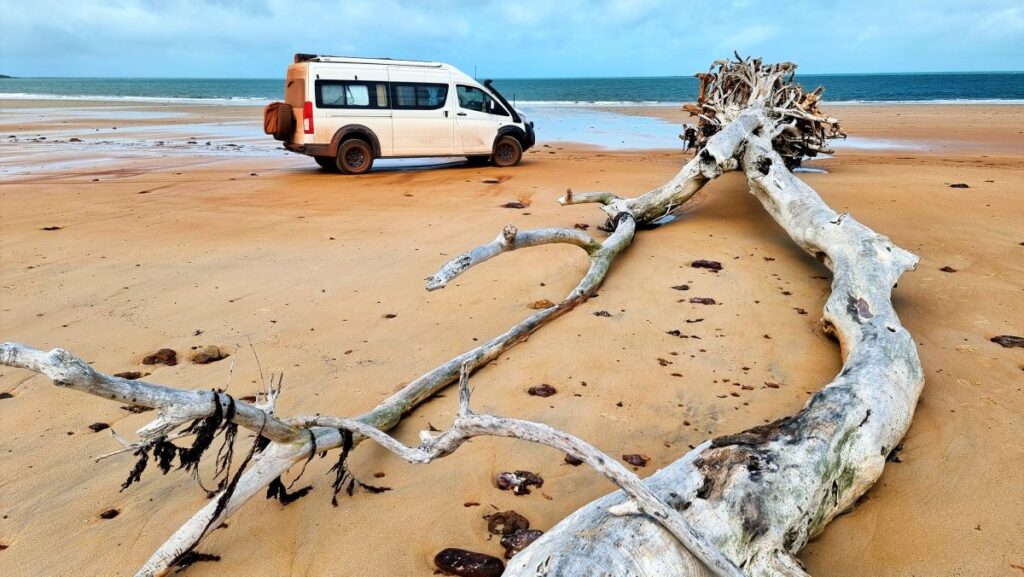
Our choice to take the 4×4-converted HiAce to Cape York paid off. It worked perfectly for what we wanted to achieve, which was to see as much of Cape York as possible while sleeping, cooking, and living comfortably out of an independent vehicle.
Its 4WD ability was superb, taking into account the much-longer wheelbase, combined with the less-than-ideal ground clearance that most 4WD’s have.
To recap, this is no standard HiAce. We had our Toyota HiAce converted to 4WD almost four years ago, long before it became a well-known or popular ‘thing’, which has since been adopted by some as the ‘ultimate touring 4WD vehicle’.
Ours sports a front-end courtesy of a 200 series LandCruiser (diff, steering, brakes and transfer case), providing high- and low-range gearing, plus we included a rear diff-lock, snorkel and a 175-litre long-range tank. After our initial eight-week trip to Central Australia back in 2023, we added a steel front bar with a winch and rated recovery points, slightly larger-diameter tyres, and a power upgrade via an engine remap.
This worked well as a touring machine for tackling the long bitumen roads to reach the rough, rugged, and remote beauty that is the geographical ‘top’ of Australia. Keeping in mind that I’m mechanically sympathetic. Meaning… I don’t thrash my vehicles for the sake of a photo; I’m well versed in ‘keeping it all together’ in remote situations, plus have the best co-pilot I could ever wish for. When the going gets tough, she’s there to steer, dig, push and help out in any way needed.
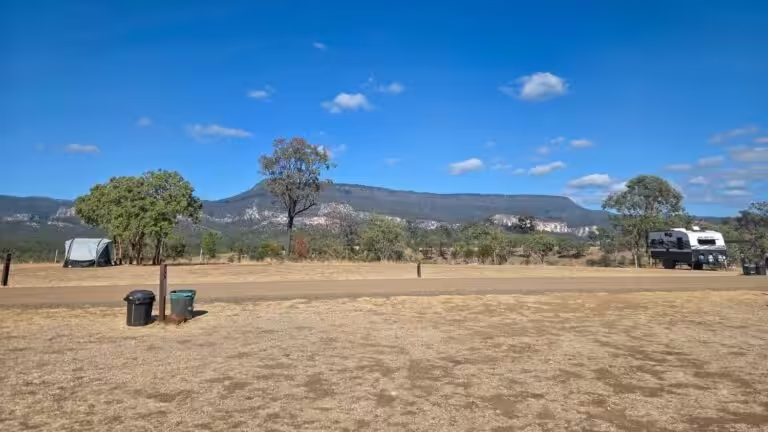
We tend to stay out of caravan parks, in favour of bush, beach and free camps where possible. As much as it makes it hard sometimes, with us not making a blow-by-blow itinerary.
Whoever is in the passenger seat mid-afternoon each day starts scouring the camping apps to see what’s within a few hours of our travels. So far, it’s worked for us on the long bitumen travel sections to get to our destinations, which is where we spend more time enjoying the surroundings.
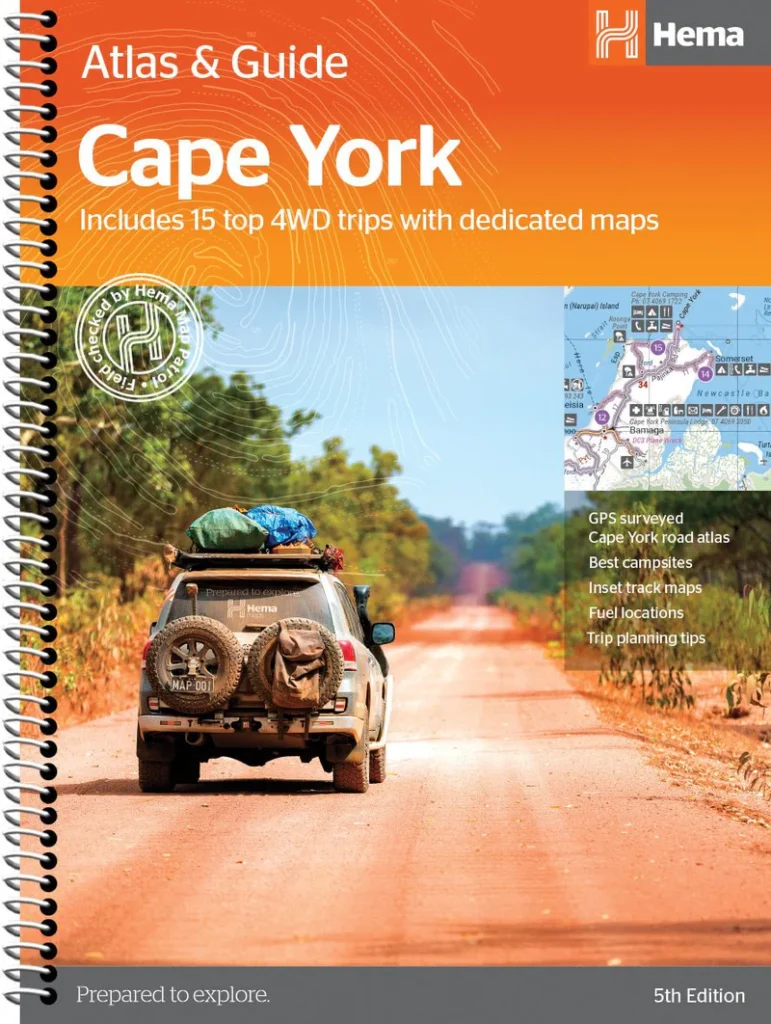
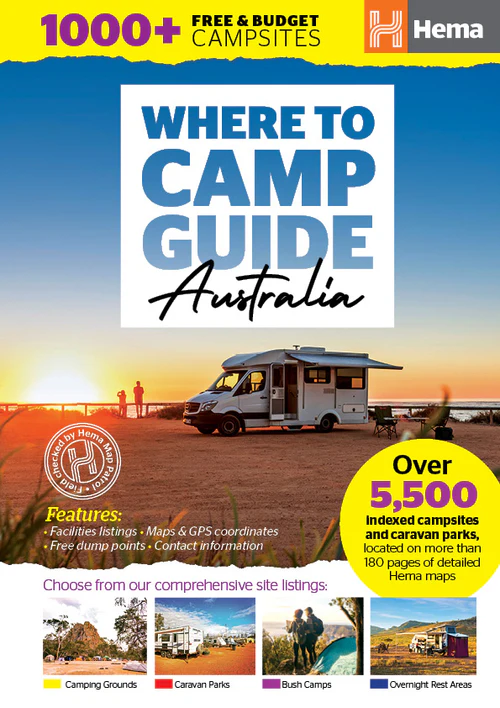
It’s always handy to grab a Hema guide before you go so you can research your route or find your next campsite on the go (including remote and free camps).
No, you don’t need all the bells and whistles on a brand spanking new 4WD. Nice to have, but simply not needed.
A well-set-up 4WD, mechanically sound and well prepared, is all you need to see most of what this country has to offer. You should have some mechanical know-how to MacGyver your way around unforeseen breakages, and carry the necessary tools and spare parts just in case.
Carrying a comprehensive recovery kit is a must, as is knowing how to use it safely.
Tyres are a very misunderstood component that many travellers should be putting at the top of every aftermarket shopping list.
As a minimum, an ‘LT’ (Light Truck) rated all-terrain in good condition is where it’s at. Forget passenger-rated tyres, forget road-oriented, lightweight construction, as they will definitely let you down. Muddies; yep, go for it if that’s your want, but not overly needed.
I hate missing out on anything while away on holidays. If there’s a 4WD track, a scenic lookout or anything adventurous to tackle, then I’m in. Unfortunately, given the lack of ground clearance of our converted HiAce, combined with my sensible approach to not damaging anything, we had to miss out on a couple of overly difficult tracks.
While that sucked, I’ve learned to accept it and enjoy the other 99.9 percent of our life’s travels on the tracks.
I had installed side and rear-mounted insect mesh on the doors to protect us from the ever-present insects while we slept. They were only attached to the vehicle with double-sided tape and Velcro, and after dust, sand, and water seeped into them, they lost their ability to stay attached, leaving us exposed to gaping holes in the mesh. I’ll install a better set next time.
As I’ve mentioned, I’d love to have more ground clearance on the HiAce. It’s really the only thing holding it back compared to most standard 4WDs. I’ll let you in on a little secret; I’m working on this very problem, so stay tuned.
Other than that, instead of only having two months away, I’d opt for three – but that’s just me being greedy.
You can, in fact, drive almost any 2WD vehicle to Cape York, although it’s not recommended. Firstly, it’ll cop a hell of a hiding on the corrugations and ingest a lifetime of dust. It’ll also mean you miss out on the best The Cape has to offer. That’s right, you’ll only be driving the main dirt (and bitumen) sections, missing out on the true adventure we call 4WDing.
So while you don’t need a hardcore 4WD – you should at least have a 4WD. Most people and their 4WD’s can take on Cape York and return safely and undamaged. It can even be taken on by well-built, off-road caravans, but be prepared for the relentless corrugations and dust to take its toll. That red dust doesn’t come off easily!
However, there are a lot of things to consider, as it’s not a walk-in-the-park type of drive. The main thing to consider is vehicle damage. Either immediate via striking obstacles, or long-term via water and corrugations, is always on the cards. Knowing what could damage your steed is important and a great start to minimising the damage.
Speed, weight, lack of knowledge (driving skills and vehicle preparation), and stupidity are the main culprits I see causing the most damage. That subject is a whole article in itself.
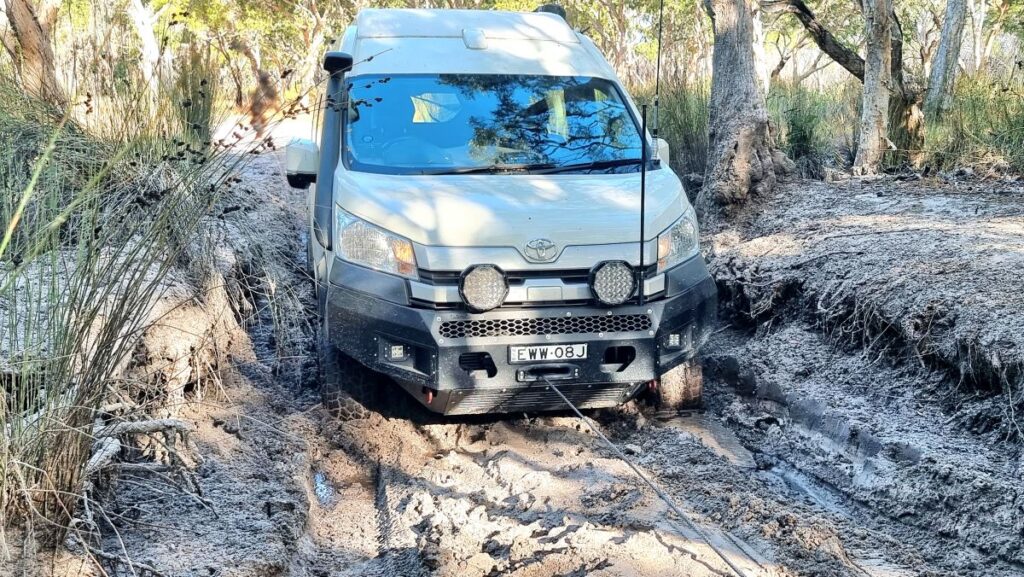
Can you tackle this type of trip and return home alive, sane, happy and still married or friends with whom you took off with?
For most folk, a short weekend camping trip is easy. An extended week-long jaunt may test your nerve, your ability to get along with your fellow travellers, and your driving ability. A month or two’s adventure will really test your wits if you’re not used to travelling in remote and adverse conditions. It’s these longer trips that can inevitably change a person for life – for better or worse!
Being bitten while up north is almost a given. So long as it’s only mosquitoes and midges, you’ll be OK, but it’s best to pack the sprays and lotions to prevent them as much as possible. Crocs and Stingers are where you’ll end up worse for wear, so heed all warnings about swimming in and hanging around waterways. Just because you can’t see them, doesn’t mean they’re not lurking below the surface, ready to snap!
The heat and humidity are relentless. Depending on the time of year of your visit, it’ll either be bad or horrendous. Staying hydrated and wearing a broad-brimmed hat will go a long way to avoiding heat stroke.
Yes, this Cape trip tested us and our vehicle, but given that we have undertaken quite a few longer, more remote and challenging trips, we’re accustomed to the harsh realities and revel in the peace and quiet found only away from crowds.
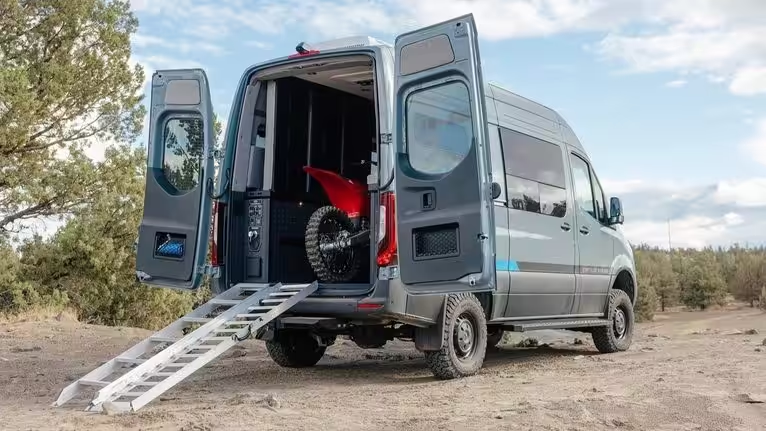
As for our choice of vehicle, as much as I loved everything about my Troopcarrier, this converted 4WD HiAce is a better bet for touring. It’s easier to live with and in, is more comfortable, uses less fuel (though not overly efficient), offers a much-improved sleeping and living area, and provides access to cooking and storage via side sliding doors and a rear lift-up tailgate.
Yep, it has its drawbacks, with a lack of ground clearance (even though it’s been raised by over 150mm from a standard 2WD HiAce), but I wouldn’t swap back to a Troopy for general touring, remote-area touring, tougher tracks, or all-round adventuring.
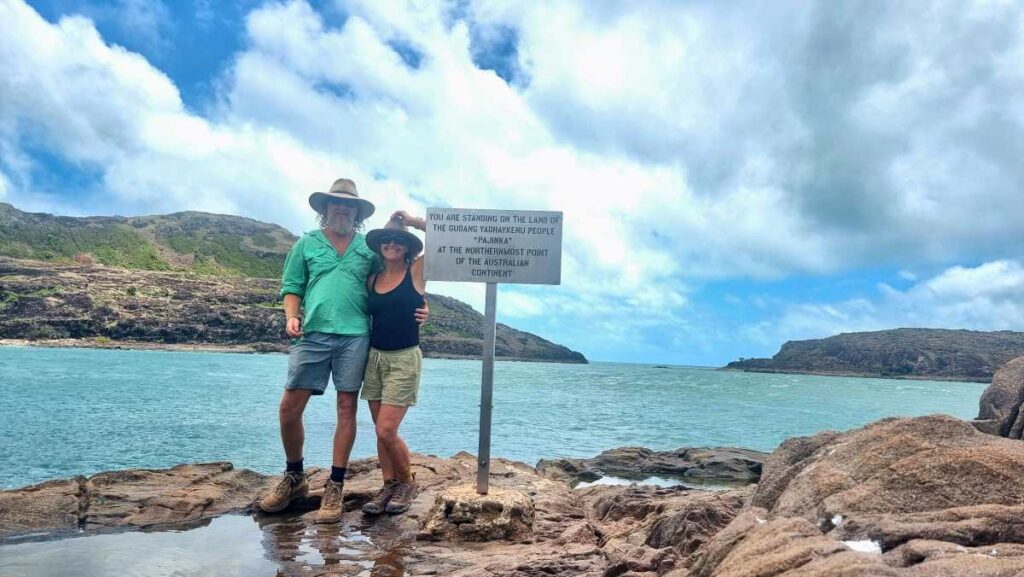
Cape York isn’t really about proving how tough your vehicle is. It’s about getting out there, slowing down, tackling a few challenges and experiencing one of the wildest corners of Australia in whatever rig gets you there.
Our editors carefully select the products we feature to ensure they meet the needs of our readers. If you purchase through links on our site, we may earn a small commission. This helps keep our content free and does not cost you anything. Read our full affiliate disclosure.