
Ute Tray vs Canopy: Which Setup Is Right For You?
Comparing a ute tray vs canopy? Learn the pros, cons, costs and best options for touring, towing, trade work and everyday use.
Published on: 5 November 2025
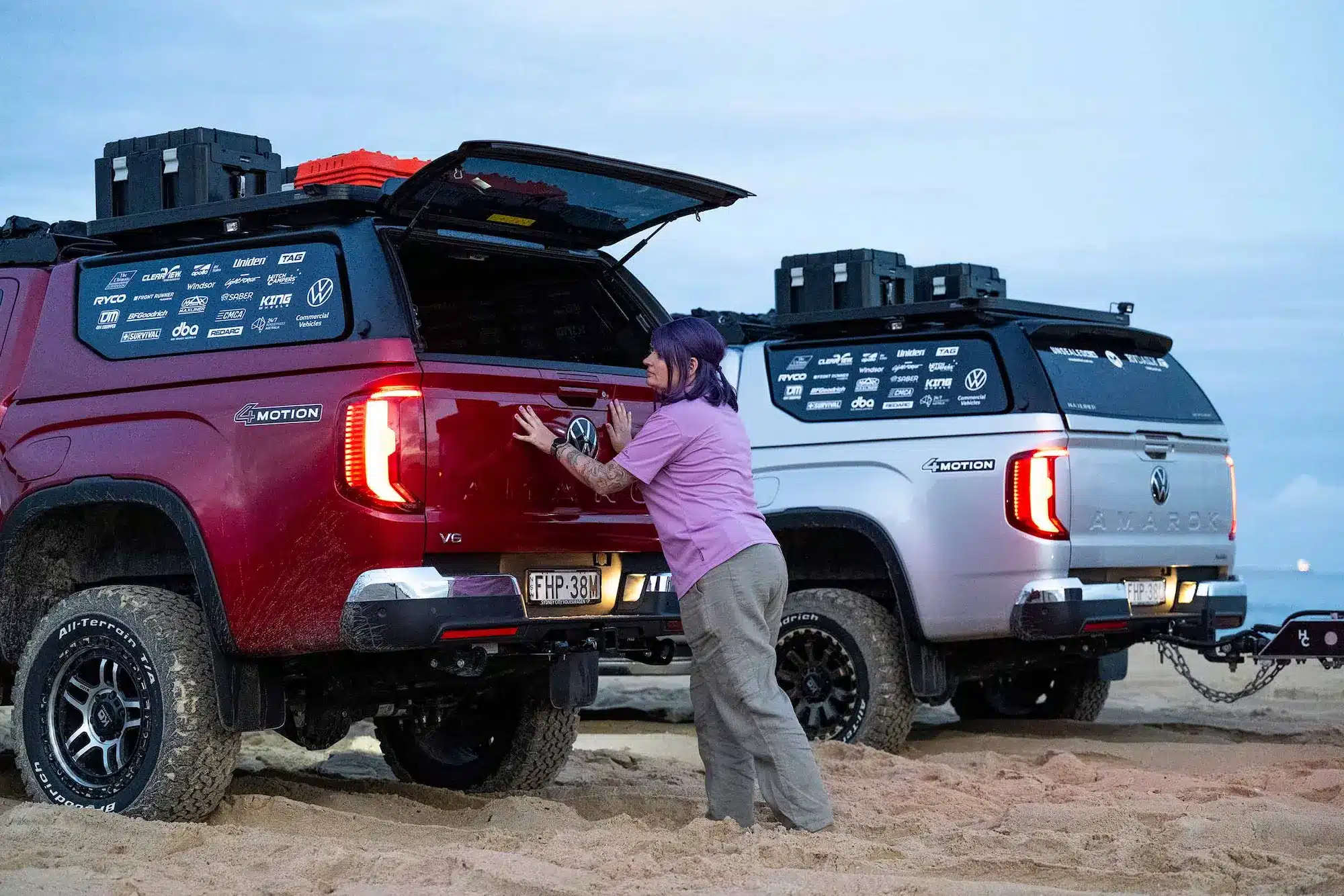
If you’re thinking about buying a ute and using it to carry stuff, whether for work, recreation or touring with the caravan, you’re going to need to understand what’s available for the back of your vehicle. With everything from basic vinyl covers to custom-built aluminium expedition setups on the market, making the right choice can feel overwhelming.
I’ve owned several utes over the years and experimented with different ute canopies and tray styles. Some worked brilliantly, while others taught me expensive lessons. This guide draws on that experience to help you choose the best setup for your needs.
The setup you choose for the back of your ute affects far more than just storage space. It influences security, weather protection, ease of access, vehicle weight and ultimately how practical your ute is for the way you use it.
For tradies, that might mean carrying tools and materials safely and efficiently. For caravanners and tourers, it could mean creating secure, weatherproof storage for recovery gear, camping equipment and supplies.
It’s also important to remember that everything you add to your ute adds weight. Canopies, drawer systems, fridges, batteries, recovery gear and passengers all eat into your available payload. For anyone towing a caravan, understanding payload limits and weight distribution is just as important as choosing the right tray or canopy.
Before diving into the different options, here’s a quick overview of the most common setups.
| Option | Security | Weather protection | Best for |
|---|---|---|---|
| Factory tub | Low | Low | Everyday use |
| Flat tray | Low | None | Trade work and oversized loads |
| Fibreglass canopy | High | High | Touring and caravanning |
| Aluminium canopy | High | Excellent | Remote travel and long-term touring |
| Service body | Very High | Excellent | Trade and fleet applications |

One of the biggest decisions you’ll make is whether a tray or a canopy better suits your needs.
A tray is an open load-carrying platform that prioritises accessibility and flexibility. Trays make it easy to load bulky items, building materials, machinery and equipment that may not fit inside an enclosed space.
A canopy is an enclosed storage solution that sits either on a factory tub or a tray. Canopies provide security, weather protection and additional organisation, making them particularly popular with caravanners, campers and touring enthusiasts.
Neither option is automatically better than the other. The right choice depends entirely on how you use your vehicle.
| Feature | Tray | Canopy |
|---|---|---|
| Security | Low | High |
| Weather protection | None | Excellent |
| Access to gear | Excellent | Good |
| Load flexibility | Excellent | Moderate |
| Touring suitability | Good | Excellent |
| Trade suitability | Excellent | Good |
As a general rule, trays suit people who regularly carry large or awkward loads, while canopies suit those who want secure, organised and weatherproof storage.
Before choosing a tray or canopy, think carefully about how you’ll actually use your vehicle.
If you’re a tradie carrying timber, tools or machinery, quick access and load flexibility may be your biggest priorities. If you’re towing a caravan or heading away on extended touring trips, secure storage, dust protection and organisation are often more important.
There are plenty of options that try to offer the best of both worlds, but every setup involves compromise somewhere. The best choice is usually the one that suits how you use your ute most often rather than the occasional trip or task.
With that in mind, let’s look at the different ute tray options available.
Let’s look at the different ute tray types available, from basic factory options to custom-built solutions.
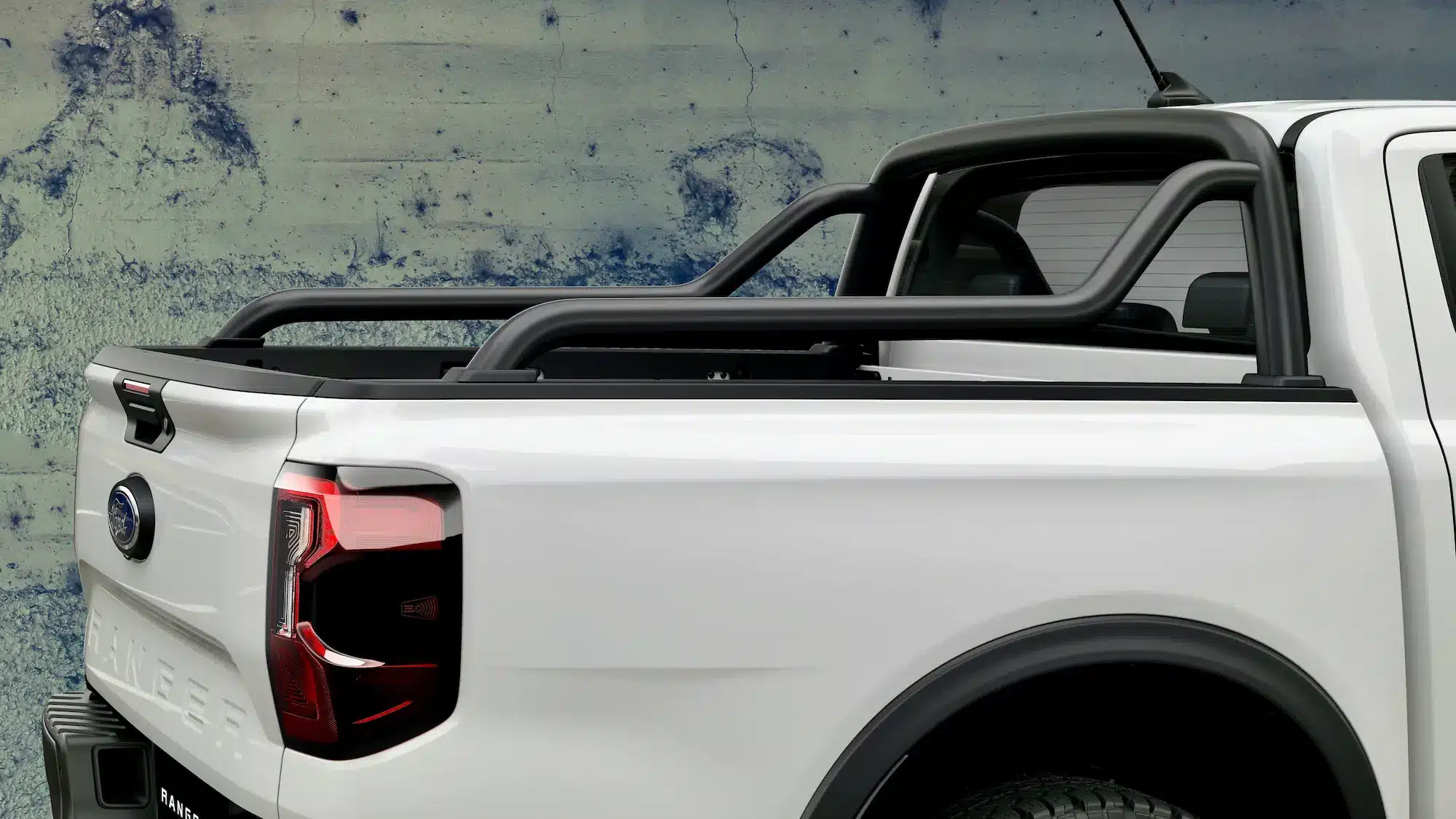
Most utes arrive as standard with a tub unless you select the factory tray option. These are typically steel construction with an open top, solid sides, and drop-down tailgate.
Best for: Budget-conscious buyers using the ute primarily for work with loose materials, or as a temporary solution before upgrading.
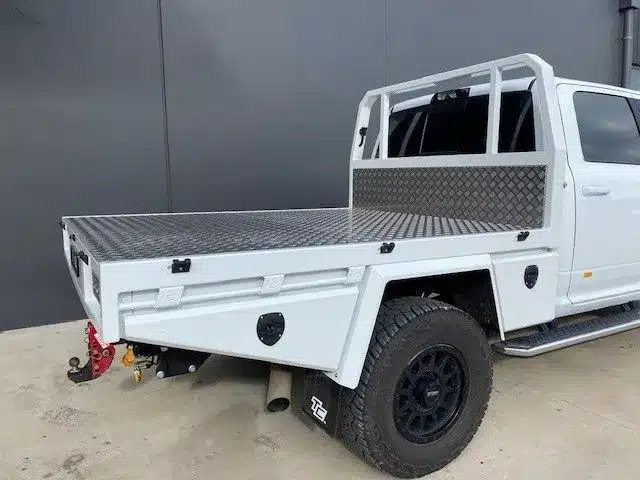
Most flat trays from dealers are aluminium with fold-down and removable sides (courier-style). Aftermarket trays can be made to your size and requirements, and there are plenty of small engineering and fabrication businesses that make beautiful-looking trays. Some people skilled with a welder will make a custom tray themselves.
Typical cost: $2,500-$7,000 depending on size and features (aluminium), $1,500-$4,000 for basic steel options.
Best for: Tradies who need to carry building materials, landscapers, or anyone regularly hauling awkward loads. Also popular with serious four-wheel-drivers who want maximum ground clearance and easy access to recovery gear.
This is where things get interesting when it comes to types of ute trays. Custom-built aluminium trays offer a significant step up from factory options, with features designed specifically for your needs.
Tommy Campers custom trays are an excellent example of Australian innovation in this space. These aren’t just trays, they’re engineered platforms designed to integrate seamlessly with slide-on campers and canopies.
Built from laser-cut aluminium components, Tommy Trays feature:
The beauty of a properly designed custom tray is versatility. You can configure it for touring one week, then adapt it for work the next. The investment in a quality tray provides a solid foundation for whatever canopy or setup you choose later.
Other quality custom tray manufacturers include:
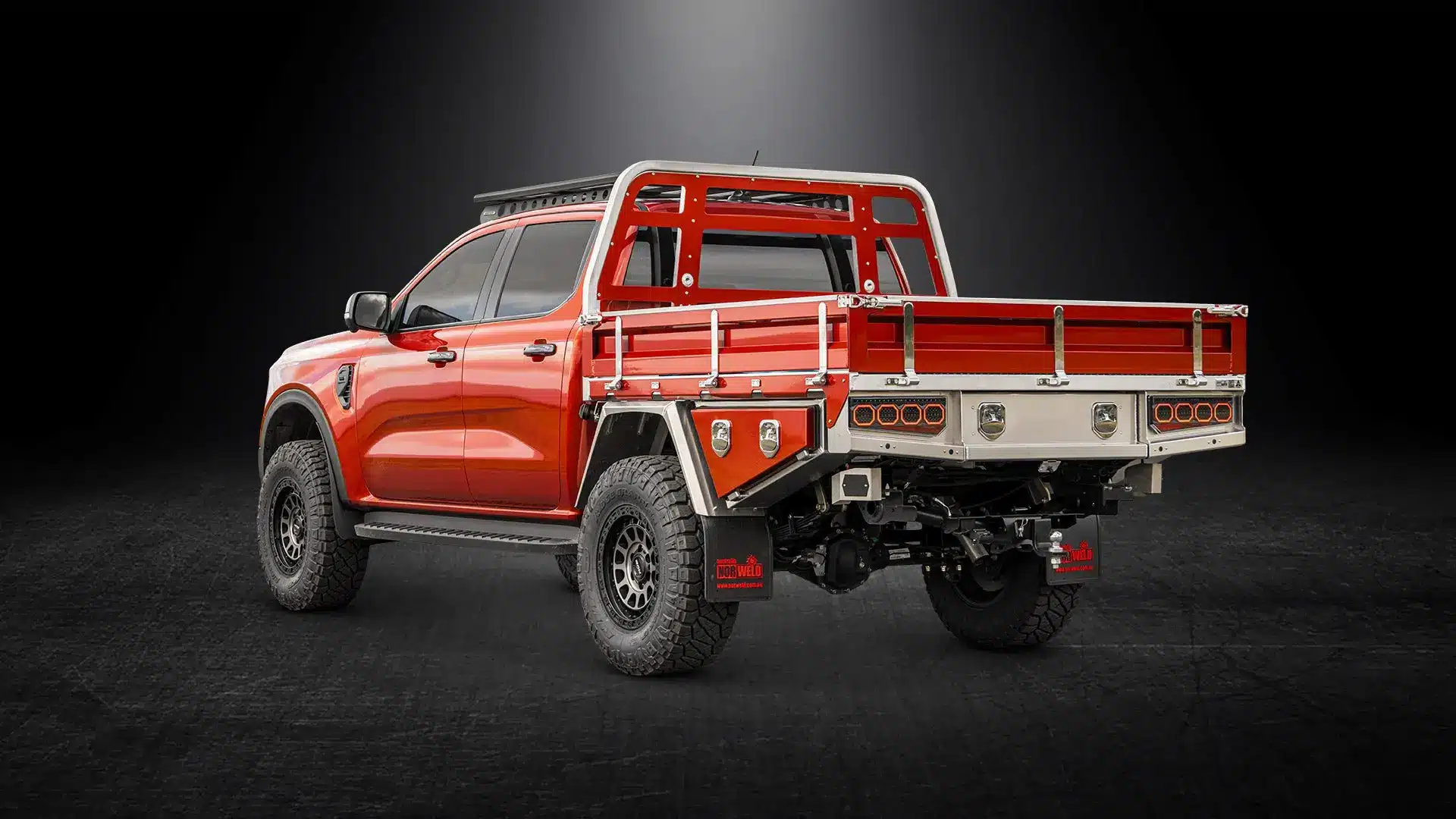
Typical cost: $4,000-$12,000 depending on complexity and fitout options.
Best for: Serious tourers building a dedicated setup, trades requiring specific tool storage solutions, or anyone wanting the foundation for a comprehensive ute system.
Buying a second-hand ute tray can be an excellent way to save money, particularly if you’re planning a touring build, work setup or caravan-towing rig. A quality aluminium tray can cost many thousands of dollars when purchased new, so it’s no surprise that second-hand trays are a popular option.
However, not all used trays are created equal. Before handing over your money, it’s worth taking the time to inspect the tray properly and make sure it will suit both your vehicle and the way you intend to use it.
Start by standing back and looking at the tray as a whole. Does it sit straight? Does anything appear twisted, bent or damaged?
Pay particular attention to:
A tray that looks visibly distorted may have been overloaded or involved in an accident. Minor cosmetic damage is one thing, but structural damage can be expensive to repair.
One of the first things to check on any second-hand ute tray is the quality of the welds.
Look closely for:
Also inspect the mounting points where the tray attaches to the vehicle. Damaged or modified mounting points can create problems when fitting the tray to another vehicle and may even raise compliance concerns.
Steel trays are particularly susceptible to rust, especially if they have spent years exposed to the weather or carrying wet materials.
Check:
Aluminium trays generally resist corrosion much better, but they should still be inspected carefully for damage and signs of electrolysis around fittings and fasteners.
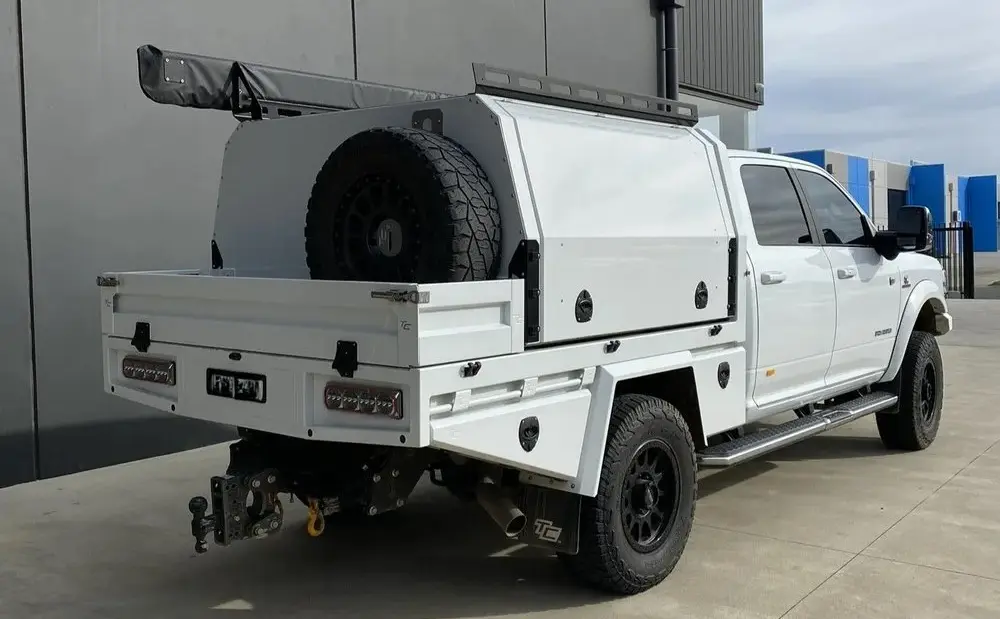
Many ute trays spend their lives carrying heavy equipment, tools and building materials.
Warning signs can include:
If a tray appears to have been overloaded regularly, it may not have much life left in it regardless of how good it looks from a distance.
Many second-hand trays are sold with valuable extras already fitted.
These may include:
Check that all locks, hinges and latches operate correctly. Accessories can add significant value, but only if they’re in good working order.
Not every tray will fit every vehicle. Before purchasing, confirm:
A bargain tray quickly becomes expensive if it requires extensive modification before it can be fitted.
Whenever possible, ask the seller:
A tray that spent its life on a touring vehicle may have had a much easier existence than one used daily on a construction site.
In many cases, yes.
A quality aluminium tray can last for many years and buying second-hand can save thousands of dollars compared to purchasing new. As long as the tray is structurally sound, suits your vehicle and hasn’t been abused, it can represent excellent value for money.
For buyers willing to spend a little time inspecting their options, a second-hand ute tray can be one of the most cost-effective upgrades available.
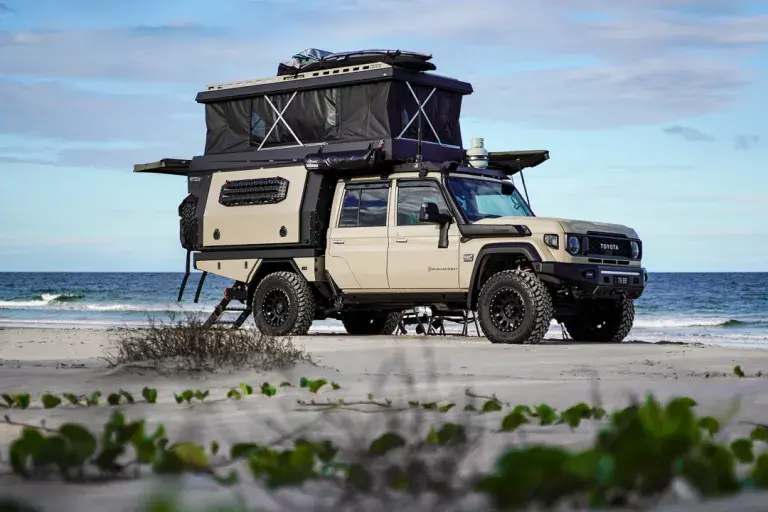
Once you’ve decided on a tray or tub setup, the next step is choosing how you want to cover or enclose it. Options range from simple tonneau covers through to fully fitted aluminium touring canopies, with each offering different levels of security, weather protection and practicality.
Vinyl tonneau covers remain one of the most affordable ways to protect the contents of your tub. Modern versions fit far better than older bungee-cord designs and can usually be rolled or folded back when required.
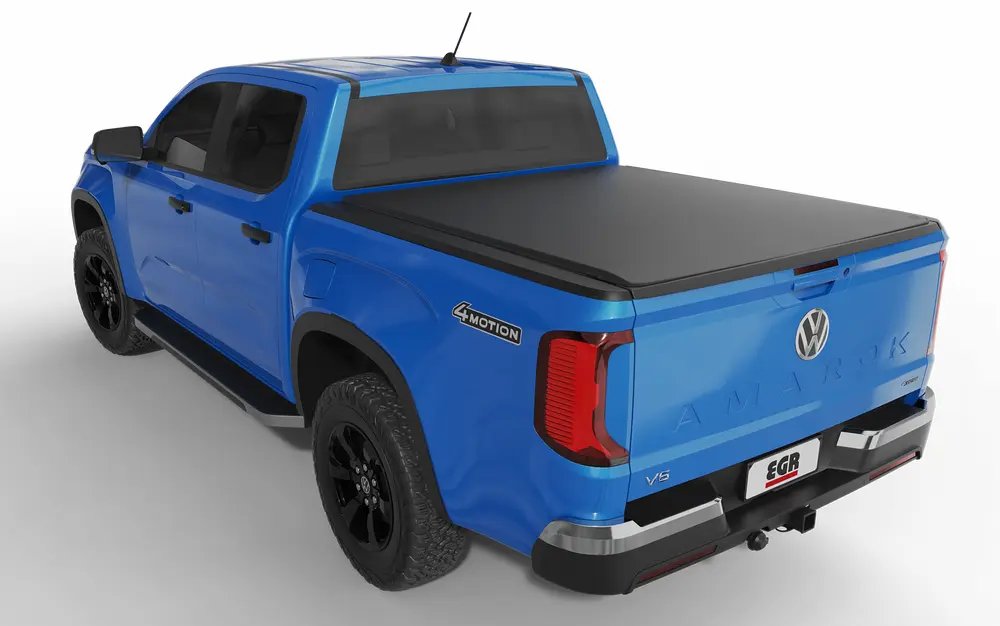
Typical cost: $300-$800.
Best for: Owners wanting basic weather protection without spending a fortune.
Hard lids are typically constructed from fibreglass or ABS plastic and mount to the top of the tub. Most use gas struts and lift like a large hatch, while some models allow roof racks or sports bars to be fitted.
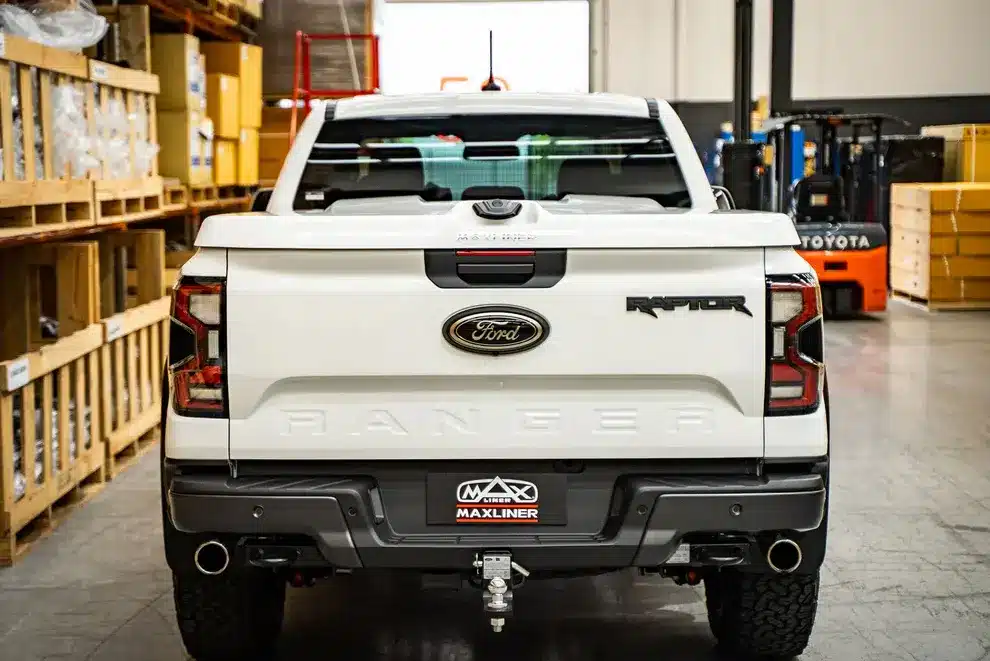
Typical cost: $1,200-$4,500
Best for: Daily drivers who want secure storage without the size and weight of a full canopy.
Roll-top covers operate much like a roller door, retracting into a housing at the front of the tub. Available in both manual and electric versions, they have become increasingly popular on modern dual-cab utes.
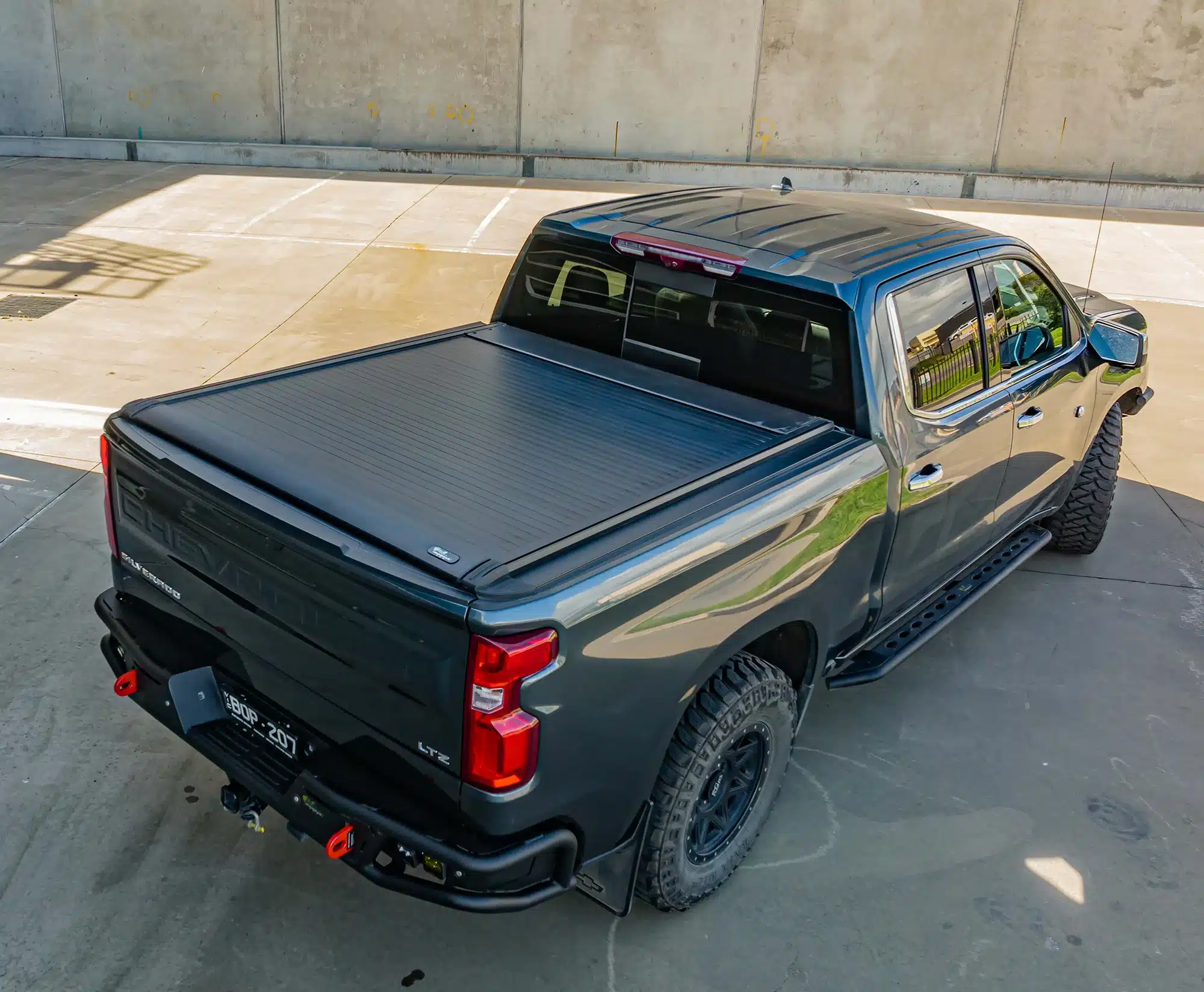
Typical cost: $1,200-$4,500
Best for: Owners wanting a balance of security, convenience and everyday practicality.
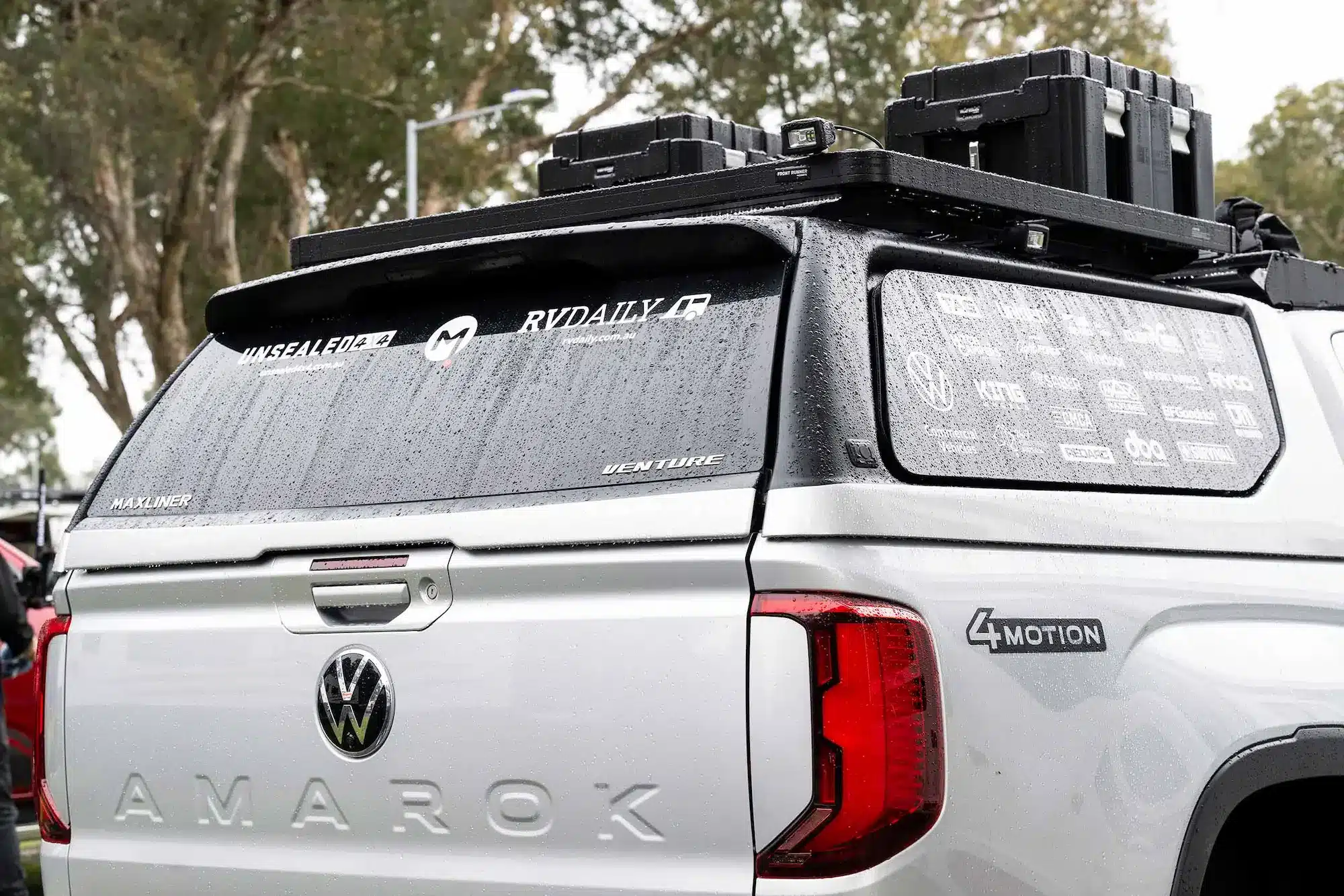
For many caravanners and tourers, a traditional canopy remains the sweet spot between practicality, security and cost. Mounted to a factory tub, these canopies provide enclosed, weather-resistant storage while allowing room for accessories such as roof racks, drawer systems, fridges and dual-battery setups.
Material options generally fall into three categories:
Best for: Touring, caravanning, camping and secure everyday storage.
| Brand | Material | Best for |
|---|---|---|
| Maxliner | ABS | Touring and value |
| ARB | ABS | Premium touring |
| EGR | ABS | Premium styling and features |
| 3XM | Fibreglass | Value for money |
| Razorback | Fibreglass | Touring and work use |
| Alpha | Fibreglass | Mid-range buyers |
If fibreglass canopies are the sweet spot, aluminium canopies represent the premium end of the market. Built from lightweight aluminium and often mounted to custom trays, these systems are designed for serious touring and remote-area travel.
Many aluminium canopies are fully customisable and can be fitted with electrical systems, water storage, drawer systems, rooftop tents and extensive storage solutions.
Manufacturers such as Tommy Campers, Trojan Canopies, TUFF Australia and MRT/MITS Alloy all offer high-quality options. Whilst Tommy Camper are well known for their slide-on campers, they also manufacture custom aluminium canopies that integrate perfectly with their custom trays.
| Brand | Best for |
|---|---|
| Tommy Campers | Custom touring builds |
| Trojan Canopies | Modular aluminium systems |
| TUFF Australia | Premium touring setups |
| MRT/MITS Alloy | Tray and canopy packages |
| Utemaster Centurion | Premium touring and trade use |
Best for: Serious tourers, remote-area travellers and those building a dedicated adventure vehicle.
These are the type of canopies commonly found on utility, government and fleet vehicles. Built primarily for trades and commercial use, they often feature multiple lockable compartments, heavy-duty construction and excellent organisation.
While designed for work, many travellers have successfully converted ex-fleet service bodies into capable touring setups.

Typical cost: $1,000-$4,000 second-hand; $5,000-$12,000 new
Best for: Tradies, budget-conscious buyers and DIY touring conversions.
Even the best canopy won’t be completely dustproof straight out of the box. Tailgate seals, dust-seal kits and roof vents can dramatically reduce dust ingress and are worth considering if you regularly travel on unsealed roads.
One of the biggest advantages of a canopy is the ability to customise the interior. Common additions include:
The best canopy depends entirely on how you use your ute.
| Use | Recommended option |
|---|---|
| Budget-conscious buyer | Tonneau cover |
| Daily driver | Hard lid |
| Everyday practicality | Roll-top cover |
| Caravan towing | Fibreglass or ABS canopy |
| Touring and camping | Fibreglass or ABS canopy |
| Remote-area travel | Aluminium canopy |
| Trade and fleet work | Service body |
Before fitting a ute tray, canopy or cover, think carefully about whether it is a DIY job or something better left to the professionals.
Most tonneau covers and some hard lids can be fitted at home with basic tools. Standard canopies are more involved, as they may require drilling, wiring and careful alignment. Custom trays and aluminium canopy systems should generally be professionally fitted, as they involve chassis mounting, lighting, wiring and compliance considerations.
As a general guide:
| Setup | Fitment difficulty |
|---|---|
| Tonneau cover | DIY-friendly |
| Hard lid | Moderate DIY |
| Standard canopy | Professional fitment recommended |
| Aluminium canopy | Professional fitment strongly recommended |
| Custom tray | Professional fitment essential |
Most canopies also need electrical connections for brake lights, interior lighting, central locking and 12V accessories. Vehicle-specific wiring harnesses can make the job cleaner, but anything more complex than basic plug-and-play wiring is best handled by a qualified auto electrician.
Legal requirements can vary between states, but it is worth keeping these points in mind:
It might not be the exciting part of building a ute setup, but compliance, payload and insurance matter, especially if you’re towing a caravan or travelling remotely.
The right ute tray or canopy setup comes down to how you use your vehicle most often.
| Fitment difficulty | Consider… |
|---|---|
| Daily work | Flat tray, service body or steel canopy |
| Weekend camping | Fibreglass or ABS canopy |
| Caravan towing | Quality canopy with careful weight management |
| Serious remote touring | Custom tray and aluminium canopy |
| Occasional loads | Tonneau cover, roll-top cover or hard lid |
| Budget buying | Second-hand tray or ex-trade canopy |
There is no single best option for everyone. A tradie carrying building materials will need a very different setup to someone towing a caravan around Australia. Likewise, a weekend camper may not need the same heavy-duty aluminium canopy as a long-term remote-area traveller.
Whatever you choose, keep payload at the front of your mind. Canopies, drawers, fridges, batteries, tools, recovery gear and passengers all add weight, and that can quickly eat into your available payload.
Ultimately, your choice comes down to what you drive, what you tow, what you need to carry and how often you use your ute.
A well-chosen tray or canopy setup can make your ute more practical, more secure and more enjoyable to use. The wrong setup can cost you money, create frustration and make your vehicle heavier or less useful than it needs to be.
Take your time, look at how other owners have set up similar vehicles, ask questions and be realistic about how you’ll actually use your ute. Most importantly, weigh your vehicle once it’s loaded and make sure your setup is legal, safe and suitable for the way you travel.
Note: All prices quoted are approximate as of October 2025 and may vary by location, dealer, and specific vehicle fitment requirements. Always obtain current pricing from suppliers before making purchase decisions.