
Last Updated: 13 January 2026
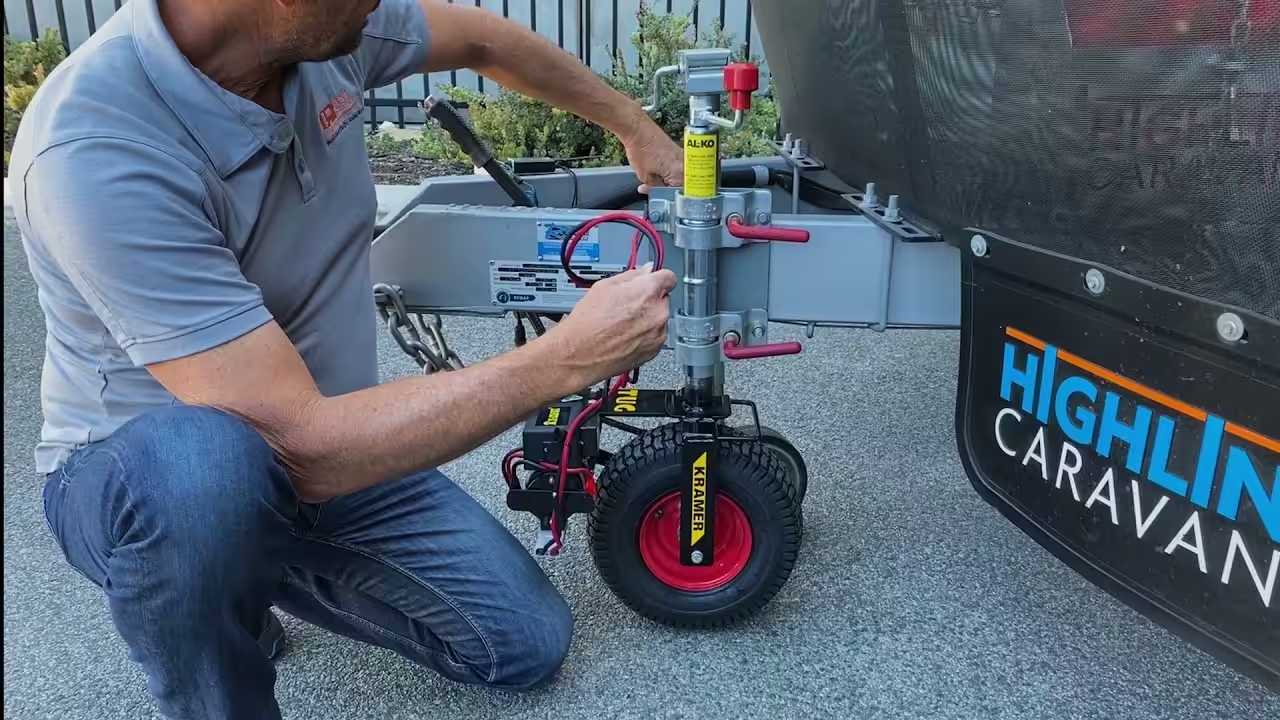
Are electric jockey wheels for caravans worth the expense? Manoeuvring a three-tonne home-on-wheels in a tight driveway can feel like an Olympic powerlifting event, but while motorised units promise to save your back, they aren’t a magic bullet for every surface. Let’s delve into the nuts and bolts of it, shall we?
There are no two ways about it. Caravans are getting heavier and heavier. Sure, a few manufacturers are using some pretty clever techniques to cut the weight down, but it’s quickly piled back on again with an endless list of high-tech gear that’s an absolute must-have. Innerspring mattresses, air-conditioning units, dual-zone internal fridges—all of it adds mass.
While our even fancier tow-tugs might easily pull our home on wheels up and over the range, things aren’t so simple back on the home front. Whether you’re trying to back your van into the shed, pull it out to work on, or you just want to park it in an awkward spot, all that weight can make it difficult to move without a few choice words being yelled at your partner.
Is an electric jockey wheel for your caravan the solution to all life’s problems, or just an expensive way to watch a tyre spin in the gravel? Here’s the harsh truth.
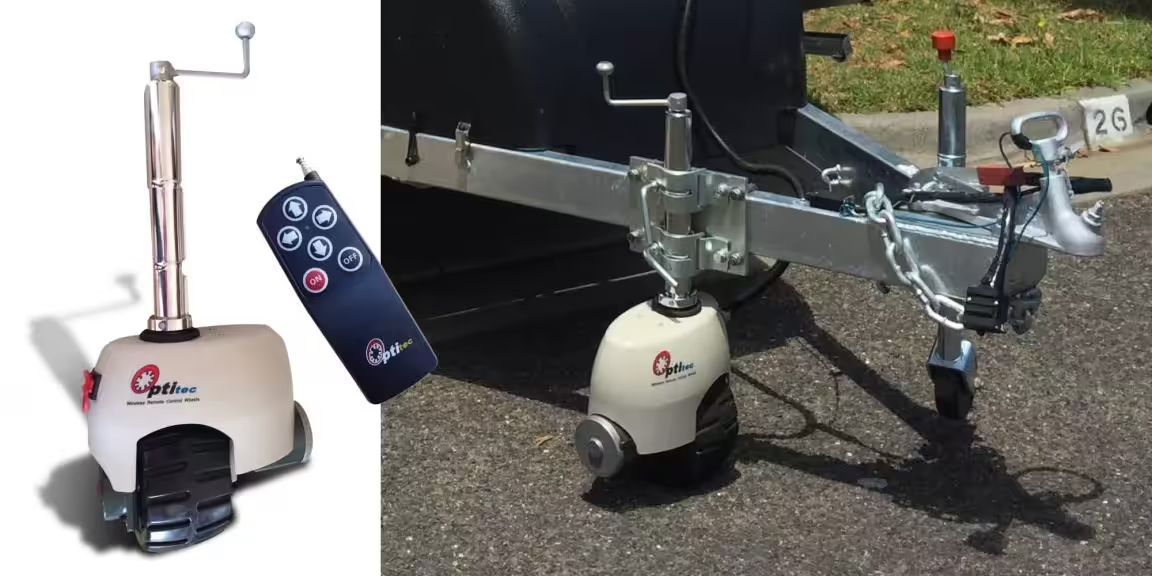
I’m a big believer that for every accessory available, there’s at least one person out there it’d suit perfectly. The motorised jockey wheel is one of those bits of kit that for some owners, just might be the difference between years on the road or calling it quits and settling in for a decade on the lounge watching Matlock.
At first, it may sound like a gimmick. But if you’ve ever looked at your van and wished you could magically manoeuvre it into place without needing to be behind the wheel of your rig, you’d be starting to pick up what I’m putting down. The ability to have your van move independently of a tow vehicle is an absolute game-changer for solo travellers or those with tight storage.
Option up a wireless version like the Optitec V3 and it’ll mean you can bump your van back to within centimetres of your shed’s back wall without any assistance. That’s huge for people keeping their caravan in storage facilities or at the end of a curving driveway where reversing is a nightmare.
Hot Tip: Some owners even use their motorised jockey wheel to ‘drive’ the caravan into a spot A-frame first. This makes it effectively impossible for a thief to hook up and take your pride and joy while you’re away.
You can get the job done without a crowd of onlookers at the caravan park judging your reversing skills with a glass of rosé in hand!
If motorised jockey wheels did everything they promised, they’d just be called jockey wheels and you’d never buy a manual one again. So, where exactly do they come unstuck? It comes down to a little thing called physics.
Imagine hooking your van up to the back of a postie bike and trying to tow it. Lacking the grip to move it safely, that skinny back tyre would just spin. Electric jockey wheels are a little better with their wider footprints, but the principle remains: it’s a lot of weight to control with one small contact patch.
You get what you pay for in the world of caravan accessories. Cheap motorised units from the usual online marketplaces will run you between $350 and $600. In my experience, these often provide “cheap” results: questionable warranties, specs that don’t match reality, and motors that struggle with anything heavier than a box trailer.
If you want a unit that actually works for a modern caravan, you’re looking at the premium end of the market.
| Product Type | Approx. Price (AUD) | Best For |
|---|---|---|
| Budget Motorised (e.g., T-Rex) | $380 – $550 | Light trailers / Flat concrete |
| Premium Motorised (Optitec V3) | $2,600+ | Heavy vans / Remote precision |
| Fixed Caravan Movers (Purpleline) | $1,500 – $4,300+ | Grass, gravel, and steep inclines |
| Heavy-Duty Manual (Ark XO) | $350 – $450 | Reliability / Off-road durability |
Before you drop two grand, consider if one of these might solve your parking problems for less:
1. Fixed Caravan Movers
If your van absolutely needs to be self-propelled, caravan movers like the Purpleline range might be the better bet. They stay mounted to the chassis and drive the main wheels directly. This gives you way more traction on grass or gravel than any single jockey wheel ever could.
2. A Better Mechanical Jockey Wheel
Sometimes you don’t need a motor; you just need a wheel that doesn’t sink. The Ark XO 750 Series is a beast of a thing with dual wheels and multiple height settings. It’s tough as nails and won’t run out of battery midway through a turn.
3. Education and Tech
Would a $300 towing course give you the skills to reverse into that spot without the gadgets? Those skills transfer to every trailer you’ll ever own. Combine that with a decent wireless reverse camera, and you might find you don’t need the motorised help after all.

Like most things in life, there’s no clear-cut answer. It all comes down to your situation. If you’re on a budget, you’re almost always better off buying a high-quality manual off-road jockey wheel over a cheap motorised “bargain” that’ll likely fail when you need it most.
If you have a flat, concrete driveway and a heavy van that needs to be pivoted into a tight shed, a premium electric jockey wheel like the Optitec is a fantastic investment. However, if your driveway looks like the back track up Mt Everest and is covered in loose rock, save your money and look at fixed caravan movers instead.
Reverse your van like a pro: Tips and tricks
How to tow off-road without breaking things
When you buy through these links, RV Daily may earn a small commission. It doesn’t change the price you pay, and it helps us keep producing practical tips and guides for vanners at no cost to you.