Caravan bike racks are a crucial accessory for active families, but fitting them aftermarket requires precise calculations to avoid compromising your vehicle’s tow ball weight or trailer stability. I reckon I’ve seen more bikes hanging off the back of vans than at a local BMX track, but I’ll make a confession: I’ve also seen plenty of setups that were one big pothole away from a diabolical disaster.
With so many families hitting the road, attention turns to keeping the kids entertained. This usually means bringing their bicycles along. Bikes aren’t just for kids though; many adults bring their bikes along to keep fit. In addition, with the rising popularity of eBikes and folding eBikes, riding has become even more accessible.
The problem is, if your caravan didn’t come with bike racks (which they rarely do), you will likely need to have them fitted. Unfortunately, this is not as simple as it may seem. You see, bicycles weigh quite a lot, especially electric ones, and this in itself presents quite a few issues.
Average bicycle weights
Type and size of bicycle
Typical weight range
Road bikes
8 to 9 kg
Mountain bikes
9 to 13 kg
Beach cruisers
15 to 18 kg
Kids’ bikes
10 to 12 kg
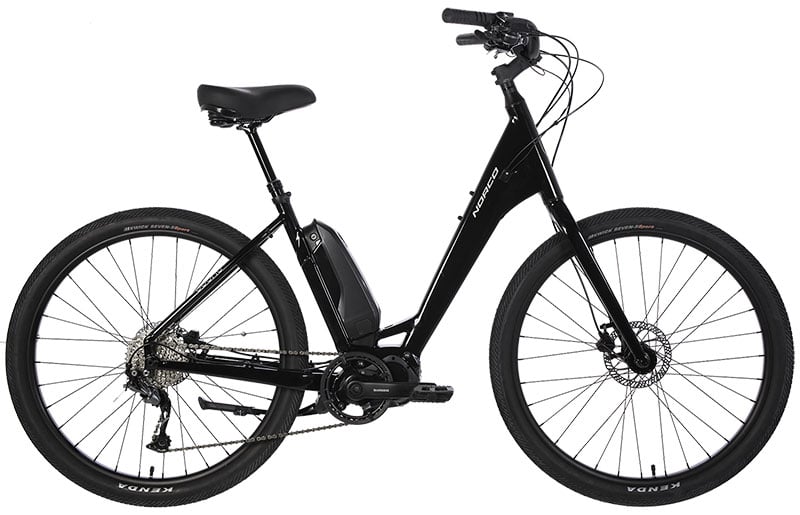
Electric bikes
17 to 31 kg
Average weights based on standard adult and child frame sizes.
E-bikes are great but they can be a bit on the heavy side.
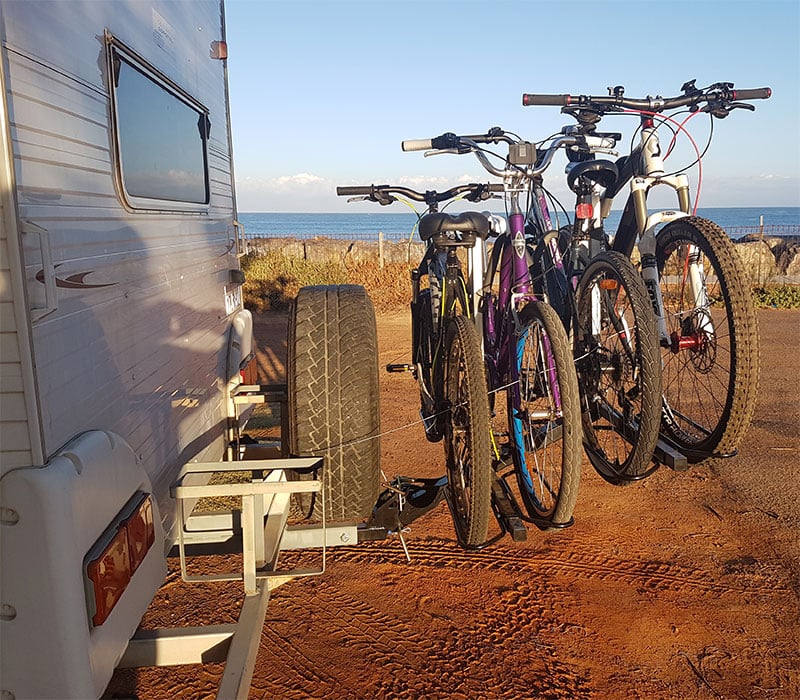
Remember, these weights are for individual bikes. It is more than likely you will want to carry more than one. For a typical family of four, you could be looking at adding around 50kg to your load. Next, you will need to have a bike rack on your caravan that is capable of holding the bikes steady while travelling over Australia’s less-than-fantastic roads. Depending on the model, racks can add another 10 to 20kg. It all adds up rather quickly.
Consider your tow ball weight
Most vans and campers are designed to make it easy for owners to get their weight distribution right, particularly when it comes to tow ball weight. The general rule of thumb is to have between 8% and 10% of the loaded weight of the trailer over the tow ball.
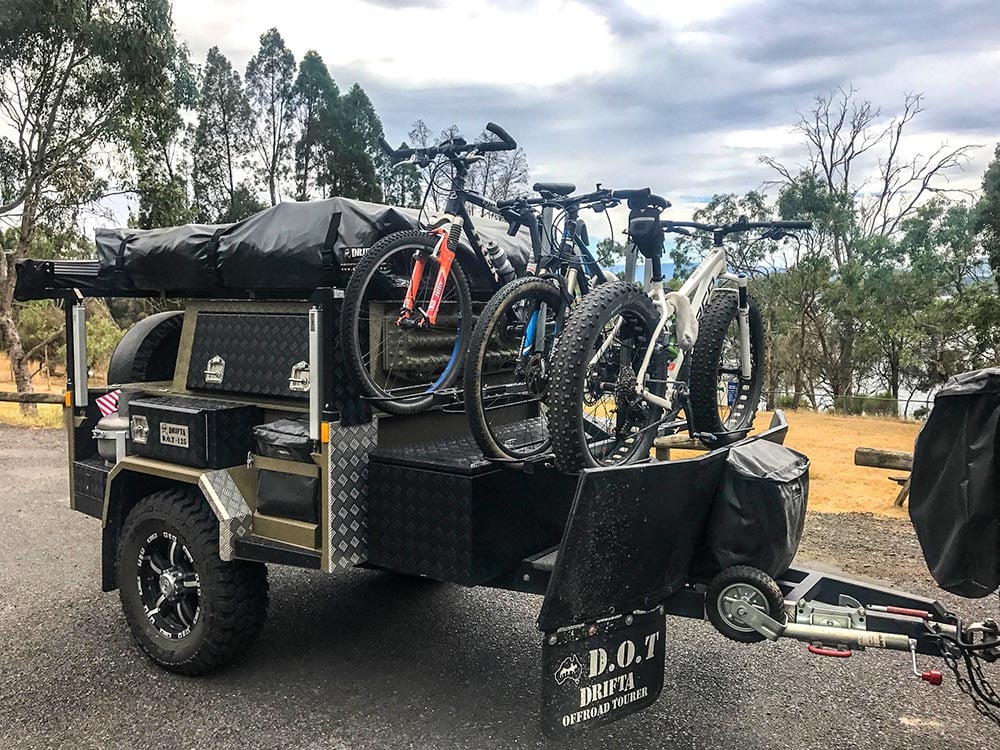
So a caravan that weighs 2,500kg fully loaded should have a tow ball weight of around 250kg. Now, let’s assume you want to add a bike rack on top of the toolbox on the caravan’s A-frame. We’ll just look at adding two adult mountain bikes for now. You could expect the bikes and the rack to hold them to weigh around 30kg all up. That may not sound like much, but that weight over the toolbox will likely add around 20 to 25kg directly to the tow ball weight.
Putting this many bikes on the drawbar will add close to 40kg to the tow ball weight. Check with the manufacturer to ensure the A-frame is strong enough.
Hot Tip: If putting a bike rack on the front of your caravan is the only solution, I reckon you should invest in a set of tow ball scales. That way you can rearrange some of your internal gear to compensate and get the distribution right before you hit the highway.
Consider your rear end
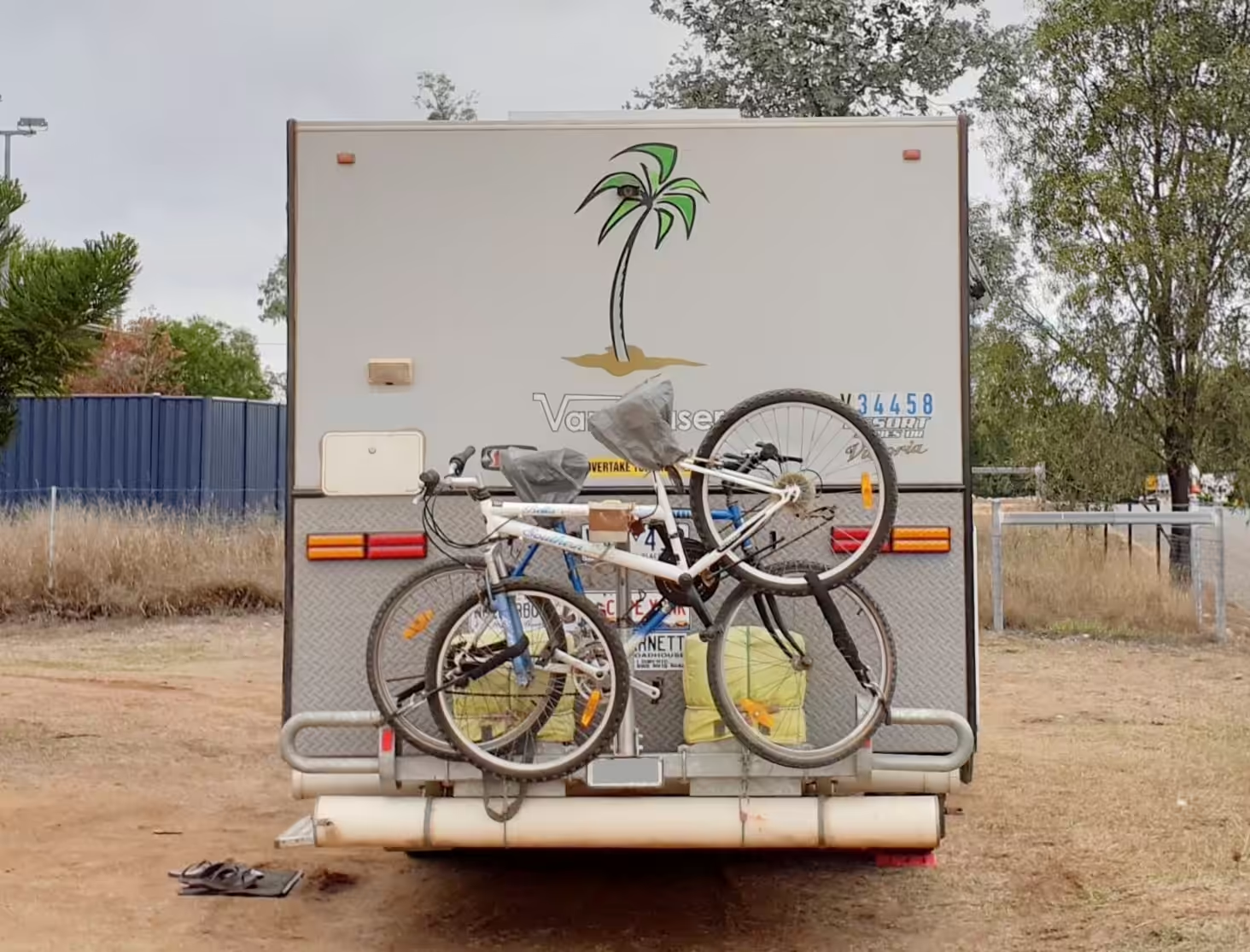
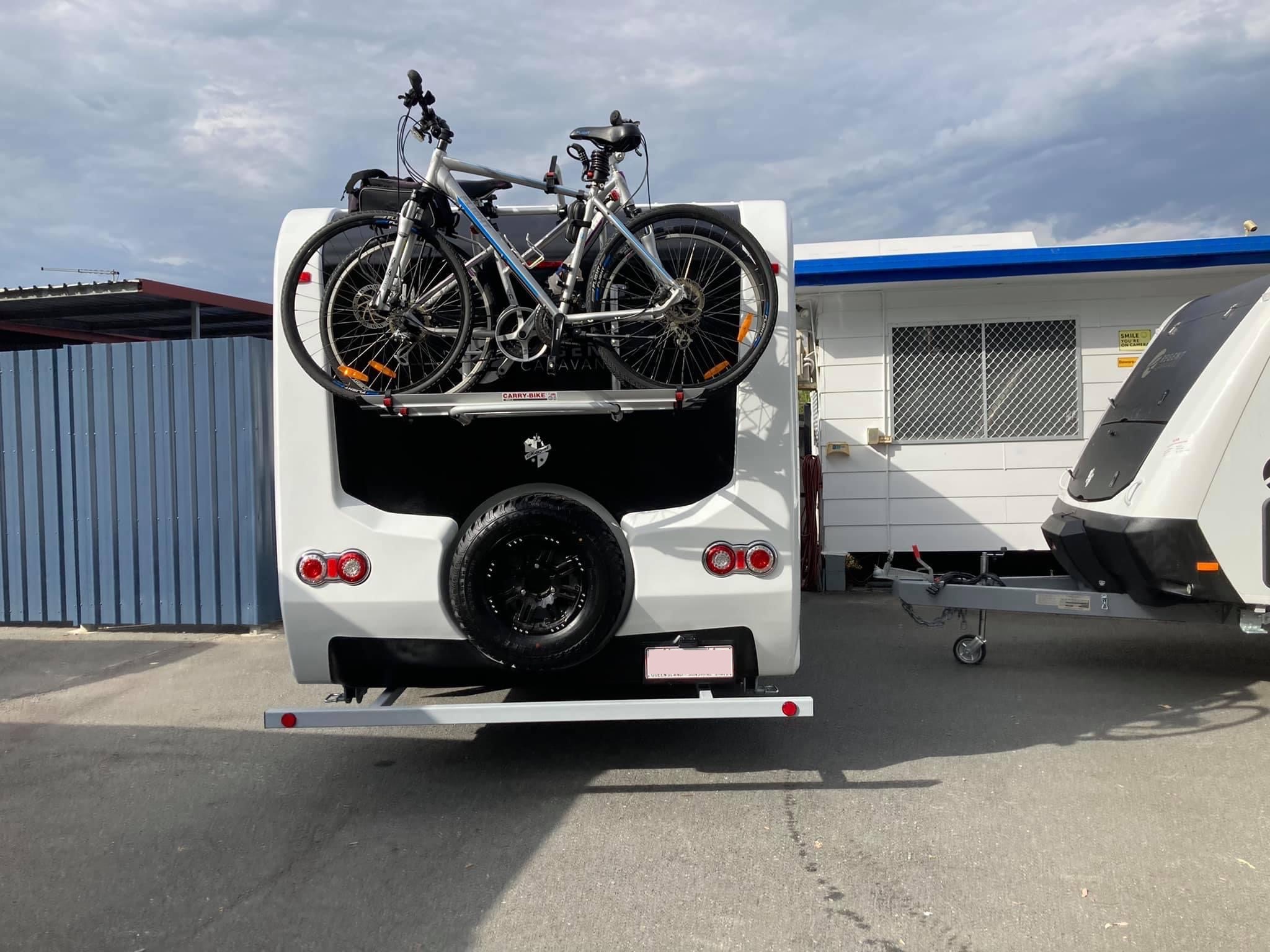
Just as adding weight to the front can affect handling, putting a caravan bike rack on the back presents a different set of dangers. In fact, when it comes to caravan stability, this is probably the worst place to add weight.
The reason for this is that extra weight on the rear of the trailer will lessen the tow ball weight. Anything less than 8% of the overall weight of the van as tow ball weight will likely make the van extremely unstable, resulting in the dreaded wobbles. You can counteract this effect to some degree by rearranging gear, but it is rarely successful once the pendulum effect kicks in.
Placing 60kg of weight at the very back of the van can have a diabolical effect on the rig’s stability at speed.
Is your caravan up to the job?
When manufacturers build a caravan with the intention to fit a bike rack, they will usually incorporate additional bracing to the frame. If you’re thinking about adding a rack to an existing caravan, you are living in hope that the structure can support the load. Remember, most caravan timber frames were not designed to have 30kg or more bouncing around on the rear wall.
If a bike rack on the back is your only choice, contact the manufacturer and ask about suitability. I reckon it’s also worth limiting the number of bikes you carry to just one or two if you’re mounting to the bumper bar.
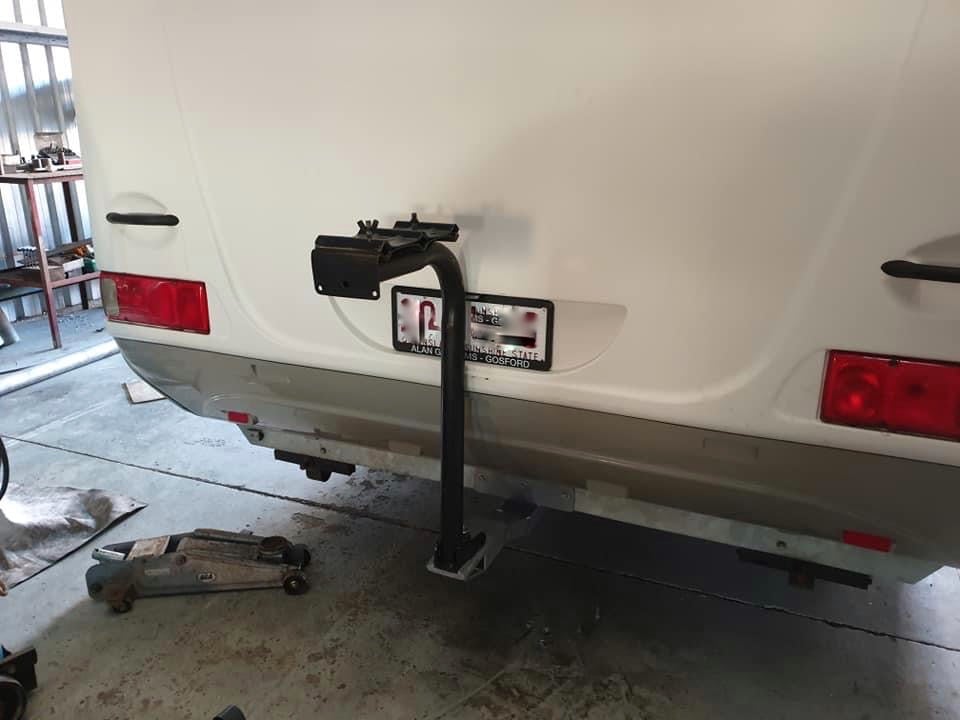
Can you still see the lights and number plates?
All trailers on Australian roads must conform to the Australian Design Rules (ADRs), specifically VSB1. These requirements state that all lamps and reflectors must be installed to ensure no equipment obstructs the light output.
In other words, you can’t just put a huge bike rack on the back without ensuring it doesn’t obstruct the trailer’s lights or the registration plate. Doing so could land you with a hefty fine. You may have to fit a secondary set of lights and a dedicated number plate if the rack is permanent.
Most road authorities sell special number plates for bike racks if the standard plate is obstructed.
Is your caravan bike rack convenient to use?
Let’s say you’ve solved the weight and legal issues. There’s one last problem: actually using the thing. Bike racks on drawbar toolboxes or rear walls are often mounted quite high. Lifting a 25kg e-bike onto a chest-height rack requires serious fitness and often a step ladder.
I’ve seen so many setups where the bikes have never been used because it’s simply too much trouble to take them off and put them back on. Make sure you’re actually going to use those bikes enough to justify the physical effort and the set-up time.
Think about the physical effort required to lift heavy bikes up and down from high mounts.
The verdict
I’m not trying to talk you out of taking the bikes along – they’re a great way to explore the area once you’ve unhitched. But fitting a caravan bike rack is a balancing act. If you do your research, check your tow ball weights, and ensure your van’s structure is up to the task, it’s a brilliant addition to your touring setup. Safe travels!
When you buy through these links, RV Daily may earn a small commission. It doesn’t change the price you pay, and it helps us keep producing practical tips, guides, and inspiration for RV travellers at no cost to you.