
Motorhome vs Campervan: What’s the difference (and which one is right for you?)
Motorhome vs campervan: what’s the difference? A simple beginner guide to help you choose the right RV in Australia.
Published on: 1 April 2026
Spend five minutes in any caravan park or free camp and you’ll see everything from big, bus-style motorhomes to compact campervans tucked into tight spots. But if you’re new to RV travel, one question comes up pretty quickly: What’s the difference between a motorhome and a campervan – and which one should you actually choose?
It’s not just about size. The choice between a motorhome vs campervan can affect how comfortable you are on the road, where you can travel, how much you spend, and even how confident you feel behind the wheel.
In this beginner-friendly guide, we’ll break down the key differences, pros and cons, licensing requirements in Australia, and which type of RV is best suited to different travel styles, so you can make the right call before you hit the road.
In short, motorhomes generally have more space and comfort and campervans are usually a little simpler with more flexibility.
| Feature | Motorhome | Campervan |
|---|---|---|
| Size | Large (6–12m) | Compact (4.5–6m) |
| Comfort | High (full amenities) | Basic to moderate |
| Driving | Can be more difficult | Easy |
| Fuel use | Higher | Lower |
| Best for | Long trips, families | Short trips, flexibility |
If you’re still figuring out what type of RV suits your travel style, it’s also worth checking out our beginner guides to caravans and camper trailers below.
Before diving into the specifics, it’s important to understand what sets motorhomes and campervans apart. While both offer the convenience of travelling with your accommodation, they cater to different types of travellers and trips.
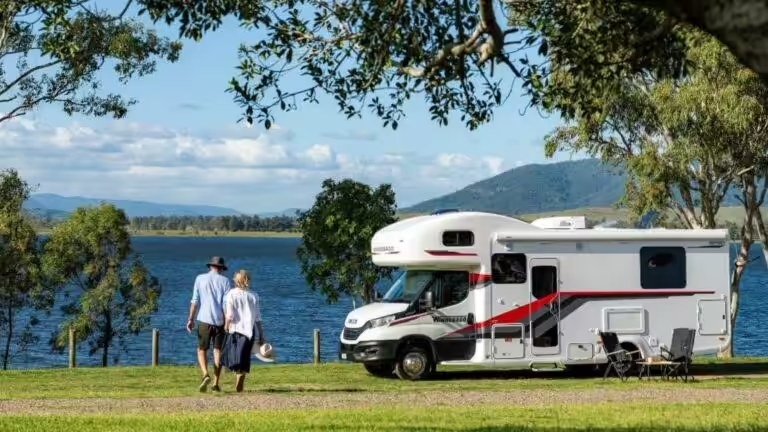
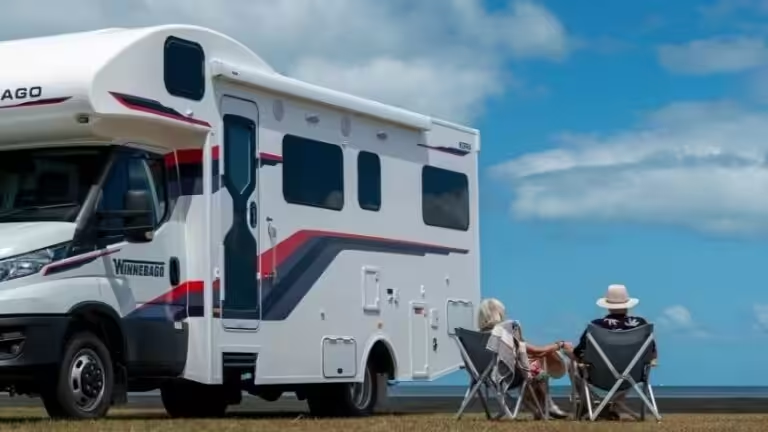
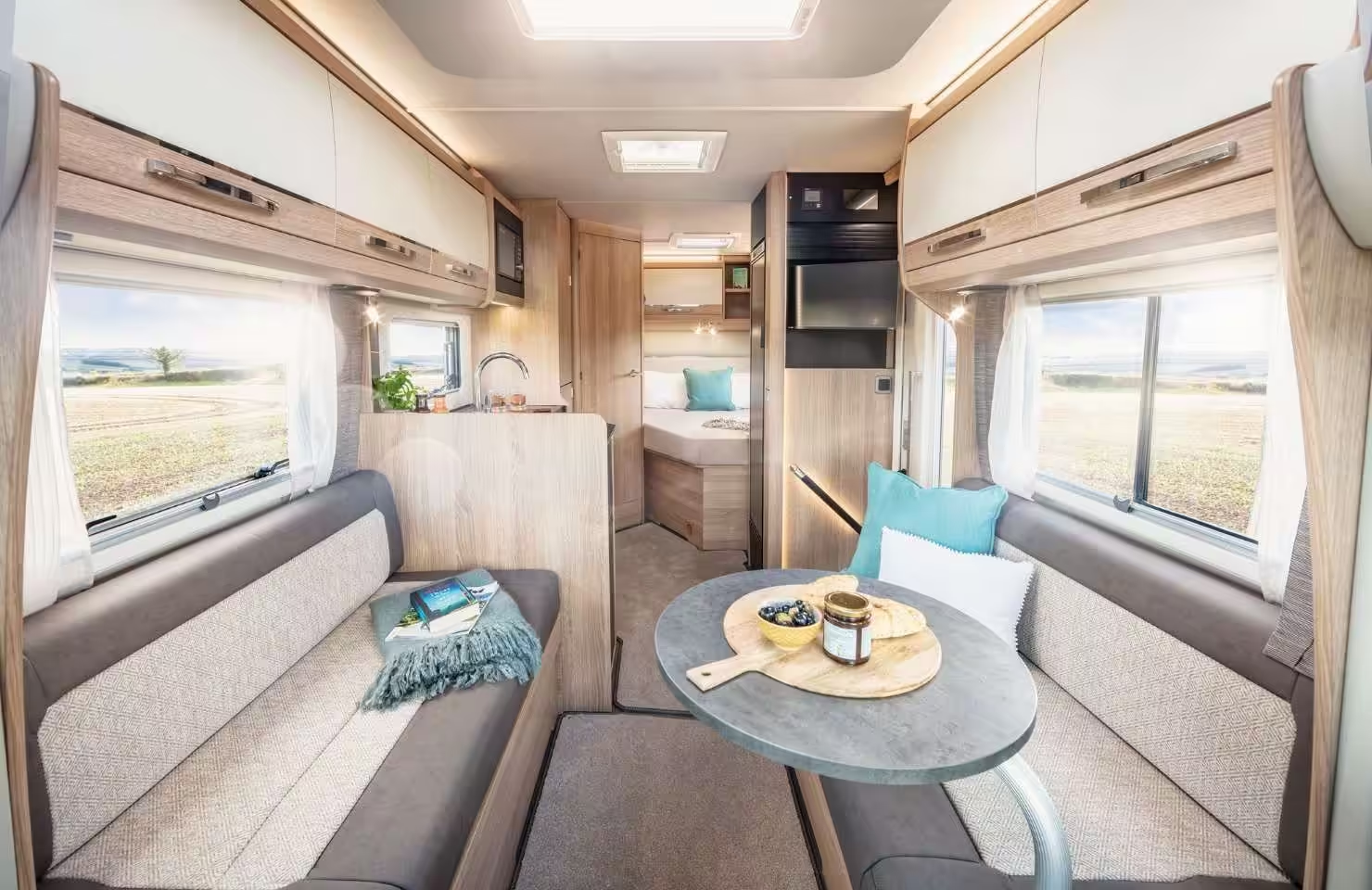
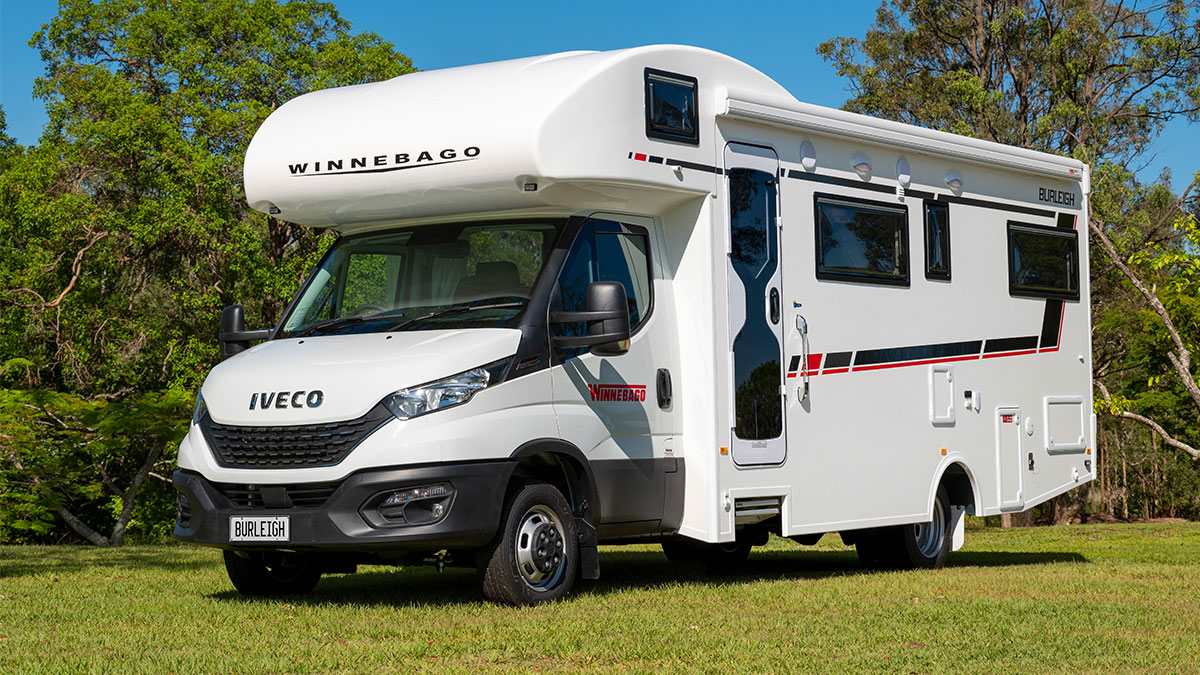
Motorhomes are larger RVs built on a truck or bus chassis, designed to provide a home-like experience on the road. They typically include separate living areas, such as a bedroom, bathroom, kitchen, and dining space.
Because of their size, motorhomes often include more amenities, such as full-sized beds, larger kitchen appliances, and sometimes even a washer and dryer. These vehicles are ideal for those who plan to spend extended periods on the road and want all the comforts of home with them.
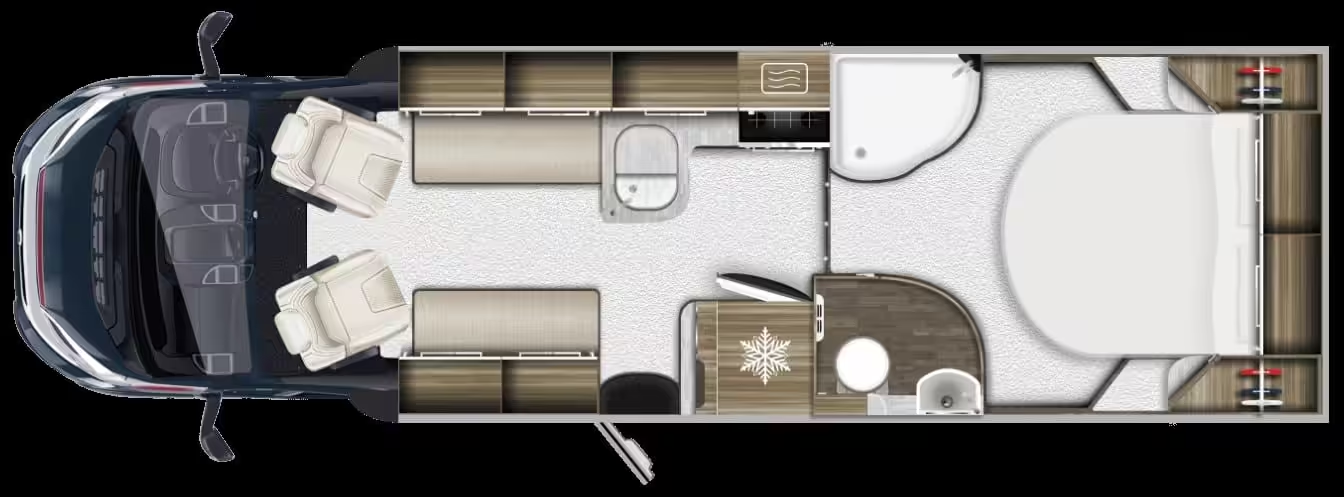
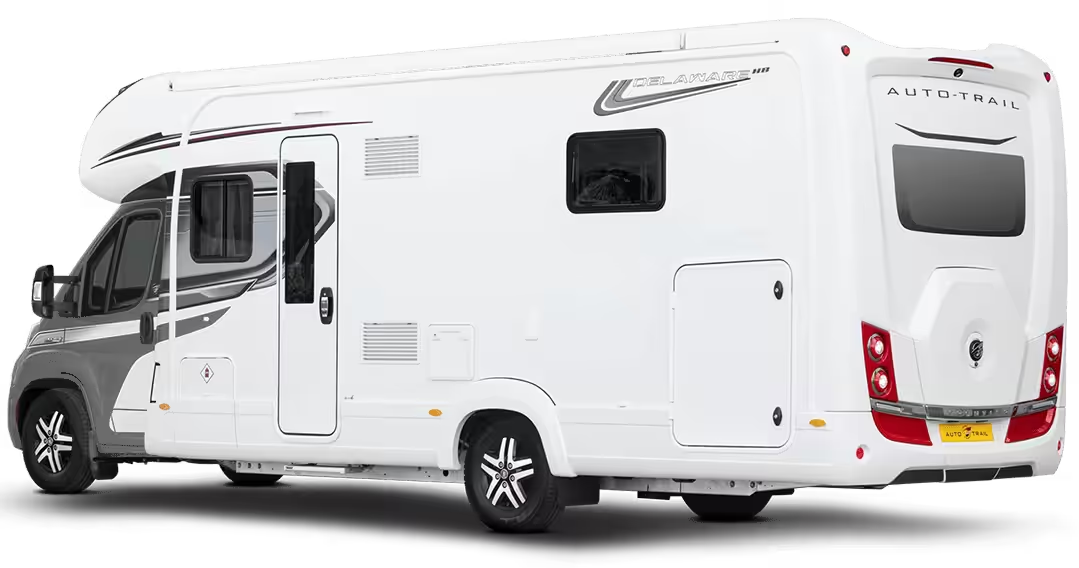
Brands like Winnebago are well known for this style of travel, offering spacious layouts and a range of motorhomes designed for longer touring around Australia.
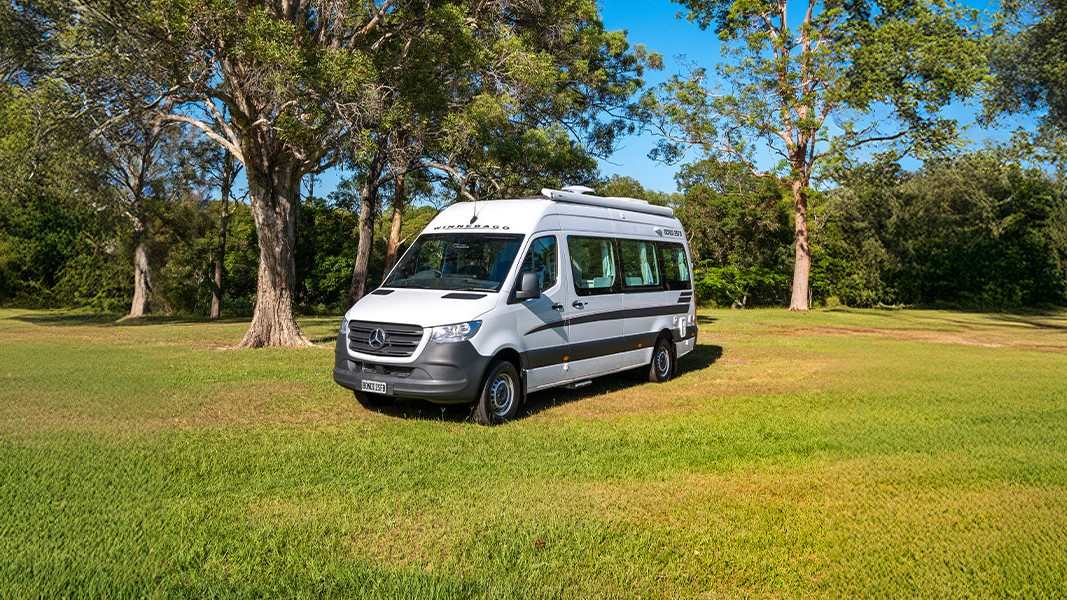
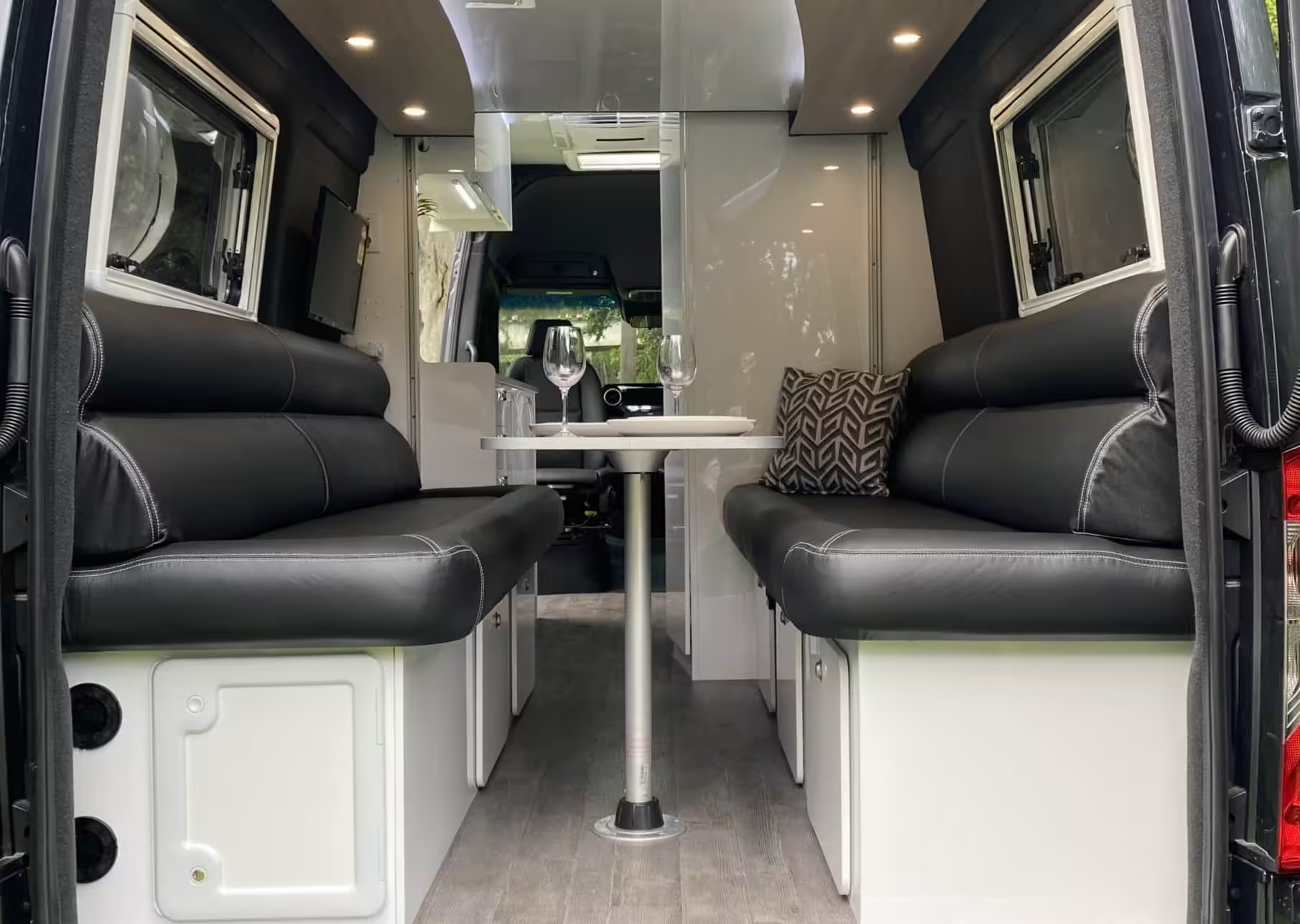
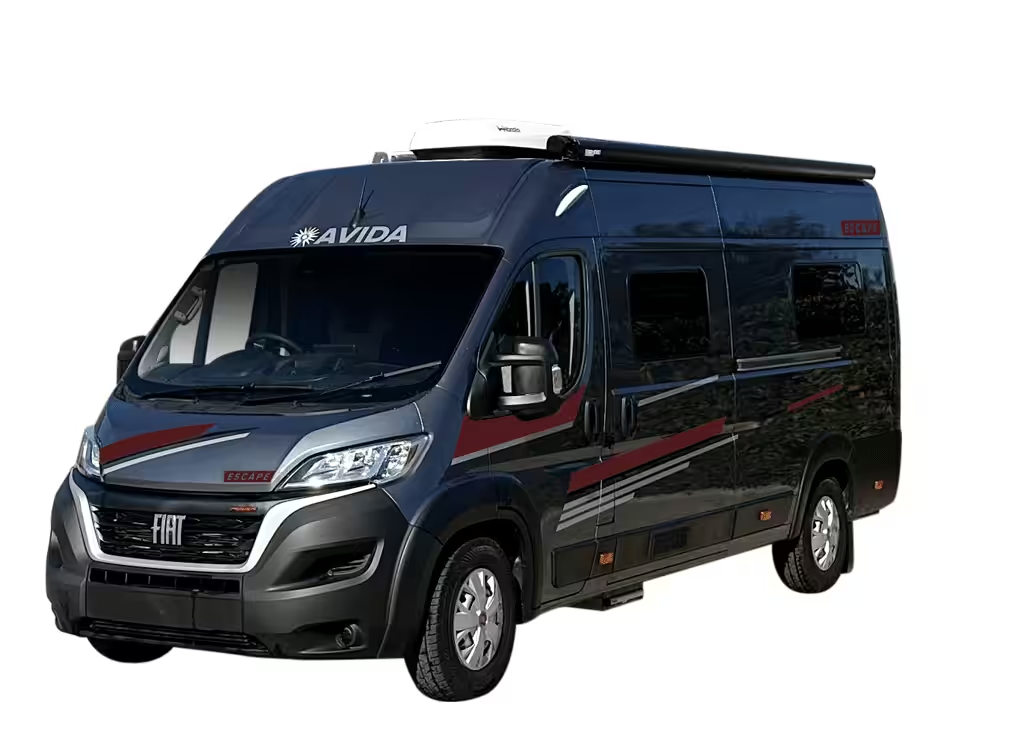
Campervans, on the other hand, are more compact vehicles, usually built on a van chassis. They offer the essentials for living on the road, but in a more confined space. Campervans typically include a sleeping area, a small kitchen, and sometimes a toilet.
They are easier to drive and park compared to motorhomes, making them a popular choice for shorter trips or for travellers who want to explore off-the-beaten-path locations where a larger vehicle might not fit.
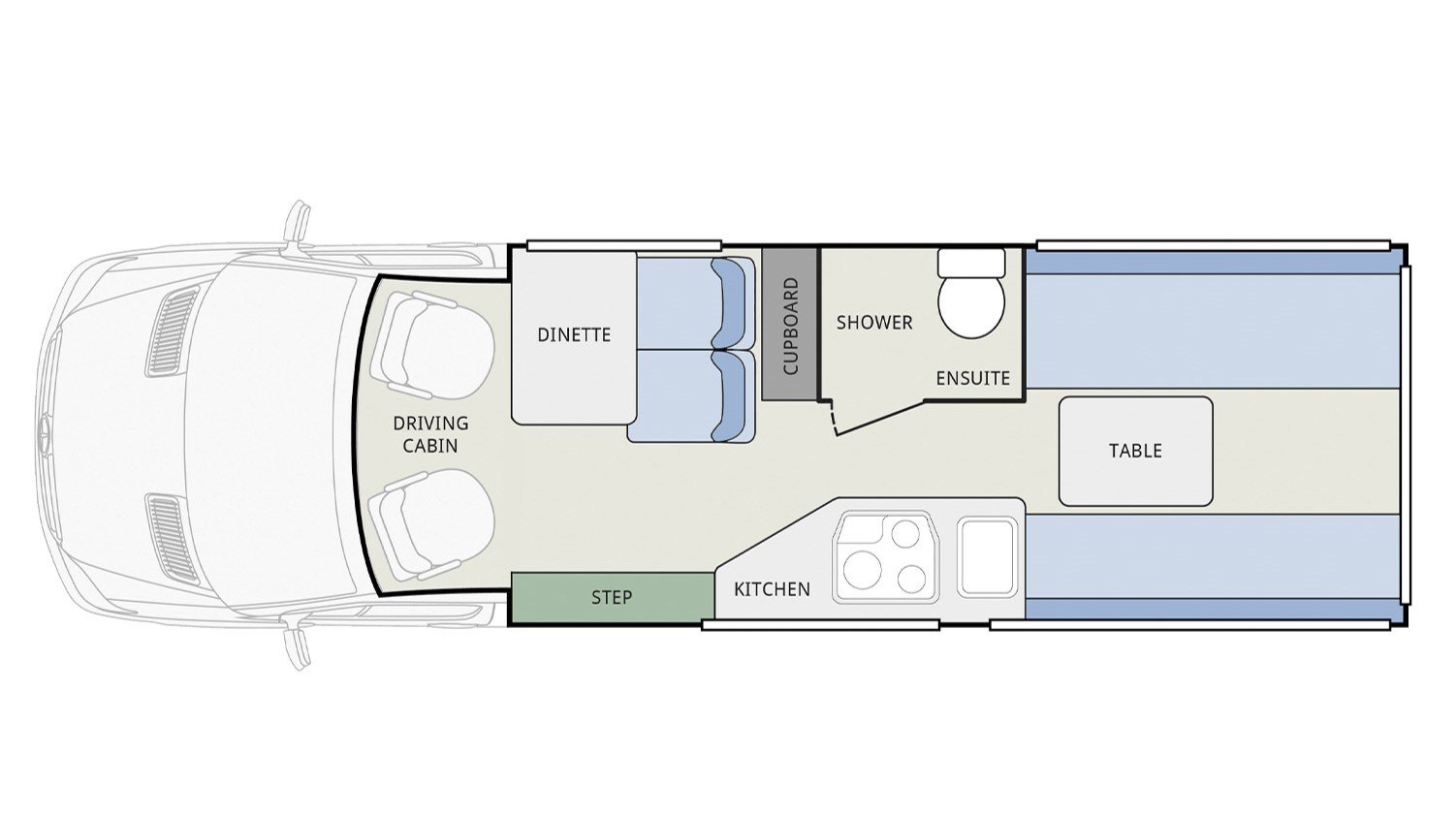
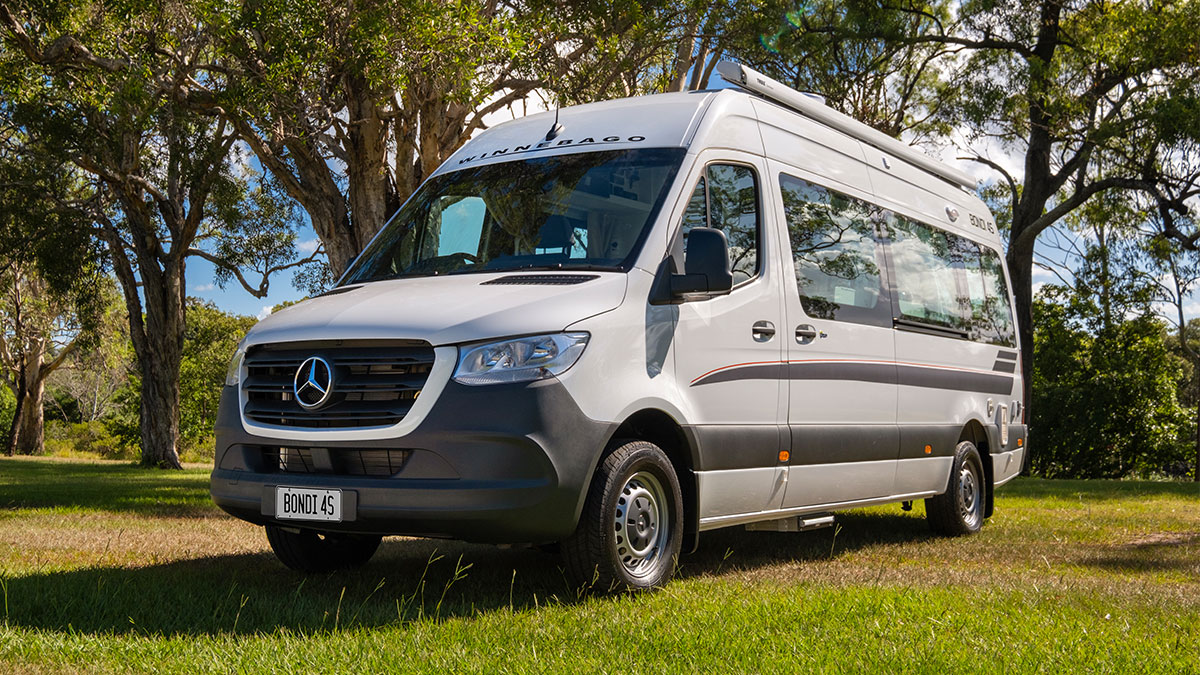
Some brands, including Winnebago, Avida and Jayco, also offer more compact campervan-style options, giving travellers a balance between comfort and drivability.
When choosing between a motorhome and a campervan, it’s important to understand the key differences so that you can make the right decision based on your travel needs and lifestyle.
Motorhomes: With more space comes the ability to include a wider range of amenities. Motorhomes often feature separate sleeping areas, full kitchens with larger appliances, spacious bathrooms, and sometimes even luxury items like a washer and dryer. They provide a more comfortable living experience, especially for longer trips or when travelling with family.
Campervans: While campervans offer the essentials, the smaller space means amenities are more compact and less luxurious. You might have a fold-out bed instead of a fixed one, a small kitchenette rather than a full kitchen, and a portable toilet instead of a full bathroom. However, the simplicity can appeal to those who value minimalism and are more focused on the adventure than the amenities.
Motorhomes: Generally, motorhomes are larger, often ranging from 6 to 12 meters in length. This size provides more living space and room for additional amenities, but can make driving and parking more challenging, especially in urban areas or narrow roads.
Campervans: Campervans are more compact, typically between 4.5 to 6 meters in length. Their smaller size makes them easier to handle, park, and navigate through city streets or off-road trails. This makes them an excellent choice for those who plan to travel to remote locations or who prefer the flexibility of exploring without worrying about space constraints.
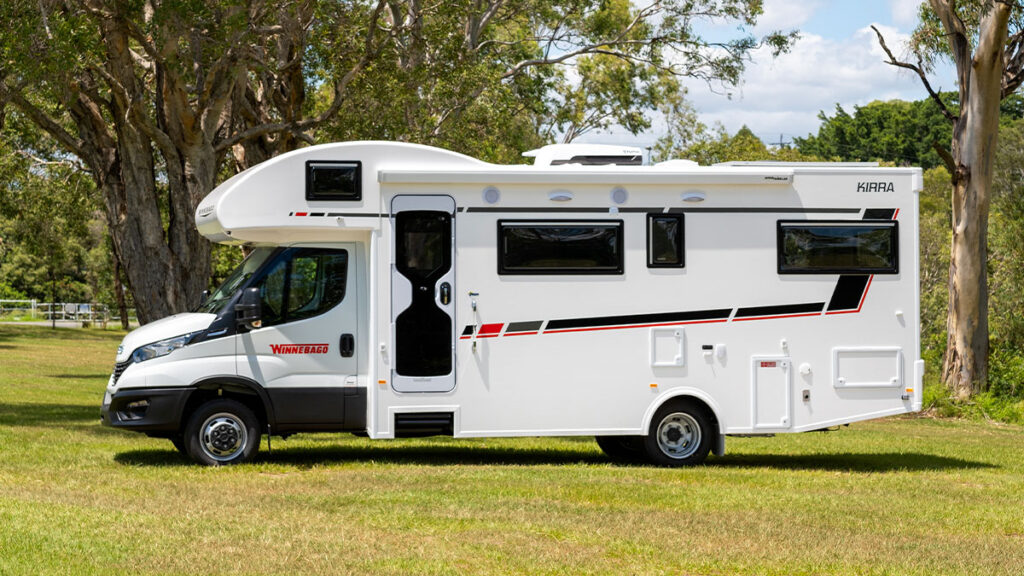
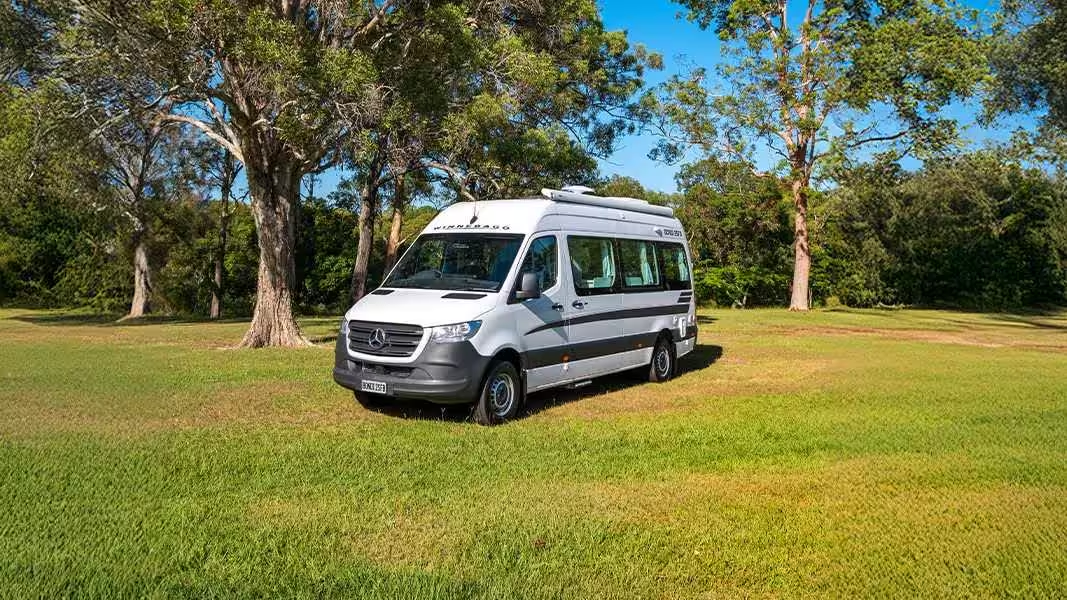
Motorhomes: The larger size and additional amenities come with a higher price tag. Motorhomes are generally more expensive to purchase and maintain. They also have higher fuel consumption due to their size and weight. Insurance costs can also be higher.
Campervans: Campervans are usually more affordable, both in terms of initial purchase and ongoing maintenance. Their smaller size means better fuel efficiency, which can save money on long trips. Insurance costs are typically lower as well, making campervans a more budget-friendly option.
Motorhomes: Ideal for long-term travel or when you want to bring the comforts of home on the road. Motorhomes are best suited for longer trips, those travelling as a family, or when you plan to stay in one place for a longer period.
Campervans: Best for shorter trips, solo travellers, or couples who prioritise mobility and flexibility. Campervans are perfect for weekend getaways, exploring remote locations, or when you want to move from place to place frequently.
If you’re still unsure, here’s a quick way to think about it:
There’s no one-size-fits-all answer. It comes down to how you like to travel and what you can afford.
Pros:
Cons:
Pros:
Cons:
In Australia, the licensing requirements for driving motorhomes and campervans vary by vehicle size and weight. Here’s what you need to know about the general requirements across the country.
For most campervans and smaller motorhomes (up to 4.5 tonnes Gross Vehicle Mass, or GVM), a standard Car Licence (Class C) is sufficient. This applies to the majority of campervans and motorhomes available in the market, as they are built within this weight limit.
If you’re planning to drive a larger motorhome (over 4.5 tonnes GVM), you will need a Light Rigid Licence (LR). This license covers vehicles weighing between 4.5 and 8 tonnes GVM.
While most states follow the general rules mentioned above, it’s important to check the specific regulations in the state or territory where you’ll be driving. For example, some states may have additional requirements for towing caravans or for motorhomes with trailers attached.
In some cases, it may be beneficial to undergo training or acquire additional certifications, especially if you’re new to driving larger vehicles. Many driving schools offer courses tailored to motorhome drivers, which can help you gain confidence behind the wheel.
Here’s a table comparing some of the most popular motorhome and campervan brands in Australia. Well-known brands like Winnebago, Jayco and Avida offer a mix of both motorhomes and campervans, depending on how you like to travel.
| Brand | Motorhomes | Campervans | Key features | Base vehicle |
|---|---|---|---|---|
| Auto-Trail | 🟢 | Luxury motorhomes with beautiful, styled interiors. | Fiat Ducato | |
| Avida | 🟢 | 🟢 | Known for durability with a wide range of layouts. | Isuzu Premium Fiat Ducato Iveco 50C-18 Iveco 70C-21 |
| Dream Drive | 🟢 | Meticulously designed interiors, walnut kitchen tops and practical details. | Toyota Hiace | |
| Explorer | 🟢 | Off-road motorhomes, rugged design for Australian terrain. | BT-50 Hilux SR Ranger XL D-Max | |
| Horizon | 🟢 | Range of Australian-made motorhomes. Off-road options are available. | Mercedes Sprinter Fiat Ducato | |
| Jacana | 🟢 | Custom-designed vehicles & conversions. | Toyota Hiace Iveco Daily VW Crafter Mercedes | |
| Jayco | 🟢 | 🟢 | Australian-built, affordable options, large dealer network. | Renault Master Fiat Ducato Mercedes Sprinter Volkswagen Crafter Iveco Daily |
| KEA | 🟢 | 🟢 | Affordable, practical, new RVs & used RVs. | Mercedes Sprinter Toyota Hiace |
| Knaus | 🟢 | Practical details, large bathrooms, panoramic glass roof section. | Fiat Ducato Renault Master Iveco Daily Ford Ranger Isuzu NQR Mercedes Sprinter | |
| Kimberley Kampers | 🟢 | Luxury motorhome with innovative features. | Unknown | |
| Latitude | 🟢 | 🟢 | Luxury motorhomes, bespoke builds, off-road options. | Mercedes Sprinter Iveco Daily |
| Suncamper | 🟢 | Operating since 1977. Range of motorhomes. Off-road options are available. | Iveco Mercedes Fiat Toyota Hilux Ford Ranger | |
| Sunliner | 🟢 | 🟢 | Luxury interiors, large range, off-road options, | Fiat Ducato Renault Master Iveco Daily Ford Ranger Isuzu NQR Mercedes Sprinter |
| Trakka | 🟢 | Innovative design, eco-friendly options, and off-road campers are available. | Volkswagen Transporter Fiat Ducato Volkswagen Crafter Mercedes Sprinter | |
| Windsor | 🟢 | Australian manufacturer, practical designs. | Renault Master Fiat Ducato | |
| Winnebago | 🟢 | 🟢 | Iconic brand, spacious interiors, variety of layouts. | Iveco Daily Mercedes Sprinter |
A motorhome is larger and offers more space and amenities, while a campervan is smaller, easier to drive and better suited to shorter trips.
Campervans are generally better for beginners due to their smaller size, easier handling and lower cost.
Yes, most motorhomes under 4.5 tonnes GVM can be driven on a standard car licence. Larger models require a Light Rigid licence.
Motorhomes are better for long trips thanks to their added comfort, space and onboard facilities.