
Published on: 7 July 2026
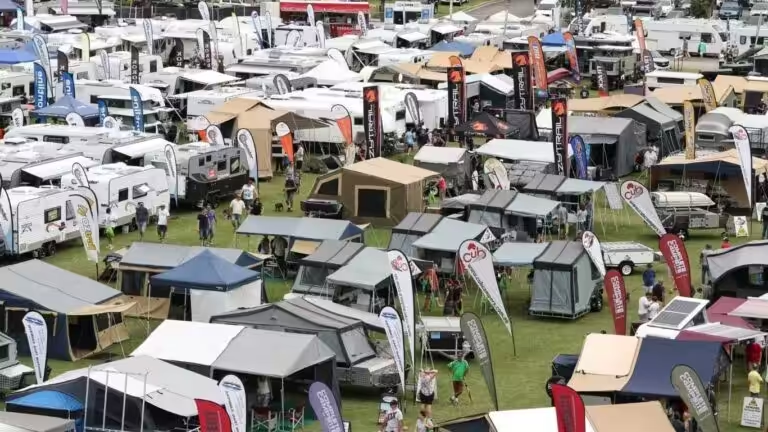
The Australian caravan industry has endured a difficult few months, with several well-known manufacturers entering administration and leaving both customers and suppliers in the lurch.
For those looking to buy a new caravan, the headlines have raised an obvious question: is Australia’s caravan industry in serious trouble?
The answer isn’t as straightforward as the recent news might suggest. While a number of manufacturers have collapsed, statistics released by the Caravan Industry Association of Australia (CIAA) show that we’re still embracing caravanning in record numbers.
In fact, while Australian RV manufacturing output fell by 5%, Australians still took a record 17.3 million caravan and camping trips in 2025, spending $12.6 billion.
Industry leaders argue that what we’re seeing isn’t the collapse of an industry, but a correction following the extraordinary boom years created by the COVID-19 pandemic.
So, what is really happening and what does it mean if you’re planning to buy a caravan?
During the pandemic, Australia’s caravan industry experienced a boom. With international borders closed, Australians redirected their holiday budgets towards domestic travel. And what easier way to practice social distancing while on holiday than in your own little box on wheels?
Caravan dealers reported long waiting lists, manufacturers expanded production and many buyers were prepared to wait months (or even longer) for a new van.
But like any industry boom, it didn’t last forever. Overseas travel resumed, interest rates got higher and cost-of-living pressures began affecting household budgets.
At the same time, caravans that were purchased during the pandemic started appearing on the used market, giving buyers far more choice than they had just a few years earlier.
For manufacturers that rapidly expanded to meet COVID-era demand, the market has become much tougher.
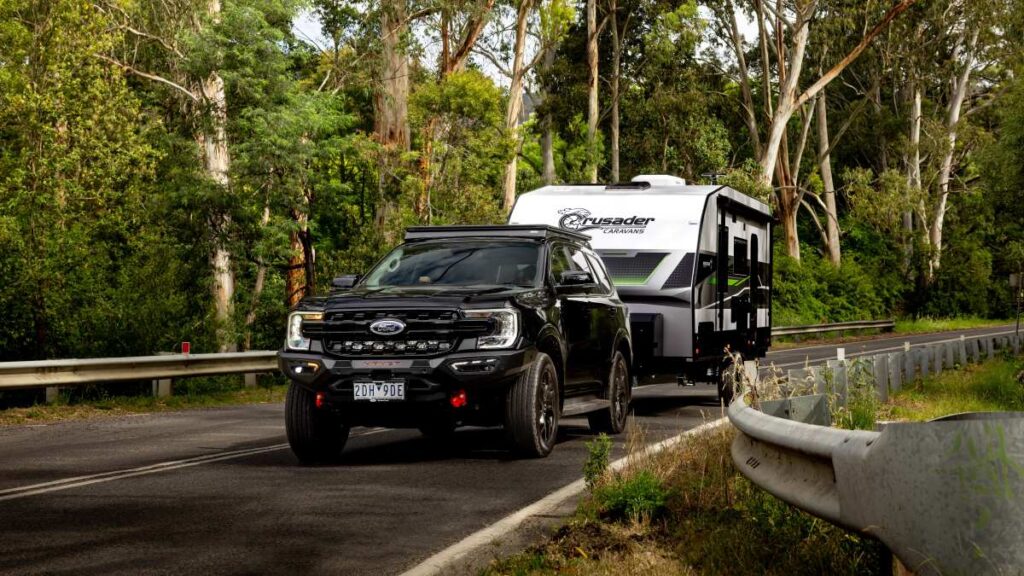
Several well-known Australian caravan manufacturers have entered voluntary administration in recent months, including Network RV, Sunland RV, Phoenix RV and X Series RV, while the fallout from Zone RV’s collapse continues to be felt across the industry. Star Vision was listed today on the ASIC Website as under liquidation. This has understandably rattled consumer confidence.
Customers with deposits, suppliers waiting on payment and employees facing uncertainty have all been impacted. These are difficult situations for everyone involved and serve as a reminder that purchasing a caravan is a significant financial investment.
However, industry leaders say these closures shouldn’t automatically be viewed as evidence that the entire sector is failing.
One of the strongest arguments against claims of an industry collapse is the latest caravanning data. While Australian RV manufacturing output fell by 5% year-on-year, Australians still took a record 17.3 million caravan and camping trips in 2025, spending $12.6 billion.
According to the Caravan Industry Association of Australia, there were around 937,000 registered RVs in Australia in 2025. Based on Australia’s population of 27.6 million, that’s roughly one registered RV for every 29 Australians.
So clearly, the challenge isn’t convincing Australians to travel – it’s that the market for purchasing brand-new caravans has changed considerably since the pandemic years.
Several factors are reshaping the Australian caravan industry at the same time.
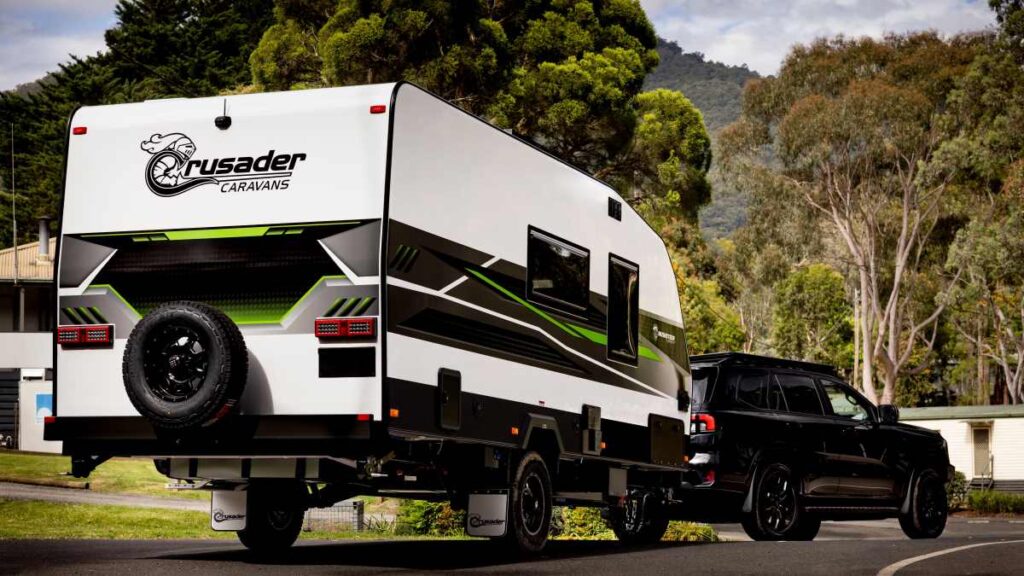
According to Crusader Caravans, the current environment is exposing differences between businesses with strong local manufacturing capability and those operating different production models. The company argues the current market is separating those that genuinely manufacture caravans in Australia and those that primarily assemble imported components.
However, that view is not universal across the industry. On The Move Caravans, which offers both locally manufactured and imported models, has previously argued that quality is not determined by where a caravan is assembled, but by how it is engineered, specified and quality-controlled.
In that view, the real divide is not simply Australian-made versus imported, but between well-engineered caravans backed by strong quality assurance and after-sales support, and products built primarily to meet a price point.
Regardless of whatever side of the fence you’re on, both sides highlight a broader conversation across the industry about manufacturing, quality, and long-term sustainability.
Many industry observers believe that’s exactly what’s happening. Caravan Industry Association of Australia CEO Stuart Lamont recently described the current environment as a return to more sustainable trading conditions rather than an industry-wide crisis.
He says dealer inventories have normalised, waiting times have reduced significantly and Australians continue to prioritise travel experiences. Industry analysts also expect further consolidation as manufacturers adapt to changing market conditions.
That doesn’t lessen the impact on customers affected by business failures, but it does suggest the broader industry may simply be entering a more mature phase where stronger businesses are better placed to weather the ups and downs.
For buyers, this means more opportunities but also more reasons to be cautious. And it seems many of us already are, with the CIAA just today noting that the median buying journey takes 6 months, double what it was in 2017.
With dealer inventories returned to healthier levels and waiting times that are significantly shorter than during the pandemic, buyers have greater choice and stronger negotiating power.
At the same time, recent business failures are a reminder to do thorough research before signing a contract.
Before committing to a purchase, consider:
Price remains important, but so does the long-term stability of the company standing behind the product.
The Australian caravan industry is undoubtedly facing one of its biggest adjustments since the pandemic boom. Sadly, some manufacturers won’t survive the transition. Others are continuing to invest in new products, manufacturing capability and customer support as they position themselves for the next phase of the market.
The latest travel figures suggest Australians haven’t fallen out of love with caravan travel. I certainly haven’t and I’m betting that you haven’t either. They’re simply buying differently than they were four years ago. Rather than signalling the collapse of the industry, the recent wave of administrations appears to reflect a market finding its new normal.
For buyers, that means more choice than we’ve seen in years, but also a timely reminder that choosing the right manufacturer is just as important as choosing the right caravan layout.