
Inverell fossicking: Where to fossick, camp and explore
Discover the best Inverell fossicking areas for sapphires and gems, including Staggy Creek and Nullamanna, plus where to stay.
Published on: 21 September 2026
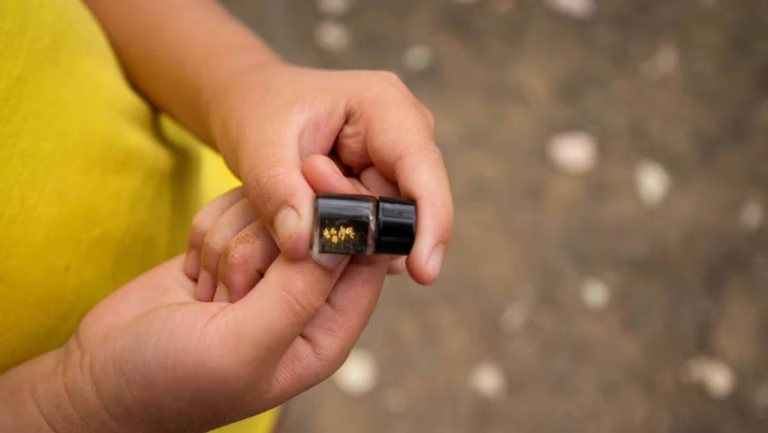
If you’re keen to try your luck at Inverell fossicking, you’ve come to the right place. In the heart of gemstone country in the New England High Country of NSW, Inverell has been attracting fossickers since at least 1875, when diamonds were found in the alluvium of Copes Creek near the junction of the Gwydir River.
So you see, there’s not only gold in them there hills here, but also diamonds. And if that wasn’t enough to make you squat down and hunch over your latest find, mumbling the words ‘my precious’, you can also find black tourmaline, gold, quartz and sapphires. In fact, the sapphires you can find fossicking here are so blue and so plentiful that the town of Inverell is actually known as “The Sapphire City”.
Today, there are several fossicking areas around Inverell where you can search for sapphires, diamonds, black tourmaline, quartz and other gems. Some are free public fossicking areas, while others are privately operated, so here’s where to try your luck and what you need to know before you start digging.
| Fossicking area | What to look for | Distance from Inverell | Cost |
|---|---|---|---|
| Nullamanna | Sapphires | 20 km north | Free |
| Staggy Creek | Diamonds, black tourmaline, quartz | 28 km | Free |
| Bukkulla | Sapphires | 43 km north | Free |
| Stannifer Creek | Clear, smoky and rutilated quartz, citrine | Near Tingha | Free |
| Wallangra | Black tourmaline in quartz | 65 km north | Free |
| Billabong Blue | Sapphires | Near Inverell | Paid |
The Visitor Information Centre in Inverell is where to head to get up-to-date information on where you can look for sapphires in the region. Hire some fossicking equipment from here if you don’t have your own.
Around 22 kilometres from Inverell, Billabong Blue Sapphire Fossicking Park has long been one of the region’s better-known places to search for sapphires on private property.
Current Inverell tourism information lists creek fossicking and bush camping as available, with bookings essential. However, opening and access arrangements appear to vary, so I recommend contacting Billabong Blue directly before making the drive out, particularly if you’re planning your trip around a visit here.
If you can’t make the timing work, don’t worry. There are several free designated fossicking areas around Inverell where you can try your luck instead, including Nullamanna and Bukkulla.
Around 20 kilometres north of Inverell, the Nullamanna Fossicking Area at Frazers Creek is a free designated sapphire fossicking area open to the public. If you’re hoping to find one of Inverell’s famous blue gems, this is one of the spots where you can try your luck without paying an entry fee.
Alluvial sapphires are the main prize here, and the best place to start looking is in and around the creek bed. Keep an eye out for gravel and wash that may have been exposed by water, and come prepared with your own fossicking gear, drinking water, sun protection and clothes you don’t mind getting dirty.
Another free option is the designated Sapphire Fossicking Area on Pindaroi Road at Bukkulla, around 43 kilometres north of Inverell. It’s open to the public and another chance to search for sapphires without paying to enter a privately operated fossicking park.
You’ll need to bring your own fossicking gear and be prepared to put in a little work. As with any fossicking adventure, finding a sapphire isn’t guaranteed, but that’s half the fun. Pack plenty of drinking water, a hat and sunscreen, and don’t wear your Sunday best – getting dirty is all part of it.

Sapphires might get most of the attention around Inverell, but they’re certainly not the only treasure hiding beneath your feet. Head a little further afield and you can try your luck fossicking for diamonds, black tourmaline, quartz and citrine at several free designated fossicking areas.
Close to the blue waters of Copeton Dam, around 28 kilometres from Inverell, Staggy Creek Fossicking Area is where you can try your luck searching for diamonds, black tourmaline and quartz.
This is a rough, dry fossicking area, so you’ll need to bring your own water or be prepared to dry sieve. Depending on the season, you may find a small seasonal waterhole, but don’t rely on it being there.
And while I can’t guarantee you’ll find anything of monetary value, it’s virtually impossible to walk away without a pocket full of pretty quartz. If you’re staying at nearby Reflections Holiday Park Copeton Waters, Staggy Creek is also an easy fossicking trip to add to your stay.
Near the village of Tingha, Stannifer Creek Fossicking Area is another free designated fossicking area where the prize is quartz rather than sapphires.
Keep your eyes peeled for clear quartz, smoky quartz and rutilated quartz, as well as yellow citrine. The fossicking area is along Stannifer Creek, so bring your own basic fossicking gear and allow some time to explore rather than expecting instant treasure.
Around 65 kilometres north of Inverell, Wallangra Fossicking Area is worth the drive if black tourmaline is on your fossicking wish list.
This is another dry fossicking area, with black tourmaline found within quartz. You’ll need to bring your own fossicking equipment, plenty of drinking water and everything else you need for a day out, as this is very much a bring-it-yourself fossicking experience.
If sapphires and diamonds aren’t enough and you’ve caught a case of gold fever, take a day trip to Bingara, around an hour’s drive southwest of Inverell.
Set on the Gwydir River, Bingara has a long gold mining history and remains a popular spot for recreational fossicking. One option is Three Creeks Gold Mine in the Upper Bingara region, where you can try your hand at gold panning and learn a few tricks from experienced fossickers.
There’s an undercover area for gold panning, and if you’ve dragged the kids or grandkids along for the ride, they can also keep themselves occupied searching for quartz crystals. Just don’t make eye contact with the resident rooster – he has a bit of a ‘what are you looking at?’ attitude.
Bingara is worth exploring beyond the gold pan, too. If you’re making a day of it, the surrounding region has some fascinating geological attractions, including the Rocky Creek Glacial Area and Sawn Rocks.
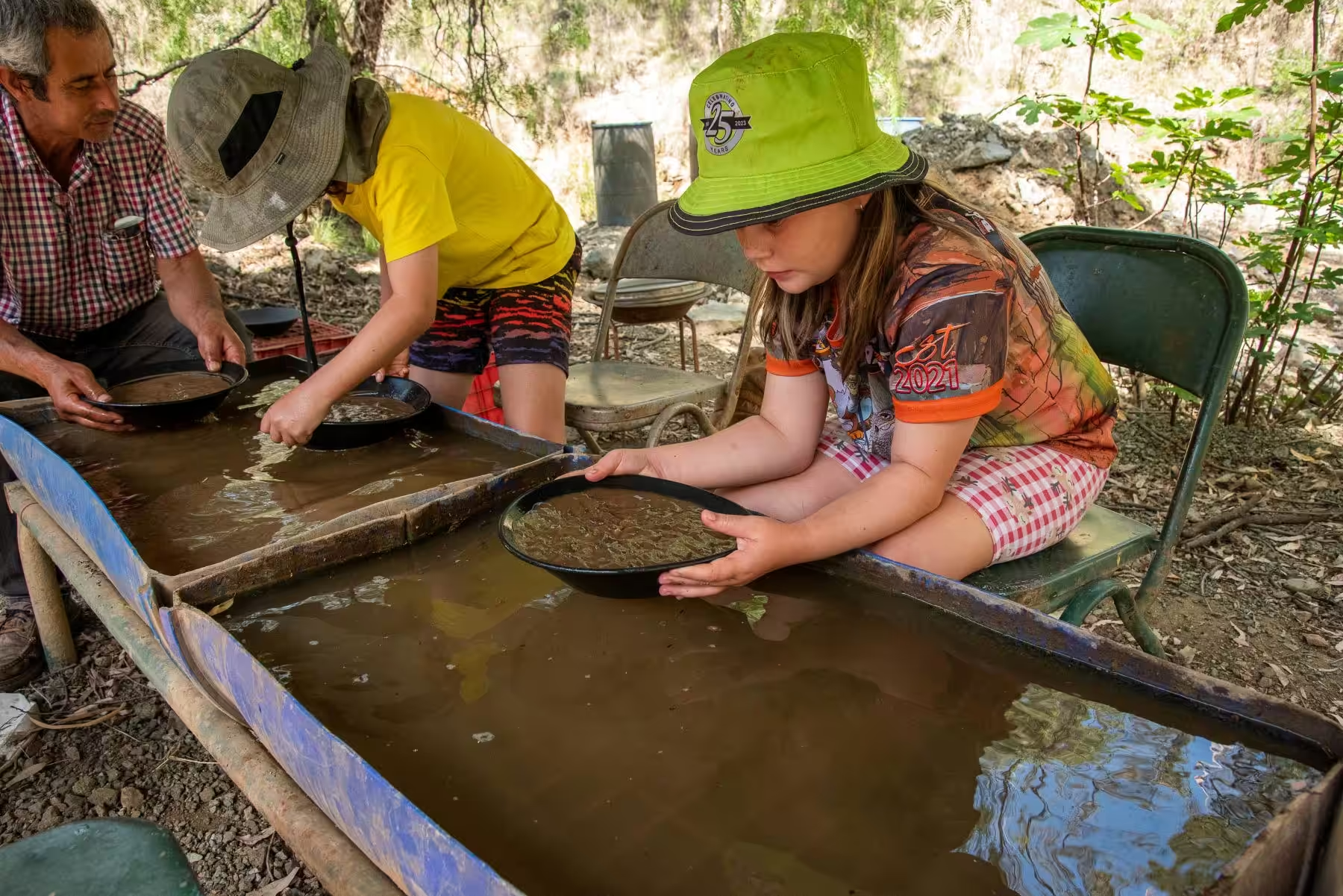
You don’t need a huge amount of gear to try your luck fossicking around Inverell, but what you take will depend on where you’re heading and what you’re hoping to find.
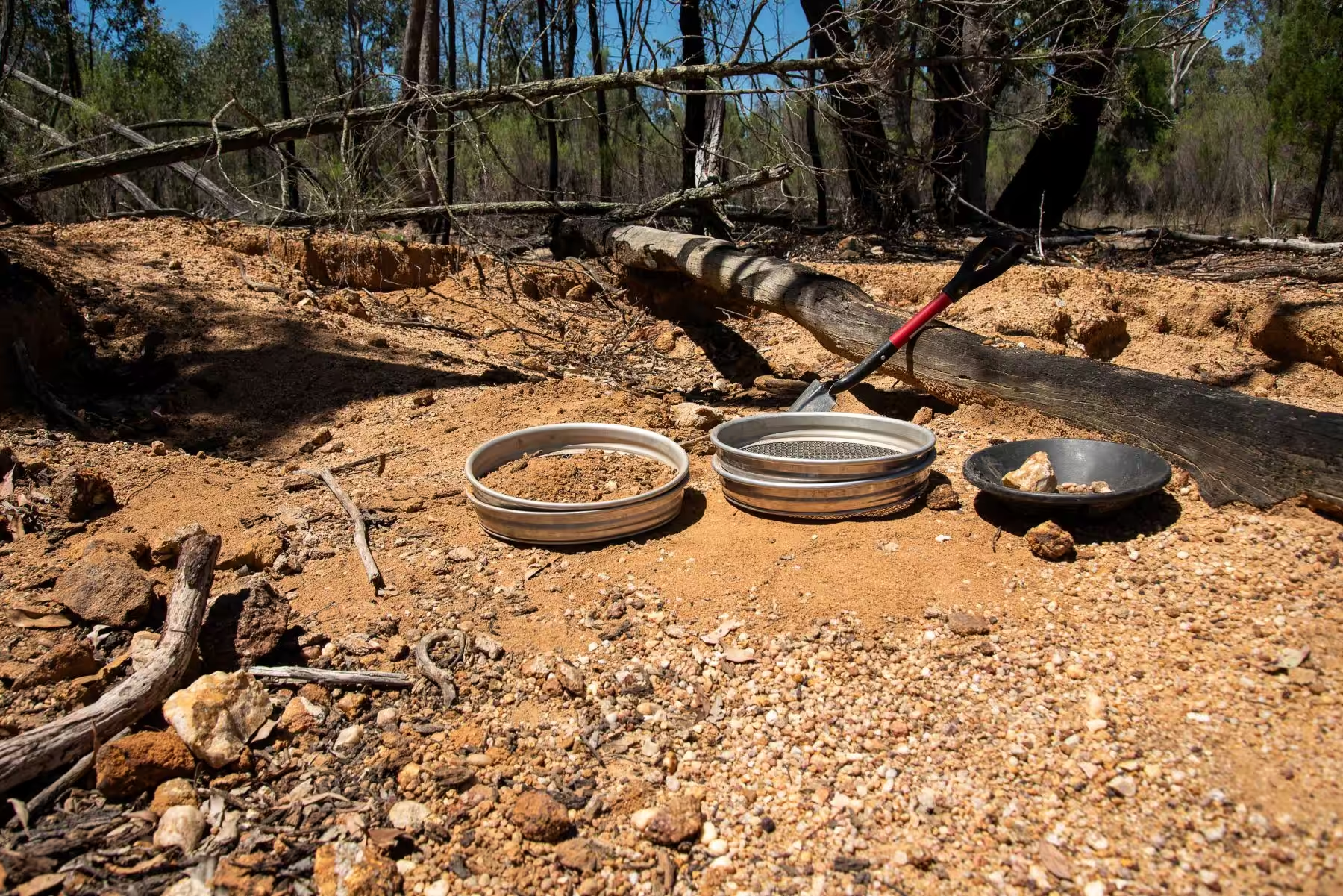
For sapphire fossicking, a good basic kit includes a couple of different-sized sieves, a small hand pick, short-handled shovel, buckets and a small container with a lid for stashing all those sapphires you’re definitely going to find. Wet sieving is generally the way to go when searching for sapphires, while some of Inverell’s other fossicking areas, including Staggy Creek and Wallangra, are dry fossicking areas.
You’ll also want plenty of drinking water, sturdy shoes, sunscreen, a hat and clothes you don’t mind getting dirty. If you’re heading to a dry fossicking area, take additional water if you plan to use it for sieving.
It’s worth remembering that fossicking in NSW is meant to be small-scale. Hand-operated equipment such as pans, sieves, small shovels and picks is allowed, but power-operated equipment used for digging or processing isn’t.
You don’t need a general fossicking licence simply to go fossicking in NSW, but that doesn’t mean you can grab a shovel and start digging wherever you like.
Where you can fossick and what permission you need depends on the land. Private property requires the landholder’s consent, while permission or other requirements also apply to places such as Crown land, State forests, national parks, land or waters subject to native title and areas covered by mining or petroleum authorisations.
The easiest option around Inverell is to stick to the designated public fossicking areas, such as Nullamanna, Bukkulla, Staggy Creek, Stannifer Creek and Wallangra, and follow the rules for each site. Tourism Inverell currently lists Nullamanna and Bukkulla as free designated sapphire fossicking areas open to the public.
If you’re unsure whether you can fossick somewhere, check before you start digging. NSW Resources has up-to-date information on fossicking rules, while the Inverell Visitor Information Centre can provide local information on the designated fossicking areas.
Don’t have any more room in your pockets for sapphires and diamonds? Looking for somewhere else to play? Here’s what else you can do besides fossicking in the Inverell region.
Head to Lake Inverell, a wildlife refuge and recreation reserve popular with kayakers, fishers and twitchers. Stroll the boardwalk and pontoon for picturesque views. You’ll find it around two kilometres from the town centre on Lake Inverell Drive.
McIlveen Park Lookout can be found around four kilometres west of the Inverell Central Business District. Here you can see wind turbines off in the distance, and views back across the township and ranges further east.
The WWII Remembrance Riverwalk hugs the Macintyre River and as the walking path is around five kilometres, it’s a great opportunity to get your daily steps in while taking in the natural surroundings of Inverell.
History buffs should head to the Inverell Pioneer Village, National Transport Museum and Wing Hing Long Museum. You can also drop in the Inverell Visitor Information Centre to pick up the “Heritage Walk in Inverell” booklet which is a great way to learn about the town’s heritage while checking out the place.
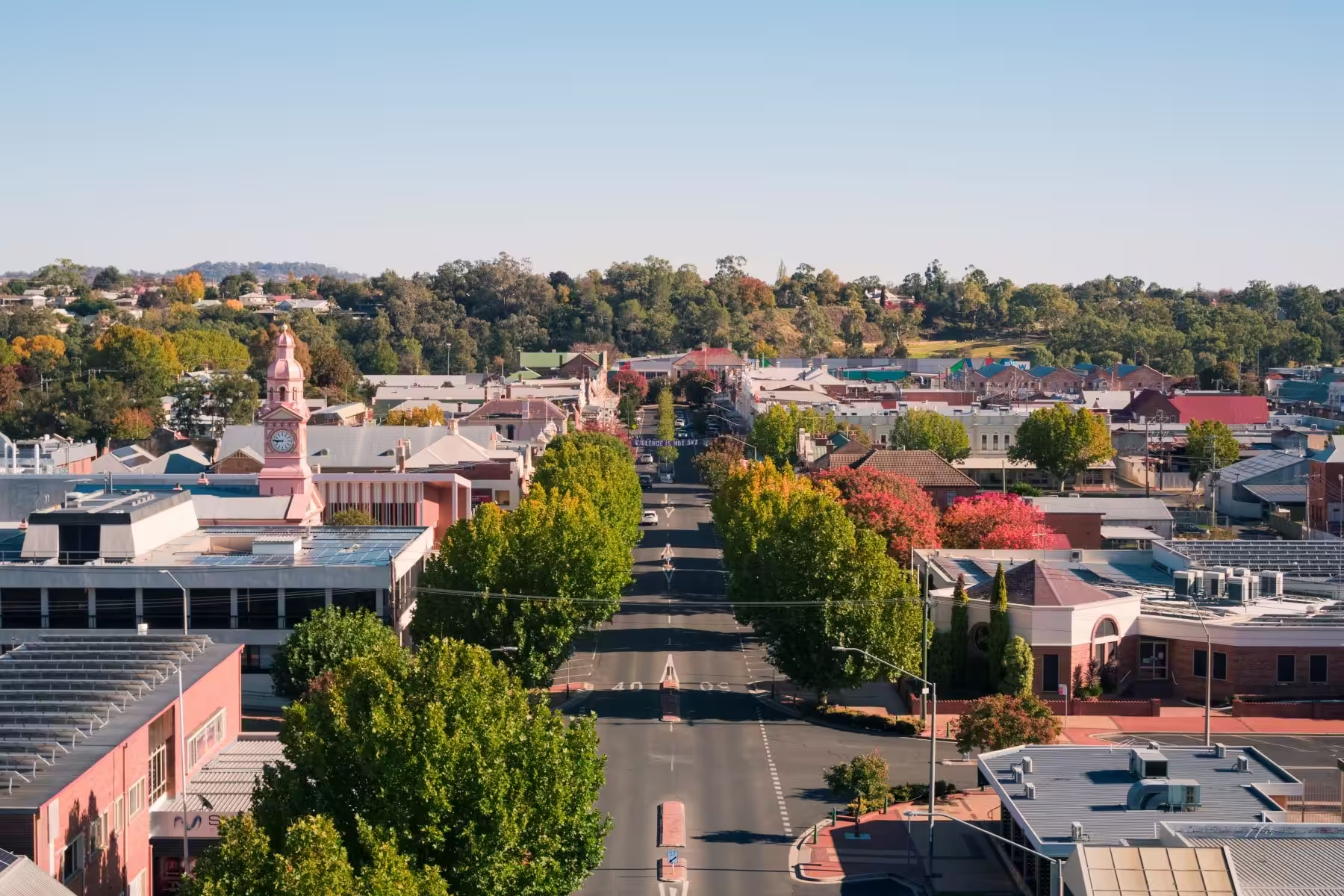
Nearby National Parks include Kwiambal National Park, where you’ll discover the Limestone Caves and Macintyre Falls, Barayamal National Park, Kings Plains National Park and Goonoowigall State Conservation Area.
Operated by the Inverell Art Society, the Inverell Art Galley is a community gallery open six days a week. Outside of the gallery, you’ll find the Meandering Macintyre footpath mosaic. Measuring 90cm across and 94m long, it represents the flow of the Macintyre River.
But for something a little different, check out the Goonoowigall Soundtrail, an interactive experience that serves to celebrate indigenous culture and educate through the telling of stories. Simply download the free soundtrails app from the App Store or Google Play, then download the Goonoowigall Soundtrail. When you visit each point, the stories will automatically start using the GPS on your device.
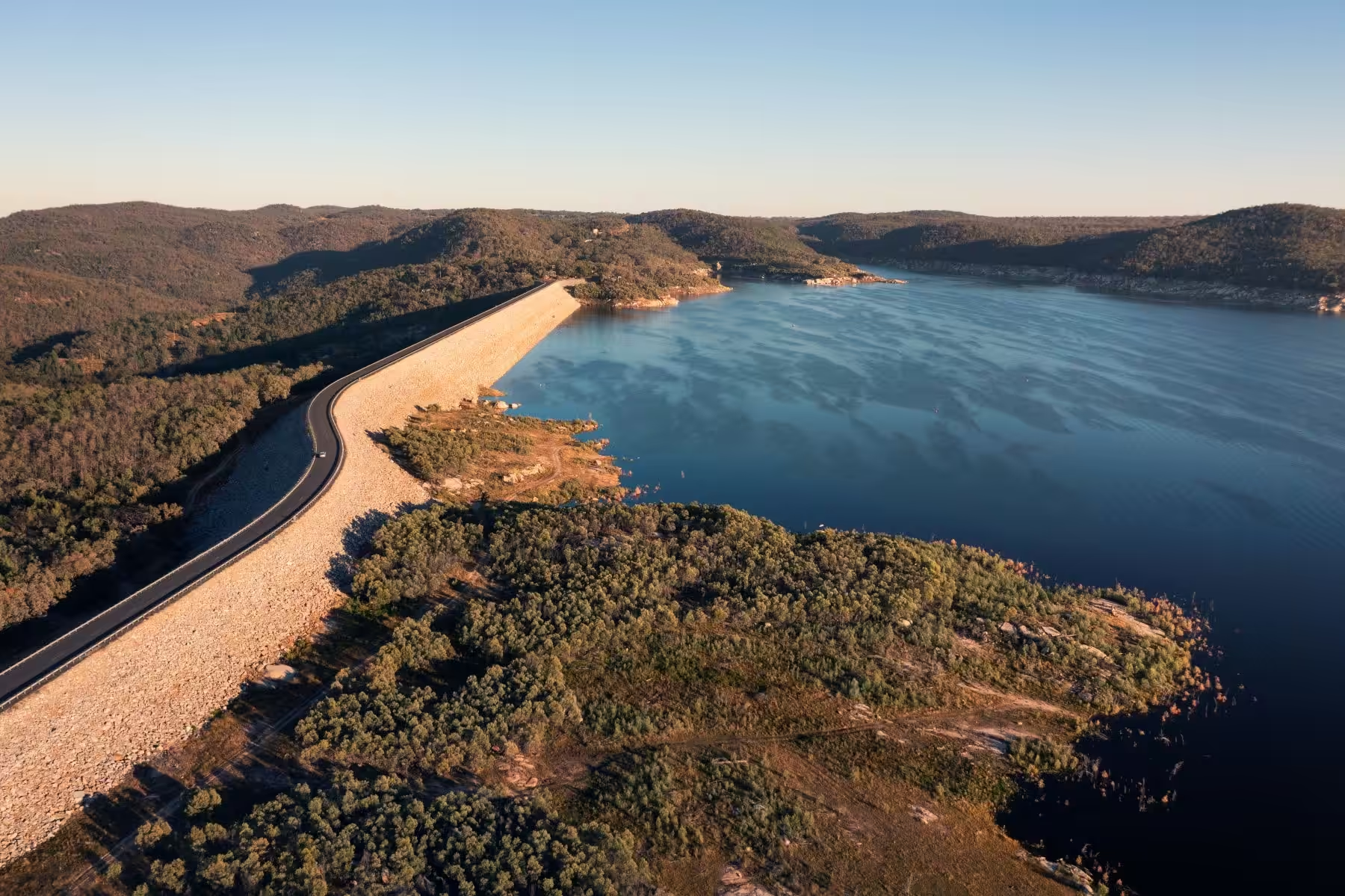
With a capacity of nearly three times the size of Sydney Harbour when full, Copeton Dam, just 30 minutes from Inverell, is our top pick of where to stay for a fossicking adventure. Right on its shores, you’ll find Reflections Holiday Park Copeton Waters. This place is a boatie’s paradise, with more than enough room for jet skis and towables, and a plentiful supply of yellow belly, murray cod, catfish and silver perch.
With generous powered and non-powered sites, cabins, wide open spaces, a water breeze, facilities, a playground and a splash park, this holiday park is a safe bet. Wake up to kangaroos and farewell the sun with deer. But more importantly, you can get fuel and lunch here, too.
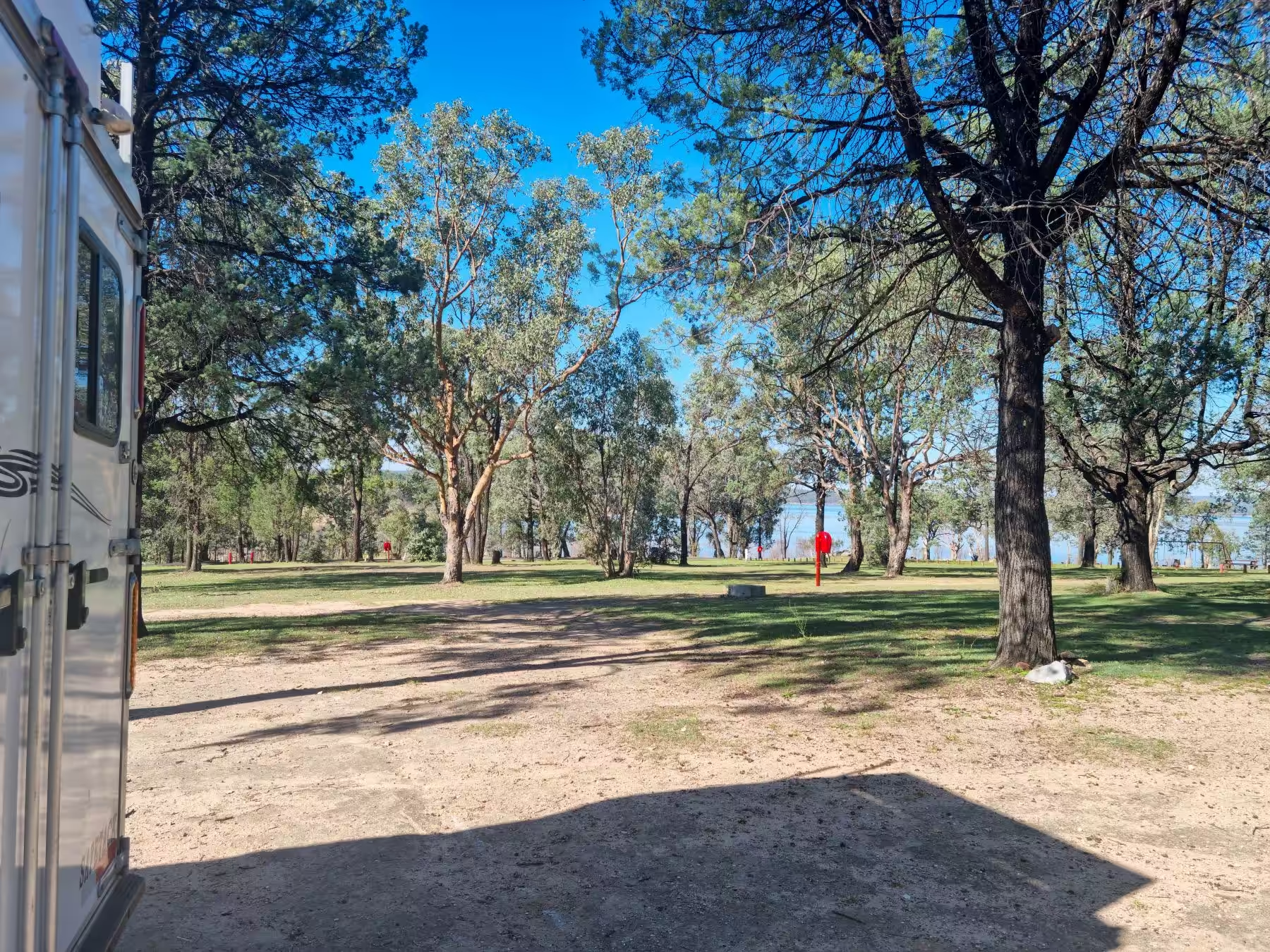
Find Inverell in the New England High Country 431 kilometres southwest of Brisbane and 578 kilometres northwest of Sydney. As part of the Fossickers Way, this charming town has everything you need and offers much for the RV traveller.