
2016 Trakka Jabiru review: Mercedes Sprinter motorhome
Our original 2016 Trakka Jabiru review looks at this Mercedes-Benz Sprinter motorhome's performance, layout, features, Remote Pack and more.
Last Updated: 23 September 2026
Editor’s note: This Trakka Jabiru review was originally published in June 2016 and covers the MY2016 Jabiru built on the Mercedes-Benz Sprinter 419. The Jabiru remains part of Trakka’s range today, but its specifications, technology and features have evolved considerably since this road test. We’ve retained the original review as a useful reference for anyone researching an earlier or used Trakka Jabiru.
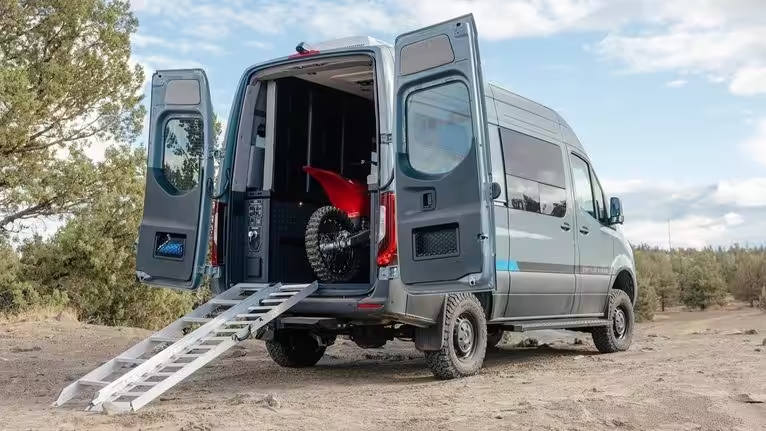
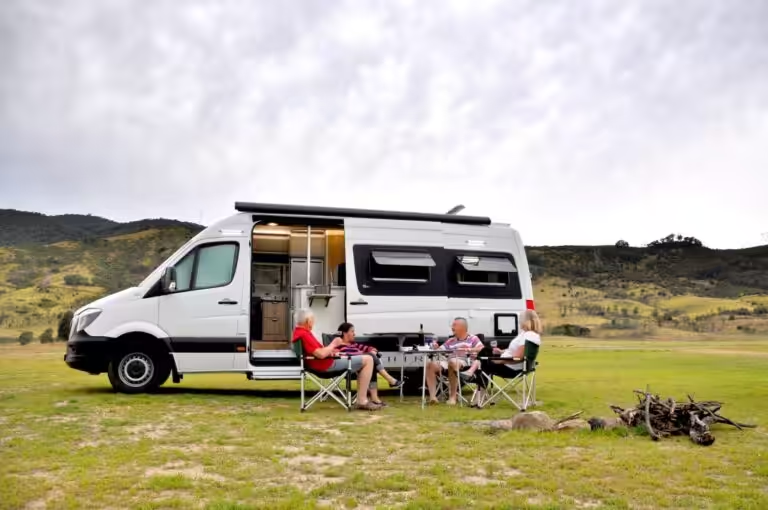
When it comes to campervans, they don’t come much bigger than the 2016 Trakka Jabiru reviewed here. Built on a Mercedes-Benz Sprinter 419 it’s an imposing 7.1 metres long and in truth, it could be described as a motorhome as campervans usually have no bathroom. To many people, however, any van conversion is a ‘campervan’. It’s a two-seat, two-berth unit ideal for singles or couples and only requires a standard car licence.
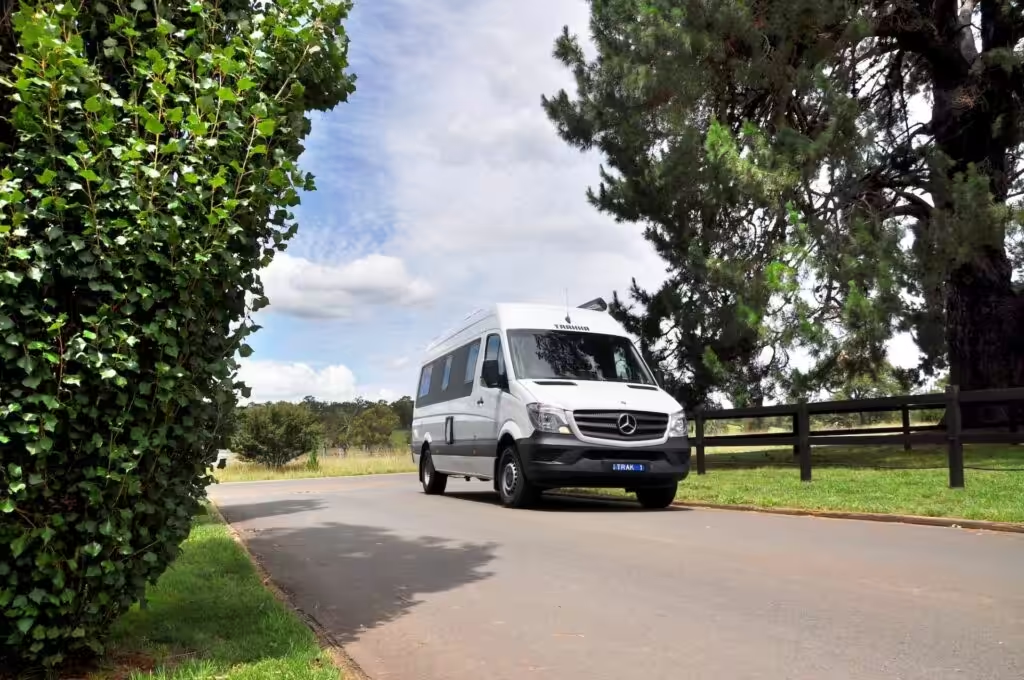
Conversion aside, the Jabiru’s real drawcard is the V6 turbo-diesel and 7-speed automatic transmission. The first thing you notice when underway is the engine doesn’t sound like a diesel, while at cruise speeds it’s inaudible. The engine is smooth – and I mean turbine smooth – and the gearbox matches perfectly in terms of ratios and shift quality. Most changes are imperceptible and the engine never seems to hunt for a ratio or have too many to choose from. Without doubt this is the most refined driveline available in the Australian RV market today.
The Sprinter also rides well, with independent front suspension and rack and pinion steering providing sure-footed handling even over broken surfaces at speed. This is a rear-wheel drive machine, but even so the live rear axle with its leaf springs provides a compliant ride devoid of harshness over even quite rough surfaces.
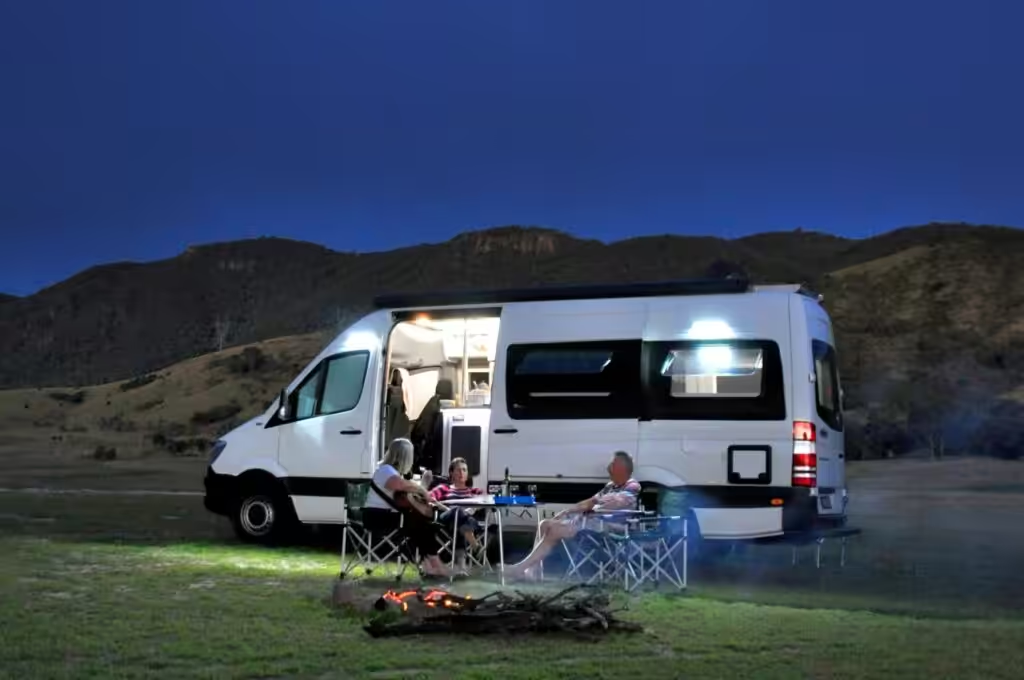
During our travels we headed to Blowering Reservoir near Tumut for a break with some friends. Using cruise control on the Hume Highway to sit on 110 km/h there were a couple of long inclines where the gearbox dropped back two gears in quick succession. I only know that because I happened to glimpse the tacho needle arcing around from 2200 rpm to 2500 and then 3000. There was no audible or physical indication of either down shift and only the vaguest seat-of-the-pants inkling when the gearbox changed back up, though nothing audible. Impressive!
Over the hills of the Snowy Mountains Highway the V6 pulled strongly and while I could certainly hear it working, it never intruded nor sounded distressed. Hundreds of kilometres a day were dispatched – our overall fuel figure of 12.6 L/100 km was impressive, especially considering the terrain, load and time constraints. I was also impressed by the trip computer, which showed an overall figure of 12.5 L/100km and was by far the most accurate I’ve come across.
Unusually, the 419 version of the Sprinter has ‘Super Single’ rear wheels. The vehicle has a 4490 kg gross vehicle mass (GVM) and dual rear wheels are the norm in this weight category. The ‘oversize’ 285/65R16 Continentals are 80 mm wider than the fronts and eliminate the need for two extra rear tyres, plus the hassle of checking pressures of the inside tyres or changing them if required. The downside would be finding a replacement away from a city. Also, the spare is the same size as the front, resulting in a speed limit of 85 km/h if fitted to the rear.
Trakka-specced Sprinters come with MB’s Comfort Seats, front and side air bags and a full multi-media centre with sat-nav, Bluetooth and more. Remis blinds are fitted inside the windscreen and cab side-windows, and it’s an excellent system providing quick privacy for short stops or overnight stays.
Rear vision is enhanced by Waeco’s brilliant dual-lens reversing camera coupled with an extra large colour display. When reversing it has the usual near-vertical view of the back of the vehicle, but when driving becomes an electronic rearview camera.
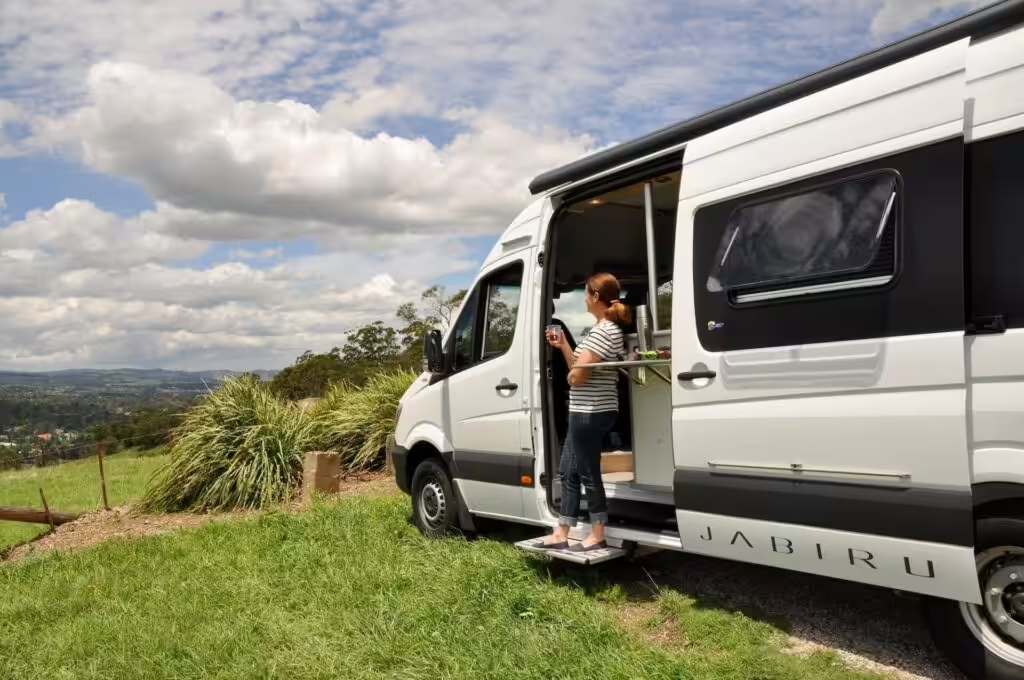
Externally the Jabiru is a clean design and the test vehicle was finished in easy-care white with a large faux-carbon fibre accent panel on each side. An electric awning is a great inclusion that makes quick shade or light rain protection a cinch.
Like most Jabirus leaving Trakka’s factory this one came with the optional Remote Pack that does away with LPG by using diesel-fired heat for the hot water and cooker, as well as the room heater. Other components of the Remote Pack include additional thermal and sound insulation and a pair of 80 watt solar panels. At the time of our 2016 review, the Pack added $7500 to the price tag, but it was worthwhile for those looking to travel in all climates and off the beaten track.
Another option and an absolute must was the electric side door. Operated by the key fob or an internal switch, you can stop it at any point to provide just the opening you want. At the time, $1800 sounded pricey, but you appreciate the convenience many times each day!
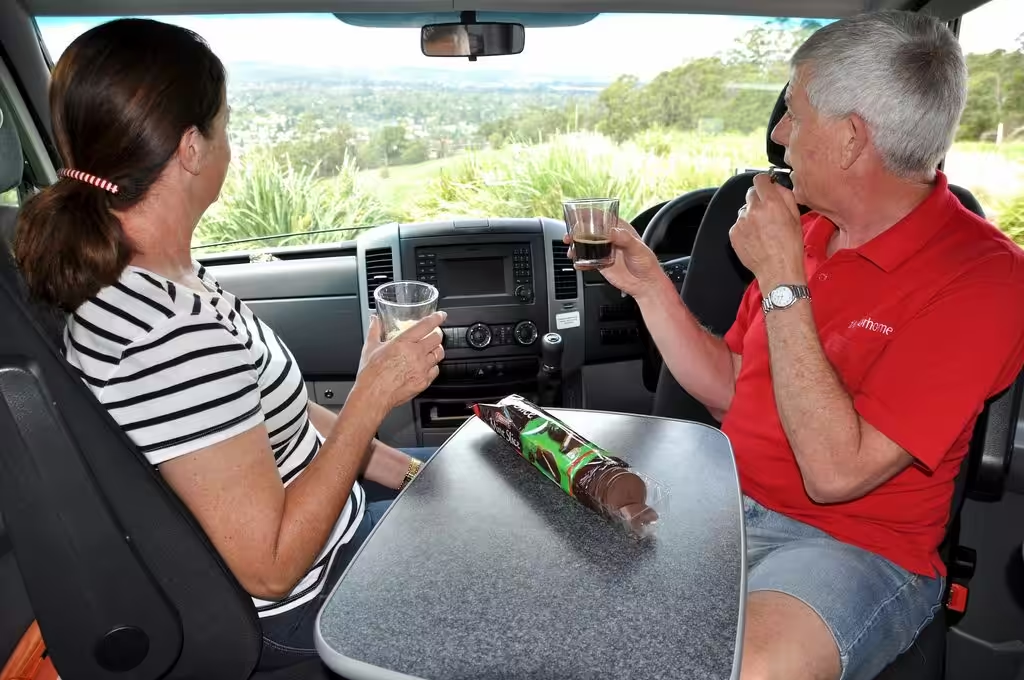
All Trakka’s are eminently liveable and the Jabiru is no exception. Step inside and you find swivelling cab seats that double as a dining area thanks to a removable table; a kitchen and bathroom in the mid section and a bedroom down the back. The beds are singles that run lengthways and provide room for a secondary dining location. They also quickly convert to a near-kingsize bed to maximise your sleeping options.
Light timber trim is augmented with gloss white panelling and Trakka’s signature silver-grey roller-shutter cupboard doors. Double-glazed windows are fitted all-round and although the rear barn doors retain the fixed factory glass, inside the doors are soft panelled and include privacy blinds.
Lighting has also undergone a major revamp. Individual reading and saloon lights have been replaced by LED strips, while concealed and dimmable LED mood lighting is a great feature. The LED strip under the edge of the kitchen bench that shines directly into any open drawers is a ripper!
Another standout feature is the patented Switch Mode Bathroom. This has a remote-controlled cassette toilet that tucks away under the vanity when not required, thus providing a larger-than-usual shower cubicle.
It’s really a given that any Trakka is good. At the time of our review, this latest Jabiru raised the bar and kept the company at the top of its game. This is a terrific big ‘campervan’ that won’t disappoint and is well worth investigating. It truly is vantastic!
The Trakka Jabiru is still part of Trakka’s motorhome range, but it has evolved considerably since we reviewed this example in 2016. Today’s Jabiru features newer technology, electrical systems and equipment, so the specifications in this review shouldn’t be taken as representative of a new Jabiru.
However, if you’re researching a used Trakka Jabiru from this era, this original road test provides a useful snapshot of the Sprinter 419-based model, including its driveline, layout, Remote Pack, Switch Mode Bathroom and on-road performance.
For current specifications, pricing and available options, visit the Trakka website.