
RV backup power: Three portable power stations tried and tested
Anker, EcoFlow or Bluetti? I’ve used all three portable power stations for camping. Here’s how they compare for practical RV backup power.
Published on: 20 October 2026
I’ve been using three different portable power stations from Anker, EcoFlow and Bluetti. Here’s how they compare for everyday camping use and backing up your RV’s existing power supply.
When I bought a new 4WD two years ago, there wasn’t much left in the budget to set it up the way I always had with a dual battery system. After around 15 years of going down that road, I decided to try something we already owned – a portable power station.
The verdict? I’ll never go back. For the way we camp, it’s simply easier. The inverter is built in, I have several ways to charge it, and I can move it between the camper and the vehicle or take it inside during a blackout. There’s also no installation bill just to start using it, although adding a dedicated alternator charger involves extra equipment and wiring.
When we head away with just the 4WD and swags, the portable power station handles all our camping power needs. When we tow the camper, its existing lithium battery runs the essentials: the fridge, lights and water pump. The portable unit takes care of Starlink, laptops, cameras, everyone’s phones and whatever else comes along.
It’s an easy way to add power as our family’s needs grow, without pulling apart a camper electrical system that still does its original job perfectly well. I can also see it being really useful for anyone doing a simple DIY campervan build.
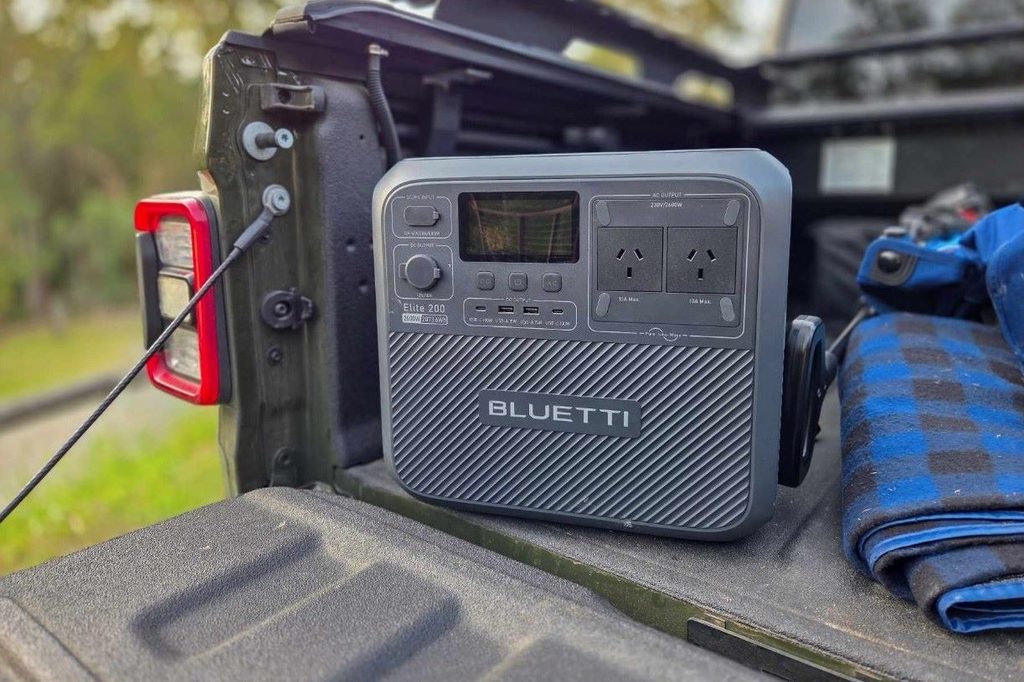
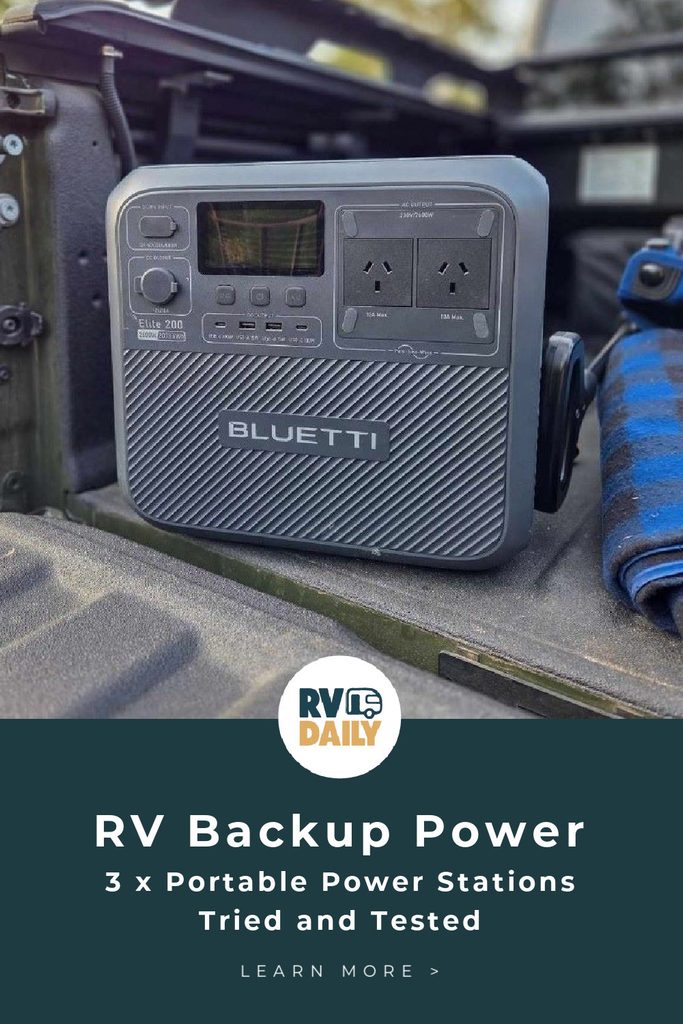
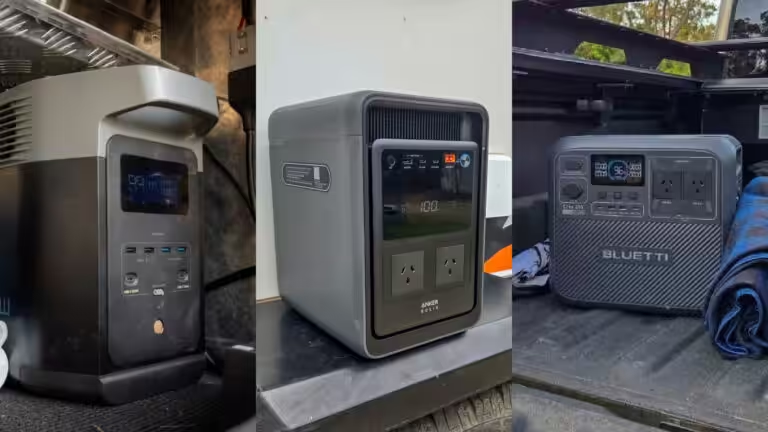
The three units I’ve been using are the Anker SOLIX S2000, EcoFlow DELTA 2 (950) and Bluetti Elite 200 V2. Before you picture a campsite full of batteries, I don’t use all three at once, and you’ll most likely only need one. I bought the EcoFlow myself, while Anker and Bluetti supplied their units for testing and review.
They aren’t identical-capacity competitors, either. The smaller EcoFlow holds around half the energy of the other two, giving this comparison a useful spread of sizes, weights and capabilities. My focus is on how easy they are to live with: packing them, moving them, keeping them charged and powering the things we take camping.
| Specification | Anker SOLIX S2000 | EcoFlow DELTA 2 (950) | Bluetti Elite 200 V2 |
|---|---|---|---|
| Battery capacity | 2,000Wh | 950Wh | 2,073.6Wh |
| Continuous AC output | 1,500W | 1,800W | 2,600W |
| Weight | 16.2kg | 12kg | 24kg |
| Dimensions | 208 × 282 × 323.3mm | 400 × 211 × 281mm | 350 × 250 × 324mm |
| AC outlets | 4 | 4 | 2 |
| USB outlets | 2 USB-C: 100W and 15W; 1 USB-A | 2 USB-C: up to 100W each; 4 USB-A | 2 USB-C: up to 100W each; 2 USB-A |
| 12V outlets | No dedicated 12V car outlet | 1 car socket; 2 DC5521 outlets | 1 car socket |
| Maximum solar input | 400W | 500W | 1,000W |
| Vehicle charging | Car-socket charging; optional alternator charger | 12V/24V car-socket charging; optional 800W alternator charger | 12V/24V car-socket charging; optional Charger 1 or Charger 2 |
| Australian advertised price – 20 October 2026 | $1,399 promotional price; $1,848 with alternator charger | $1,349, listed as sold out; 800W alternator charger advertised separately at $549 | $2,499; $2,799 with Charger 1 or $2,999 with Charger 2 |
For more detail on each unit, read my individual reviews of the Anker SOLIX S2000, EcoFlow DELTA 2 and Bluetti Elite 200 V2.
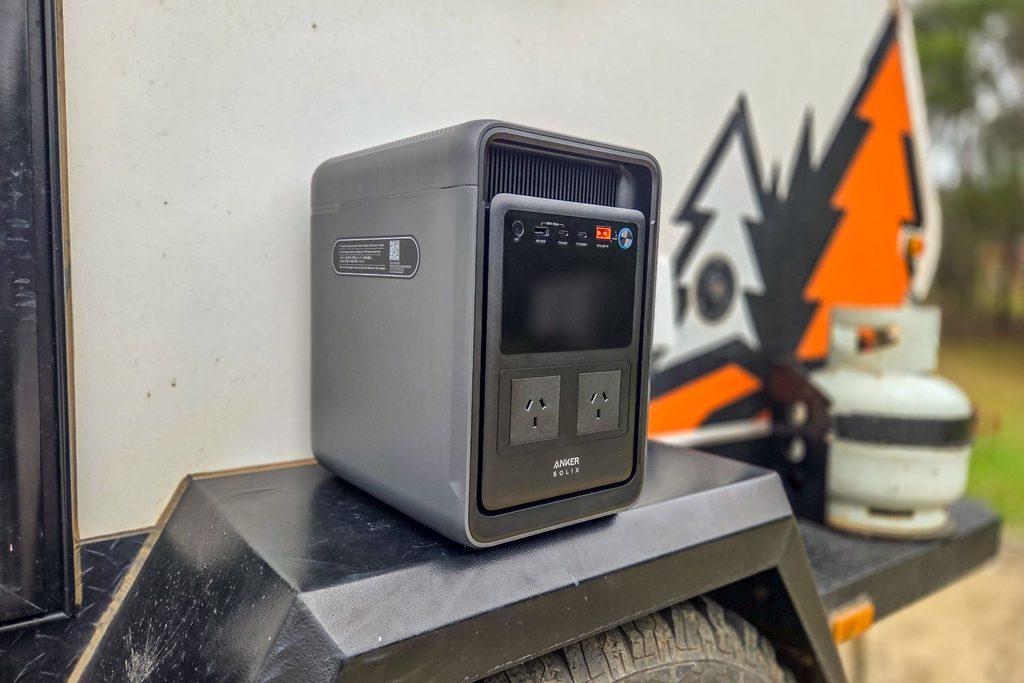
The specs above tell you what each unit can do, but they don’t tell you how awkward it is to lift into the car or whether you can reach the sockets once everything’s packed. These are the differences I’ve noticed using all three.
The EcoFlow is the easiest to carry. It has less battery capacity, but at 12kg with decent grab handles, I can comfortably move it around one-handed.
The Anker comes second. At 16.2kg, I reckon I could manage it one-handed if it had proper grab handles. Instead, it has recessed handholds beneath the top, so I need two hands to get a secure grip.
Then there’s the 24kg Bluetti. I can move it, but there’s usually some grunting and groaning involved. Its proper grab handles help, although it’s too heavy for me to comfortably carry one-handed. Moving it between the vehicle, campsite and house feels like hard work most of the time.
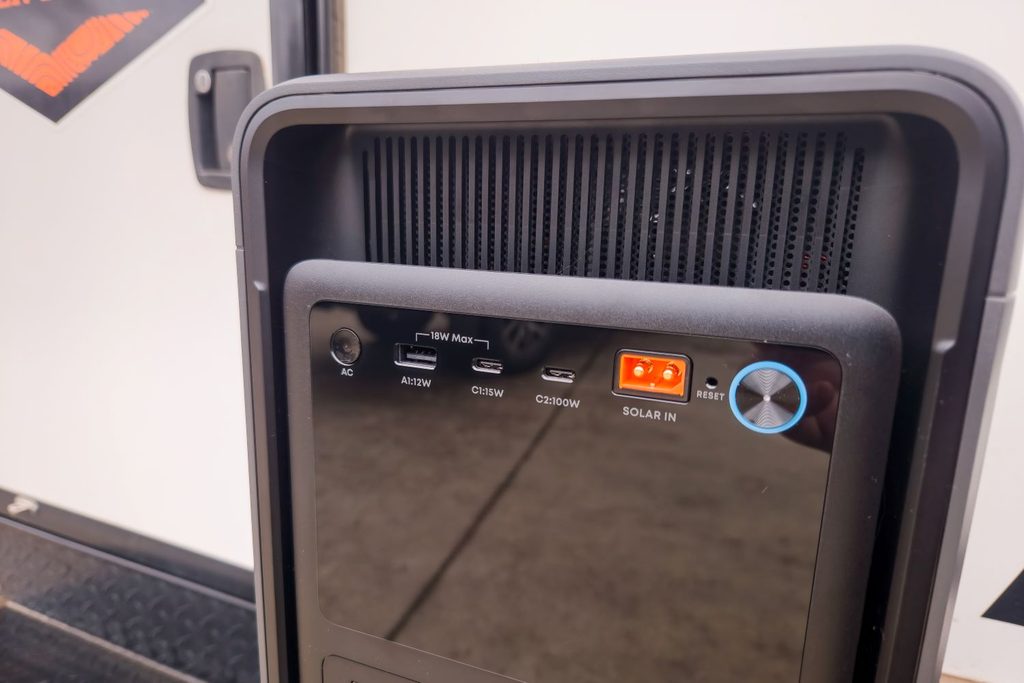
None is particularly difficult to pack, but the Anker’s neat, boxy shape makes it the easiest to fit among our other gear. The catch is its split outlet arrangement: two AC sockets are on the front and two are on the back. If you’ve packed it with only the front accessible, reaching those rear sockets becomes awkward.
The Bluetti also has a convenient, fairly square shape. However, I want it somewhere accessible because shifting 24kg just to reach something behind it gets old quickly. Its weight also deserves some thought when choosing where it travels in your RV.
The EcoFlow’s protruding handles make its shape slightly less convenient to pack around, although it’s hardly a deal-breaker. Its lower weight makes repositioning it much easier.
Whichever unit you choose, leave the ventilation openings clear and secure it for travel rather than relying on surrounding luggage to hold it in place.
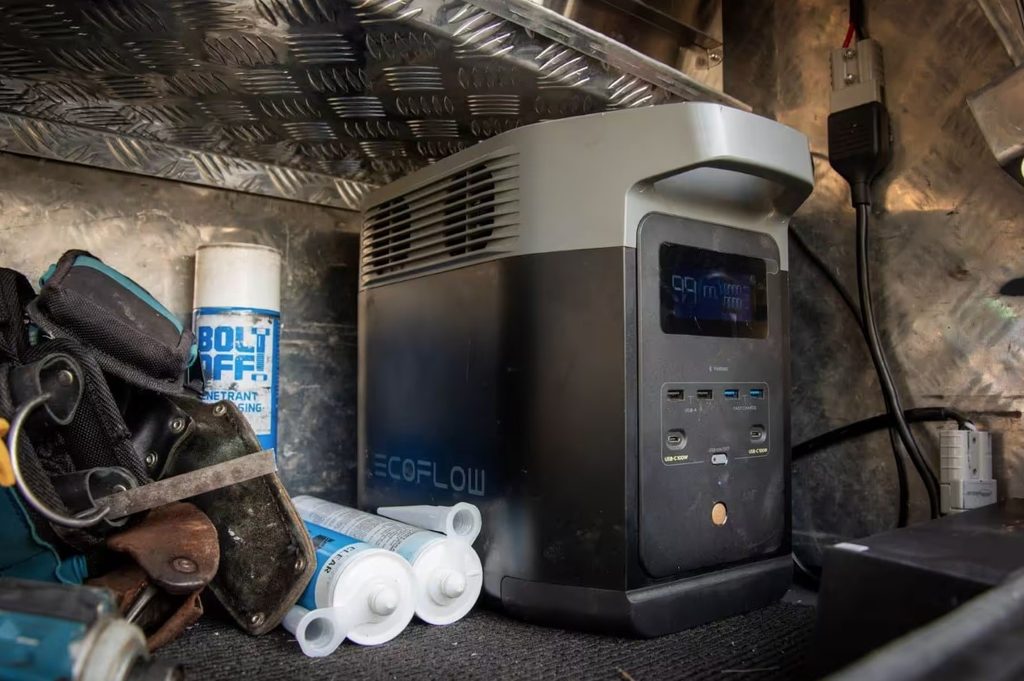
All three are straightforward to switch on and start using. Their displays make it easy to see incoming power, outgoing power, battery percentage and an estimated time remaining. That last figure changes with what you’re running, but it’s useful for keeping an eye on things around camp.
I had no trouble setting up any of the apps or connecting via Bluetooth. Each puts the important information within easy reach and lets you adjust settings from your phone.
The EcoFlow and Bluetti apps can feel a little like browsing a shop when you venture beyond the main controls, with promotions competing for your attention. It doesn’t stop them doing their job, but I’d prefer to get straight to managing my power.
Portability is a big part of the appeal for me. With no fixed connection to the camper or vehicle when in use, I can unplug any of these units and move it wherever it’s needed.
The EcoFlow makes that feel effortless. The Anker is manageable with two hands. The Bluetti offers the same flexibility, but its weight makes moving it feel more like a chore.
The EcoFlow is the most accommodating when everyone wants to plug something in. It has four USB-A ports, two USB-C ports, a 12V ciggy-style socket and four AC sockets. Trust me, having plenty of USB ports is handy when a family of four all want to charge their phones at once. The downside is that the AC sockets are on the back while the USB ports are on the front so you need to pack it in a way that you can access both.
The Bluetti has two AC sockets, two USB-A, two USB-C and one 12V ciggy-style socket all on the front. That’s usually enough for me when camping, but when using it during a blackout at home, I’d appreciate the additional AC sockets offered by the other two. I also find this a little weird given its larger capacity.
The Anker has four AC sockets, one USB-C and two USB-A outputs. With only three USB outlets it’s a bit lacking in that department. It’s also missing a dedicated ciggy-style output. I’m not particularly fond of this connection anyway, but some of my cheaper camping gear still uses it, including strip lighting and a portable shower pump. Having no matching outlet is inconvenient if that’s what your gear comes with.
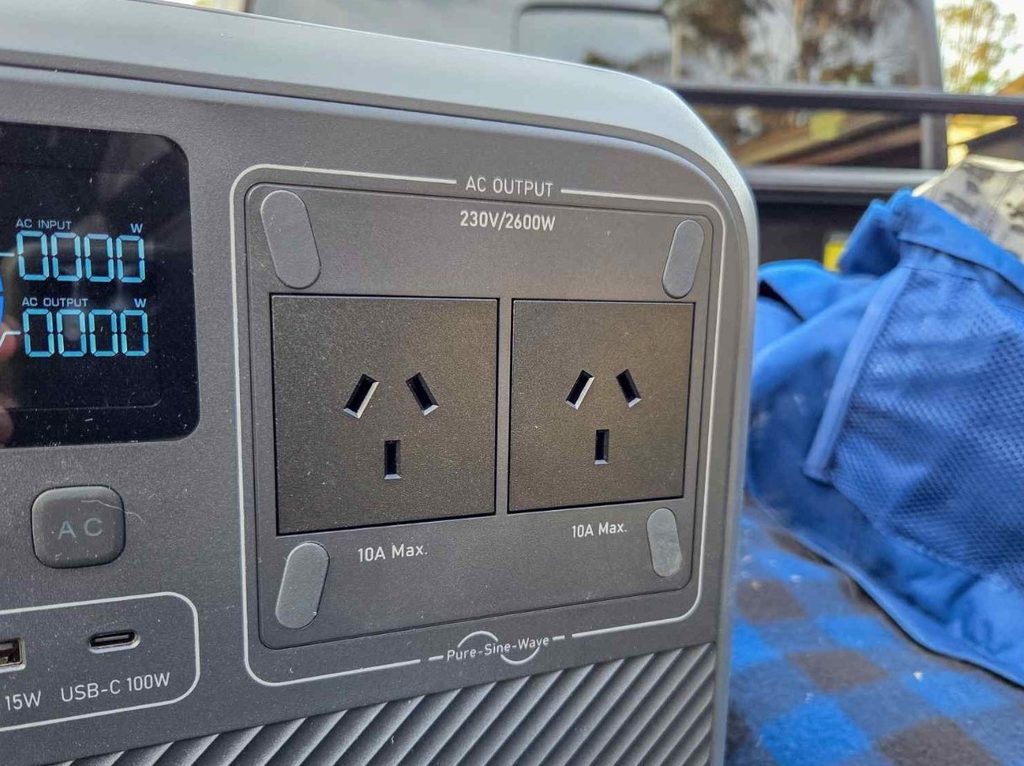
All three give you several ways to recharge: mains power, solar, a vehicle’s cigarette socket or a dedicated alternator charger while driving, provided you have the right cables and compatible equipment.
Mains charging is straightforward, using a kettle-style power cord that they all come with. Plug it in at home before leaving or top up at a powered campsite along the way.
A dedicated alternator charger makes a portable power station much more useful if you regularly move between camps or have had a traditional dual battery set up in the past. Unlike ordinary cigarette-socket charging, it’s designed to deliver a higher charging rate from your vehicle while you drive. It’s an additional purchase and needs wiring into the vehicle, so factor that into the cost.
All three brands sell alternator chargers. I have a Bluetti charger installed and have used it to charge all three units, although you’ll need to check compatibility and the required settings and cables for your particular combination.
My main frustration is the connection at the power station itself. These units use XT60i-style connections for solar and compatible DC charging equipment. In my experience, they’re not as secure off-road as the traditional Anderson plugs you might be familiar with.
On my Bluetti, it’s not uncommon for the input connection to work loose while driving, interrupting charging. I haven’t had that happen with the Anker or EcoFlow, so I can’t say whether it’s particular to my unit or its connector. Either way, it’s pretty frustrating. When stationary and charging from solar, it hasn’t been a problem.
I haven’t used cigarette-socket charging with any of them because it seems like a ridiculously slow way to charge.
You may not need an alternator charger at all. Charging at home before leaving and topping up with solar at camp can be enough, depending on what you’re running and the weather.
The manufacturer-rated maximum solar inputs are:
The Bluetti offers more room for a larger solar setup, provided the panels meet its voltage and current requirements. However, I use just one 200W panel for my portable power station, so I’m nowhere near the maximum input of any of these units. For my setup, those higher limits don’t make a practical difference.
What matters is whether you can replace the energy you use each day. Running Starlink, charging laptops and cooking electrically is a different proposition from charging a couple of phones. A panel’s advertised wattage also isn’t what you’ll receive continuously throughout the day.
And if a few days of rubbish weather means solar can’t keep up? A night on a powered caravan site gives you a straightforward opportunity to recharge before heading off again.
This is how I use mine. My off-road teardrop camper has a smallish lithium battery that handles the fridge, lights and water pump. The portable power station runs the fun stuff: Starlink, phones, laptops, cameras and whatever else needs charging.
It also gives me a separate backup if something goes wrong with the camper’s electrical system. I can plug the fridge directly into the portable unit and keep the food cold while we sort things out. It’s extra capacity and a little reassurance without rebuilding the existing setup.
I haven’t built it yet, but I’ve absolutely designed a DIY campervan in my head (as many of us have), with a portable power station at the centre of it. Having the battery, inverter, charging controls and outlets in one unit would reduce the number of separate components I’d need to install.
The Bluetti appeals to me for this idea. Its larger capacity, higher AC output and allowance for a bigger solar array would be useful, and its weight would matter less if it mostly stayed in one accessible, secured spot.
The idea would be to plug appliances directly into the unit. Now I just need to find the right vehicle to get started!
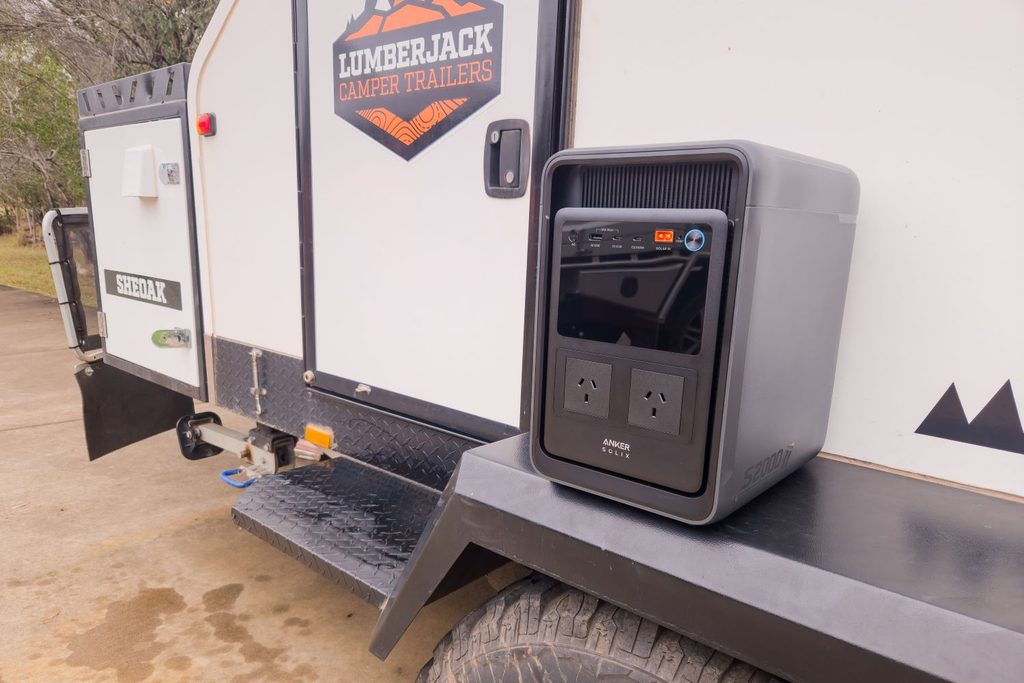
The Anker SOLIX S2000 is my pick. It gives me the battery capacity I want without the weight of the Bluetti, and its compact, boxy shape makes it easy to pack among our camping gear.
The missing 12V ciggy-style outlet is a drawback for some of my cheaper camping accessories, but I can plug those into the camper instead. For our setup, that’s an inconvenience I can comfortably live with.
I still love how easy the EcoFlow DELTA 2 is to grab and move around, and its generous selection of outlets is handy with a family. But its smaller battery capacity doesn’t give me quite the same reassurance that we have enough power in reserve. It’s the one I reach for when portability matters most and our power needs are lighter.
The Bluetti Elite 200 V2 offers plenty of capacity, the highest AC output and room for a much larger solar array. Those strengths could suit a setup where it mostly stays put. For me, though, carrying 24kg is a chore, and I don’t see myself travelling with enough solar to take advantage of its higher input limit. The charging lead repeatedly working loose while driving is another frustration with my particular unit.
The Anker strikes the best balance for us. It’s got enough capacity to feel comfortable, a manageable weight and a shape that fits easily into the space we have. Of these three, it’s the one I’ll keep choosing to take away.
Our editors carefully select the products we feature to ensure they meet the needs of our readers. If you purchase through links on our site, we may earn a small commission. This helps keep our content free and does not cost you anything. Read our full affiliate disclosure.
📌 Save this article to Pinterest so you’ll have it handy for later.