
Published on: 22 December 2025
Hands up if you’ve ever held your breath while changing lanes on the highway? You’ve checked your mirrors, indicated for a solid five seconds, and started to drift across, only to hear the angry honk of a hatchback that was completely invisible in your blind spot.
It’s a heart-stopping moment that happens to the best of us.

We all know that seeing down the side of your van isn’t just a “nice to have”, it’s a legal requirement. But let’s be honest: for most of us, the journey starts with a cheap set of strap-on mirrors we grabbed from the auto parts store on the way to pick up our first van.
And for a while, they do the job. Sort of. But after you’ve spent a few hours watching them vibrate like a washing machine on spin cycle, or had to pull over to tighten a strap that’s flapped loose in the wind, you start to wonder if there’s a better way.
Spoiler alert: There is. And having made the switch myself years ago, I reckon upgrading to full replacement mirrors is the single best safety mod you can make to your tow tug. Here is why.
When it comes to seeing past your caravan, you generally have two camps: the “universal add-ons” and the “full replacements.”
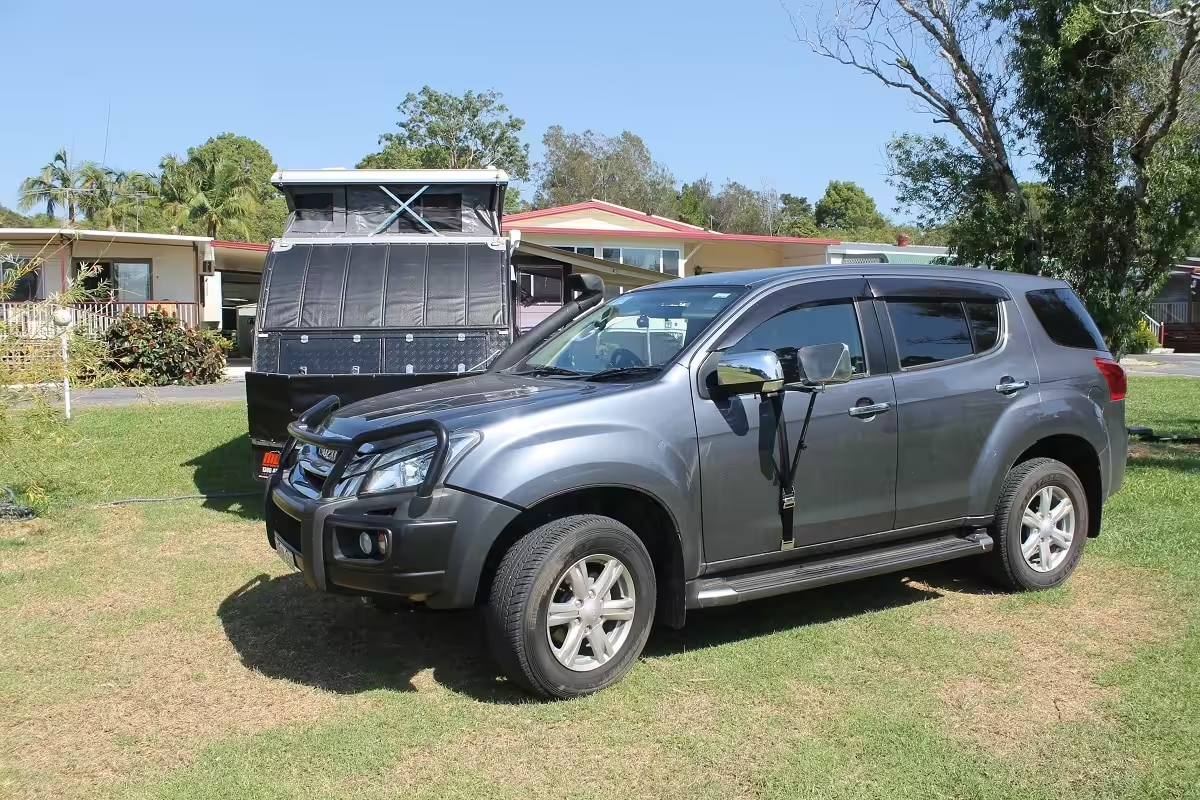
Universal add-ons (clips/straps) are popular for one big reason: they are cheap. If you only tow a box trailer to the tip once a year, they are probably fine. But for regular tourers, the cons quickly outweigh the pros.
Their biggest flaw is instability. At highway speeds or on corrugated outback roads, they tend to vibrate, blurring your rear view and contributing to driver fatigue. Improperly fitted add-ons can also scratch or damage your factory mirrors.
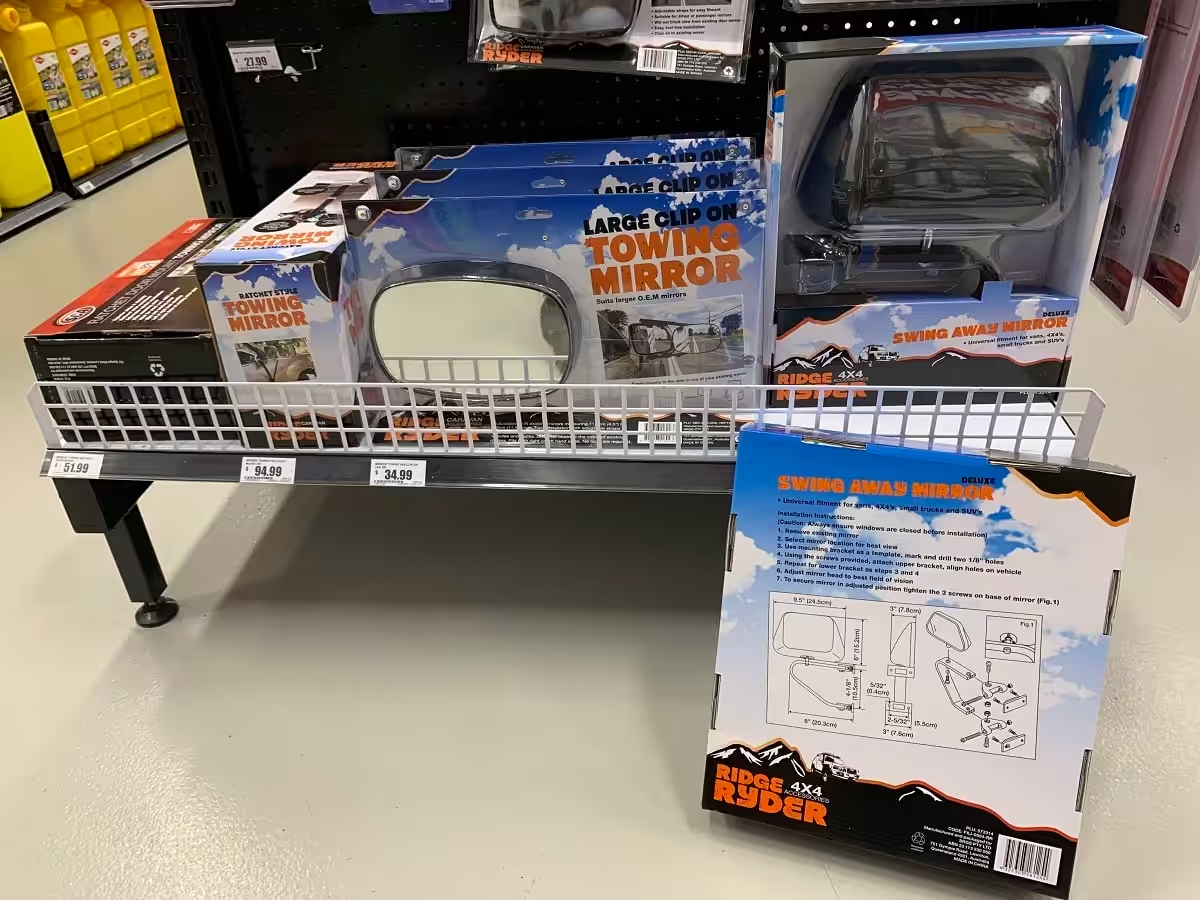
Plus, let’s be honest – they can look clunky and out of place on a modern vehicle. And because they are so easy to remove, they are unfortunately easy for opportunistic thieves to steal when you’re parked.
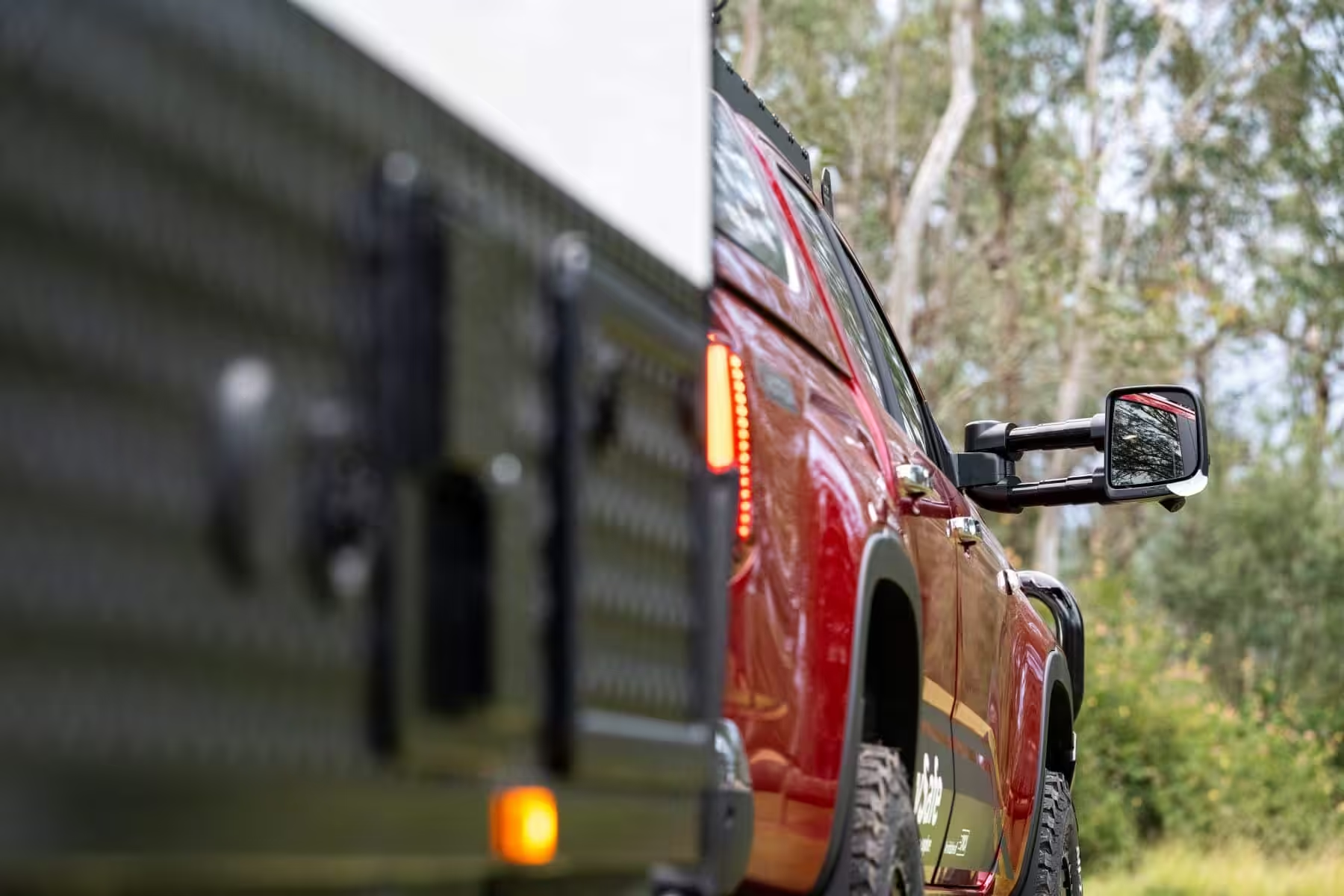
Full replacement mirrors, on the other hand, completely replace your vehicle’s standard side mirrors. Because they are bolted directly to the door in the same way as the factory mirrors, they are rock solid. No vibration, no straps flapping in the wind, and no scratching your paintwork.
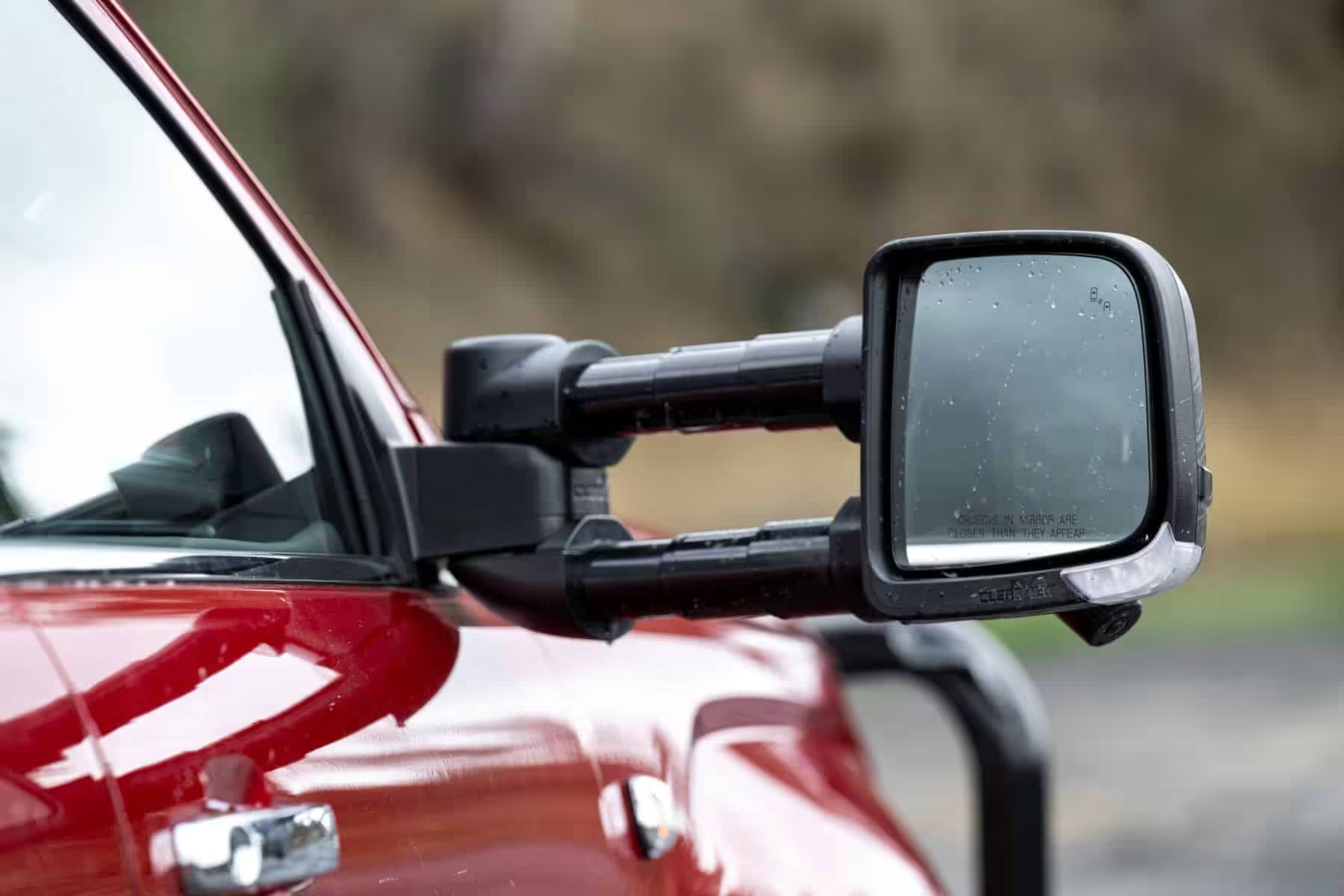
Are there downsides? Sure. They cost more upfront, and they are a permanent fixture on your car. But if you are serious about touring, the peace of mind is worth every cent.
Hot Tip: Many people worry about the width of towing mirrors when they aren’t towing. Look for “Extendable” designs. They slide in for the weekly grocery run and slide out a full 180mm when you hitch up the van. Best of both worlds.
This is the number one question I hear from owners of modern 4WDs. You’ve just spent big money on a new LandCruiser, Ranger, or D-Max, and it’s packed with 360-degree cameras, blind spot monitoring (BSM), and puddle lights. The fear is that ripping off the factory mirrors means losing all those safety features.
In the early days, that might have been true. But brands like Clearview Accessories who actually invented the first replacement towing mirror back in 2006, have kept pace with vehicle tech.
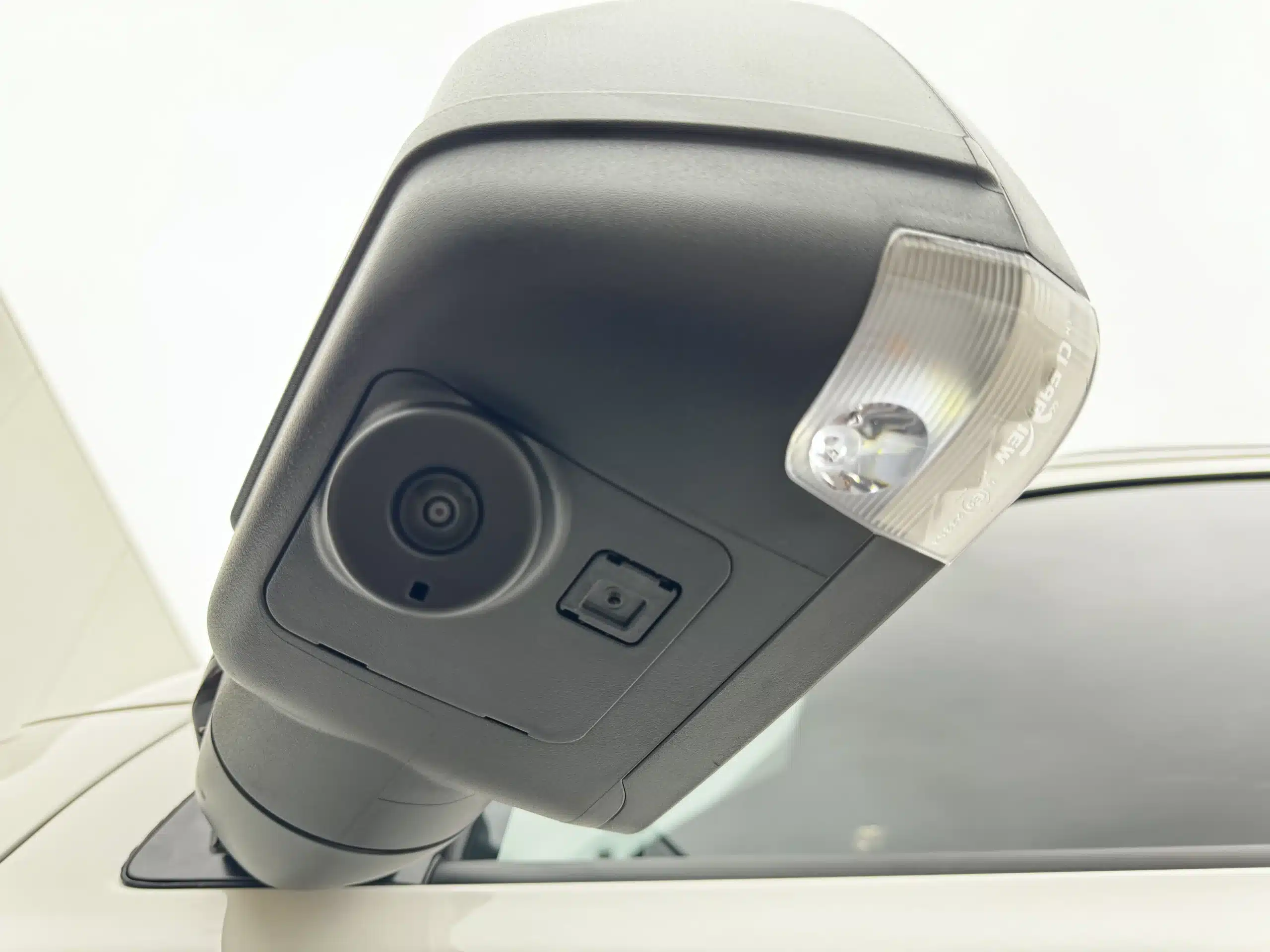
Their mirrors are engineered to plug-and-play with your vehicle’s systems. This isn’t just about plugging in a wire; it involves re-housing complex sensors and cameras to ensure the car’s computer still ‘sees’ the road correctly, without triggering fault codes.
If your car has a 360-degree camera system for parking, the Clearview mirrors include the camera mount to keep that view seamless. The same goes for Blind Spot Monitoring, heating, and electric adjustment. They even include the GPS and AM/FM aerials if your vehicle hides them in the mirror housing.
If you’ve decided to upgrade, you’ve got a few options depending on what kind of traveller you are. Clearview offers a few different styles, and they cater to different needs.
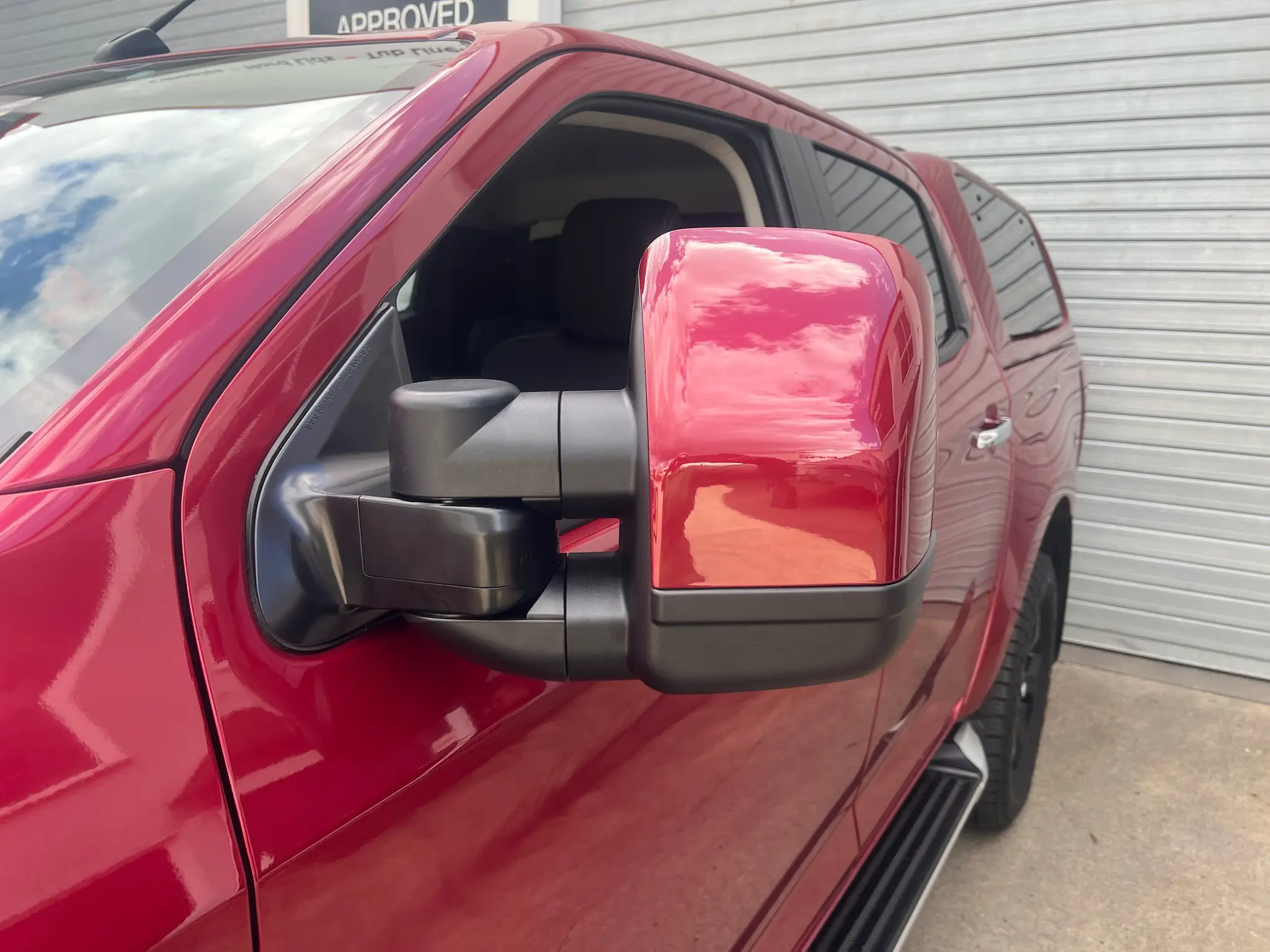
These are the big ones you see on plenty of touring rigs. They have a massive glass surface area with a split design—a large flat top mirror for distance and a smaller convex bottom mirror to eliminate blind spots. If visibility is your absolute priority, these are the king of mirrors.
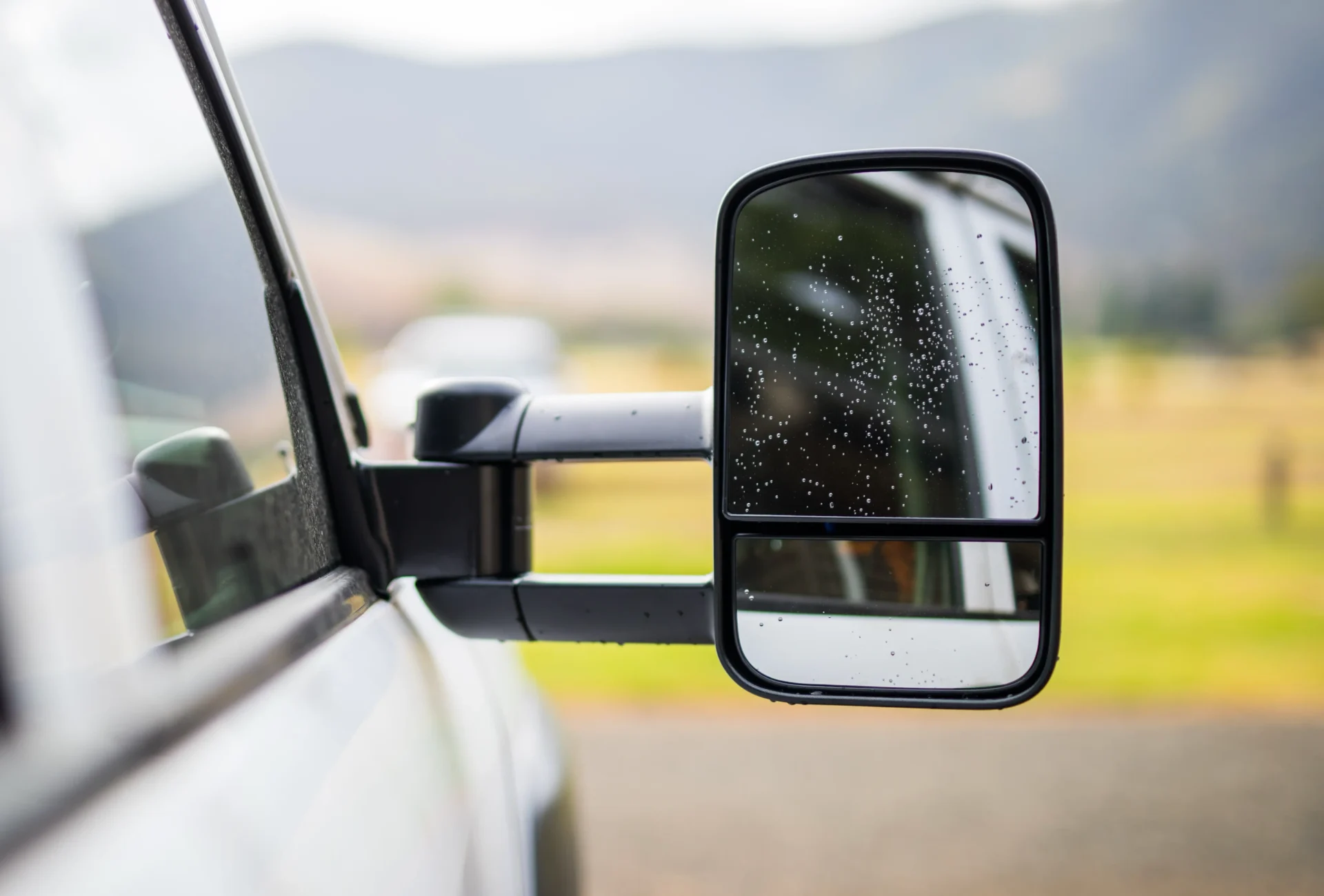
If you want the twin-mirror visibility but in a sleeker package that suits modern body shapes, the Next Gen is the pick. They extend a full 180mm but retract closer to the body when you’re just driving to work. They sit somewhere between the Original and the Compact in terms of physical size.
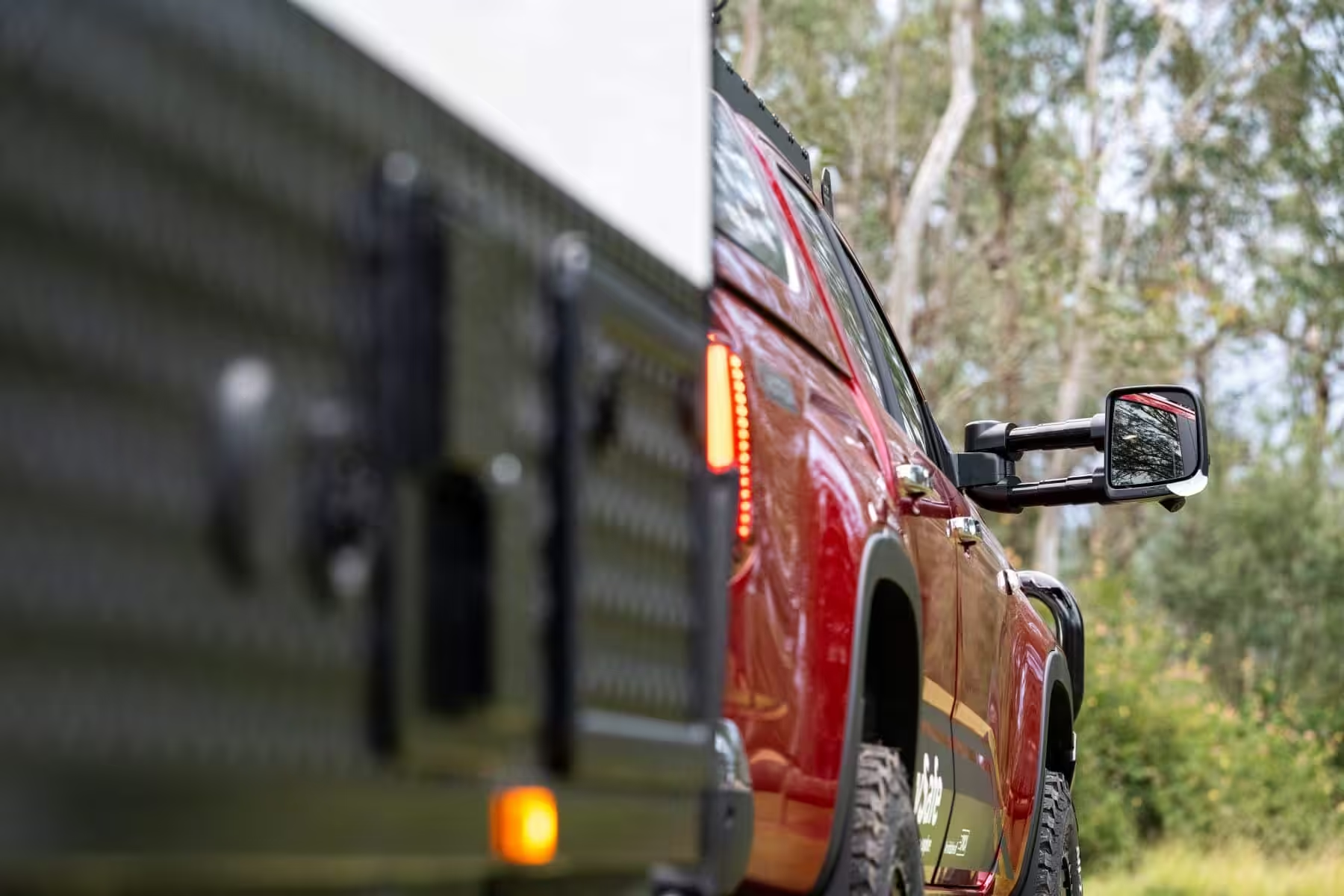
I reckon these are a game-changer for people who use their 4WD as a daily commuter. They feature a single, large mirror glass (just like your factory mirror) but sit on an extending arm. The large convex glass reduces the objects it reflects, allowing for a much wider field of view. They look almost stock when retracted, but slide out to give you the legal width you need when the van is hooked up.
Look, we all start our towing journey trying to save a few bucks. But safe towing demands more than just a sturdy hitch; it requires clear vision.
While universal add-ons have their place for the occasional weekend tip run, they simply cannot match the stability, visibility, and integration of a full replacement system. If you are hitching up for a lap of the map, or even just regular holiday runs, do yourself a favour and invest in proper glass. It’s an investment in your safety and your sanity.
The legal lowdown: Do I need towing mirrors?
How to master the art of towing safely
Are you overweight? Why every caravan owner should get a GVM and towing assesment