
Are integrated caravan power systems the future of touring?
What is a caravan power system and are integrated setups worth it? We break down the Renogy system now used in On The Move Caravans.
Published on: 26 March 2026
For years, setting up a caravan’s power system meant piecing together batteries, chargers, inverters and monitors from different brands, with different apps, and sometimes very different ideas of how things should work.
It did work, but it wasn’t always simple. As a result, we’re now starting to see a shift, with some manufacturers moving towards fully integrated 12V systems, where everything – from solar to storage to monitoring – comes from the same ecosystem.
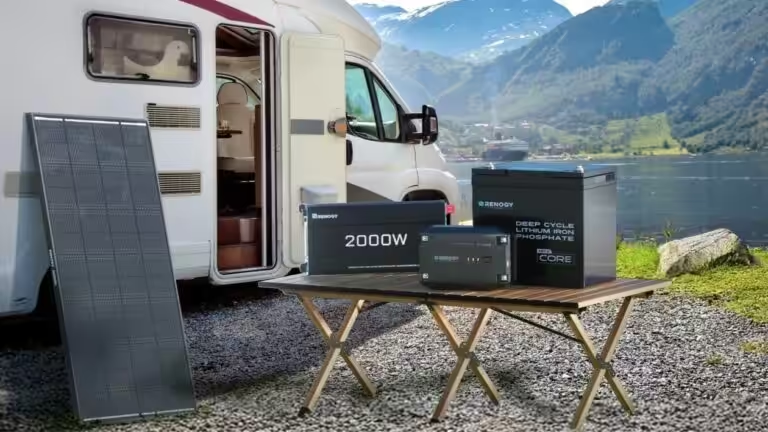
One example of this is the partnership between On The Move Caravans and Renogy as well as Ezytrail and Renogy, which is starting to appear across a number of new caravan and camper models.
But what does that actually mean for travellers and is it a better way to go?
An integrated system is exactly what it sounds like. Instead of mixing and matching components and brands, the entire setup is designed to work together from day one.
That typically includes:
Instead of juggling multiple brands and interfaces, everything is managed through a single system.
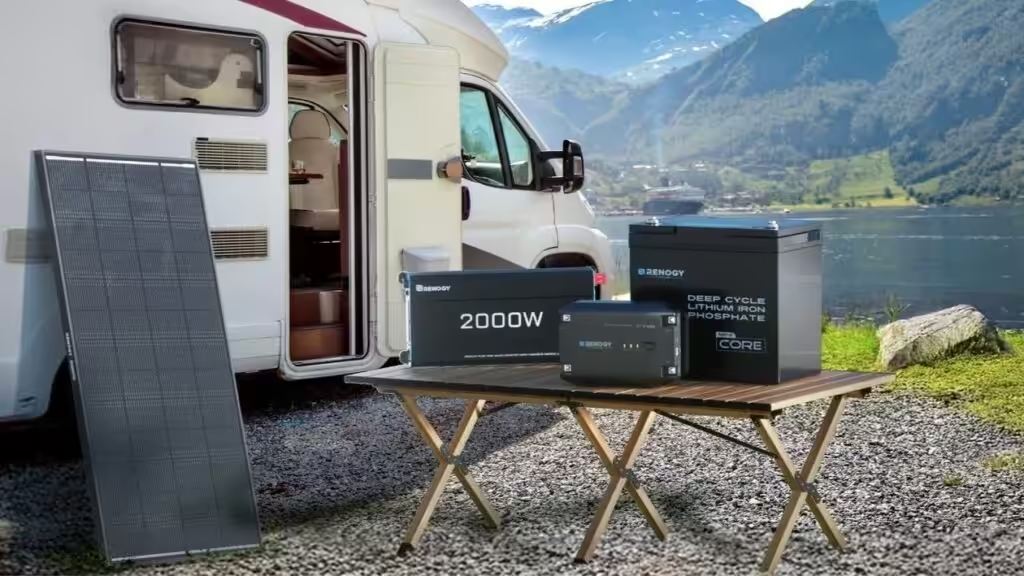
On The Move Caravans has also moved towards a fully integrated setup, partnering with Renogy to roll out what they describe as an E-IoT (Energy Internet of Things) system across their newer vans, starting with their Adventure and Traxx series.
Rather than simply bundling components together, the system is designed as a connected ecosystem in which everything communicates through a central hub.
At the centre is the Renogy Core screen, which serves as the system’s brain. From this single interface, users can monitor and control battery levels, water tanks, temperatures, power usage and connected devices.
It also introduces practical features for everyday touring, like preset “home” and “away” modes that automatically manage power use depending on whether you’re in or out of the van.
Behind the scenes, the setup integrates key components, including:
All of these are linked via Bluetooth, Wi-Fi and CAN Bus, allowing them to operate as a single system rather than a mix of separate parts. Renogy has also backed the system with a national service network and local support, giving owners a single point of contact if something goes wrong.

So what does all that mean when you’re actually out on the road? The biggest gains come down to power performance and simplicity. In the Renogy and One The Move partnership:
Basically, you can generate more power, charge faster and rely on it for longer.
Beyond raw performance, the system is designed to be easier to live with. Everything is monitored through a single screen, built-in diagnostics make faults easier to track, and isolation switches allow quick shutdown or resets.
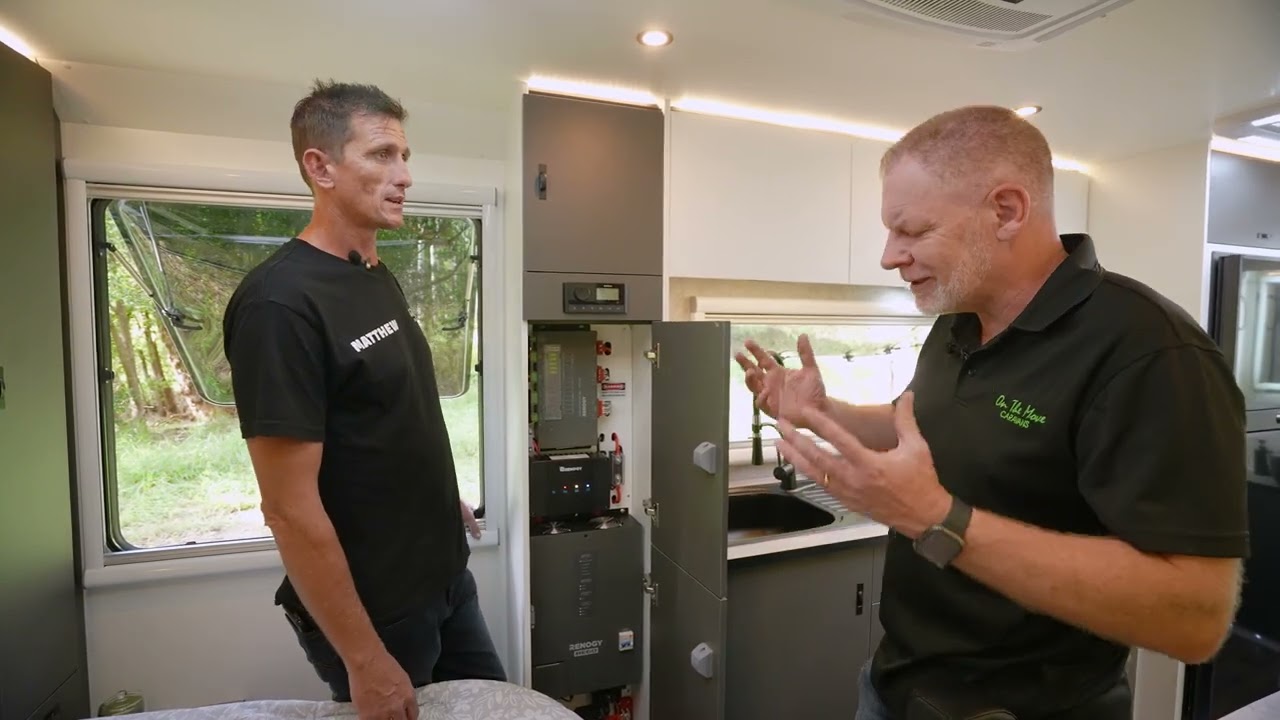
The physical layout also plays a role, with major components grouped together in one accessible space and cooling systems in place to keep everything running efficiently.
Then there are the smaller touches, like integrated levelling, real-time system feedback, and preset modes. While they don’t sound like game changers on their own, they do make day-to-day use noticeably more straightforward.
This shift towards integrated systems changes the ownership experience. There is now no need to piece together a system or troubleshoot compatibility issues between brands and there is only one interface and system. Because everything is designed to fit and function together from the start, it’s a much cleaner install.
It’s not all upside. Integrated systems come with a few limitations, including:
For some travellers, especially DIY-focused setups looking to save coin, that flexibility is still a big drawcard.
| Feature | Traditional setup | Integrated system |
|---|---|---|
| Install | Custom / DIY | Factory-installed |
| Monitoring | Multiple apps/devices | Single system |
| Ease of use | Moderate | High |
| Flexibility | High | Moderate |
| Support | Multiple brands | Single provider |
If you want to get a better idea of how these systems are laid out in a real van, this quick walkthrough gives a good overview of the Renogy setup being used in On The Move Caravans:
Integrated caravan power systems aren’t going to replace custom setups overnight, but they’re clearly becoming more common. For travellers who want a simpler, ready-to-go solution, they make a lot of sense.
For those who prefer to tweak and build their own setups, traditional systems will still have their place. Either way, one thing’s clear – caravan power systems are evolving fast, and setups like this are a big part of where things are heading.